
AP super clones often attract buyers because the Royal Oak-style design has a level of wrist presence that simpler sports watches do not. The sharp bezel, integrated bracelet, textured dial, exposed screws, and mixed brushing/polishing turn AP super clone challenges into a practical factory comparison, because these details can look impressive when executed well. The harder question is not whether an AP-style replica can look convincing, but whether it is easy to live with once the first excitement fades.
This article focuses on that ownership gap. AP-style watches can demand more attention to fit, scratch visibility, QC details, movement feel, and daily comfort than Submariner-, GMT-, Seamaster-, or Datejust-style replicas. The practical decision is whether you want design drama as part of a rotation, or a quieter watch that you will actually wear without hesitation. For many buyers, the simpler option becomes the more useful one.
Brand names are used here to identify genuine reference designs and familiar watch categories for comparison. Replica watches and super clone watches are replica-market products, not genuine watches from Audemars Piguet, Rolex, Omega, Cartier, or any other original luxury watch brand, and they should not be represented as authentic brand-manufactured watches.
| Buyer concern | AP-style super clone | Simpler sports or dress replica |
|---|---|---|
| Daily attention | High wrist presence; more likely to be noticed | Quieter look; easier in more situations |
| Scratch tolerance | Bezel, chamfers, and bracelet marks show quickly | Wear marks usually feel less disruptive |
| Comfort fit | Depends heavily on first-link angle and bracelet drape | Often more forgiving across wrist sizes |
| QC sensitivity | Screws, dial texture, date, markers, and bracelet gaps need close checking | Still needs QC, but visual flaws are often less exposed |
| Movement expectations | Rotor noise, winding feel, and service risk can affect confidence | More familiar movement routes may feel easier to own |
| Best use case | Rotation watch for buyers who enjoy bold design | Daily watch for buyers who want less friction |
Editorial Perspective: For AP-style replicas, the useful question is rarely “which factory is best” in a general sense. A factory name, seller photo, or higher price can help narrow the shortlist, but it does not prove that a specific unit will fit the buyer’s wrist, age gracefully, wind smoothly, or feel comfortable as a daily watch. At cleanvsfactory.com, this type of AP decision is treated as a model-specific ownership question: case thickness, first-link angle, bezel finishing, dial alignment, movement route, and the buyer’s tolerance for attention often matter more than the factory label alone.
Evidence Boundary: This guide discusses imitation watches and buyer decision logic, not authorized Audemars Piguet products. Official brand information can help define what the authentic Royal Oak design is known for, but it cannot prove that any replica has identical finishing, materials, movement performance, water resistance, or serviceability. Factory names and seller descriptions should be treated as market shorthand unless the buyer has specific QC photos, movement images, and a credible inspection basis for the individual watch being considered.
Practical Reading Note: Claims such as “best factory,” “same as genuine,” “waterproof,” “904L,” “Swiss movement,” or “latest version” should not be accepted as final evidence by themselves. For AP-style replicas, the safer approach is to judge visible execution, seller transparency, after-sales support, and personal lifestyle fit. A watch can be visually convincing at normal wrist distance and still differ meaningfully from an authentic watch in finishing tolerance, movement behavior, legal status, warranty coverage, and long-term repair experience.
Quick Questions Before You Read
Q: Are AP super clones bad daily watches?
Not automatically, but they are less forgiving. Their shape, finishing, and visibility can make daily wear feel more stressful than simpler models.
Q: Is the main issue factory quality?
No. Factory quality matters, but the bigger issue is lifestyle fit: comfort, scratches, attention, and whether you enjoy the watch’s bold presence.
Q: Why do buyers move back to Submariner, GMT, Seamaster, or Datejust-style replicas?
Those watches are usually easier to wear often, attract less attention, and create less anxiety over marks or small flaws.
Q: Who should still consider an AP-style replica?
Buyers who specifically want architectural design, strong wrist presence, and a rotation piece rather than the lowest-maintenance daily watch.
AP Super Clones Are Impressive, but They Are Not Always Easy to Live With
An AP super clone can be one of the more visually impressive replica watch choices on the market, but it is not always the easiest one to wear. That distinction matters. Many buyers do not move away from an Audemars Piguet replica because the watch looks bad. They move away because the watch asks more from them in daily life: more confidence, more attention management, and more tolerance for visible wear.
The Royal Oak design is not a quiet design. Even before anyone reads the dial, the octagonal bezel, exposed screw layout, flat case planes, integrated bracelet, and textured dial create a very specific profile. A Submariner-style or Seamaster-style replica can blend into the general category of sports watches. A Royal Oak replica does not blend as easily. It looks deliberate, angular, and expensive in a way that makes the wearer more aware of it.
This is the first misunderstanding buyers should correct: the problem is not simply whether an AP-style replica is “good enough.” Some current Royal Oak and Offshore replicas may be more convincing than older low-tier versions in case shape, dial execution, bracelet integration, and movement appearance. The harder question is whether that kind of watch fits the buyer’s normal week. A visually strong watch can still become hard to wear every day if it feels too noticeable for the office, too sharp for casual use, or too precious around desks, doors, and travel bags.
The First Impression Is Usually Strong
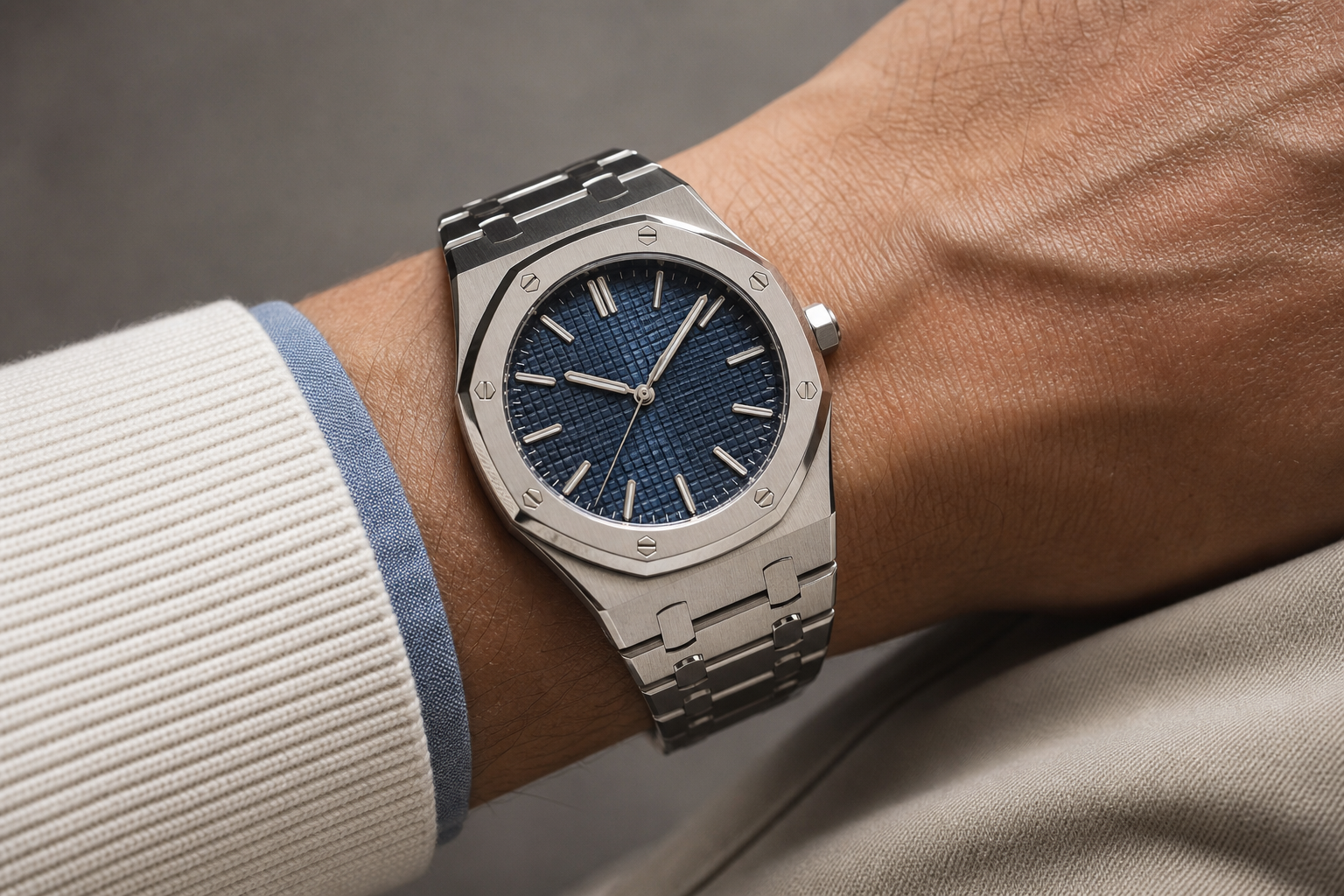
The first appeal is easy to understand. The Royal Oak shape feels different from a normal round sports watch. The bezel is not just a frame around the dial; it is part of the identity of the watch. The exposed screw heads, broad brushed surfaces, polished bevels, and integrated bracelet create a piece that feels more architectural than decorative.
The tapisserie-style dial also does real work. In photos and at normal wrist distance, the grid texture gives the watch depth and makes many simpler dials look plain by comparison. For a buyer who already owns a Submariner, GMT, Seamaster, or Datejust-style replica, an AP super clone can feel like a step into something more specialized and more visually serious.
That strong first impression is why buyers take the risk. They are not usually choosing AP because it is the safest daily watch. They choose it because it feels distinctive. The watch has presence before it has practicality.
The Ownership Experience Can Feel Different After a Few Weeks
The reversal usually starts after the excitement settles. The same wrist presence that felt exciting at first can become a source of awareness. The buyer notices the watch catching more light, drawing more comments, or feeling more exposed in ordinary settings. It may still be a good-looking AP-style replica, but it no longer feels effortless.
This is where livability separates itself from visual accuracy. A watch can look convincing in photos and still require more care than the owner wants to give it. An angular bezel makes small marks easier to notice. A distinctive silhouette invites more attention. A high-profile model creates stronger expectations around the entire ownership experience.
For daily wear, the safer watch is often the one the buyer stops thinking about. That is why some AP super clone buyers eventually return to simpler replica watches. They may still like the AP, but they reach more often for the watch that feels less demanding.
Factory Name Helps, but It Does Not Solve the AP Decision
AP buyers often start with factory reputation, and that is understandable. A known factory can indicate a better chance of correct case shaping, cleaner dial texture, more consistent bracelet finishing, or a more convincing movement layout. The problem is that factory reputation does not apply equally to every AP model, every size, or every version. A factory that performs well on one Royal Oak reference may not be equally strong on an Offshore chronograph, a skeleton-style model, or a thinner dressier configuration.
For this category, the more useful comparison is model-specific: case thickness, bezel screw execution, tapisserie texture, date position, first-link behavior, bracelet feel, and the movement route used in that exact version. A famous factory label is a signal, not final proof. QC photos still need to confirm the actual unit, and seller descriptions should be read as starting information rather than a substitute for checking the watch’s visible details.
This matters because some AP choices are better as photo watches than daily watches. A version may look impressive in a seller’s bright front-facing photo but feel thick, sharp, loud, or mechanically uncertain in normal use. A quieter Submariner-style or Datejust-style replica may appear less exciting in the listing, yet be a better ownership match because it is more forgiving on the wrist and easier to live with when small flaws appear.
How to Treat Factory Claims Without Overtrusting Them
Factory names such as APSF, ZF, 3KF, BF, or other market-known labels may help buyers organize choices, but they should not be treated as official verification. In the replica market, factory reputation is usually built through buyer discussion, seller listings, and repeated visual comparison rather than public manufacturer documentation. That means the claim “this factory is best” is too broad unless it is narrowed to a specific model, version, and buyer priority.
A more defensible way to compare AP-style replicas is to ask what the factory claim actually predicts. Does it suggest a better bracelet finish, a thinner case, a more convincing dial texture, a more suitable movement layout, or stronger QC consistency? If the claim cannot be translated into something visible or testable on the specific watch, it is not very useful. Buyers should be especially careful when a seller uses factory reputation to skip over unit-level evidence such as straight dial photos, side profile images, clasp shots, movement photos, or video of the bracelet and rotor.
This is also why one buyer’s “best AP clone” may be another buyer’s regret. A collector who wants the most convincing caseback may accept service risk. A daily wearer may prefer a less visually ambitious movement route if it feels easier to maintain. A buyer with a flat wrist may praise the bracelet, while a buyer with a smaller round wrist may find the same watch uncomfortable. Factory reputation can start the conversation, but it cannot replace wrist fit, QC review, and honest use-case matching.
Factory Name Clarification: Factory names in the replica watch market are buyer-facing reference labels rather than official brand affiliations or audited manufacturer identities. For AP-style replicas, buyers should judge each model and version through visible QC details, movement route, bracelet fit, case thickness, and seller-provided unit photos instead of assuming that one factory label guarantees identical quality across every reference.
A More Traceable Way to Compare an AP-Style Replica
A useful AP comparison should move in a clear order: reference, size, version, movement route, case profile, bracelet behavior, dial execution, and actual QC evidence. If the discussion begins and ends with a factory name, the buyer still does not know whether the watch will sit flat, whether the date is centered, whether the bezel screws look balanced, or whether the movement choice creates a thickness or service tradeoff. Traceability means connecting a market claim to details that can be checked.
For example, two AP-style replicas may share the same broad factory label but differ in case thickness, bracelet articulation, dial color, rotor decoration, or batch-level finishing. One may be more visually impressive in a display-back photo, while the other may be more comfortable for daily wear. That is why CleanVSFactory’s practical approach is to treat factory names as organizing tools, not conclusions. The better decision is the one supported by version-specific photos, movement information, and the buyer’s actual use case.
Why Buyers Choose AP Super Clones in the First Place
AP super clones attract buyers because they offer something many conventional sports replicas do not: a watch that feels designed around shape, surface, and architecture rather than only function. A Royal Oak super clone is not just another steel bracelet watch. Its appeal comes from the way the case, bezel, dial, and bracelet are visually tied together.
For many buyers, this is the whole point. A Submariner-style replica can be practical, familiar, and easy to wear, but it may not feel special after the buyer has seen many versions of the same design language. An AP replica watch offers a sharper visual jump. It looks more intentional on the wrist, and that makes it tempting even for buyers who know it may be less forgiving long term.
The Design Feels More Architectural Than a Typical Sports Watch
The Royal Oak’s design is built from lines and planes. The octagonal bezel sits flat and wide. The case has strong edges. The bracelet does not attach like a normal afterthought; it flows out of the case as part of the same structure. This integrated bracelet design is a major reason the watch feels more expensive and more engineered at first glance.
The finishing contrast matters as much as the shape. Brushed top surfaces and polished bevels create light breaks across the bezel, case, and bracelet links. On a good AP-style replica, this can make the watch feel crisp and dimensional in a way that many round-case watches do not. The appeal is immediate because the design does not need a close look to announce itself.
This is also why AP is more demanding to replicate convincingly. A minor weakness in case geometry, bezel proportion, dial texture, or bracelet transition can disturb the whole visual system. Buyers are drawn to AP because of the design unity, but that same unity makes flaws harder to ignore.
Status Appeal Can Be Stronger Than Practical Fit
There is no need to pretend status is not part of the attraction. The Royal Oak is one of the most recognizable luxury sports watch shapes, and that recognition is part of why buyers consider an AP super clone in the first place. The watch feels like a statement, especially in blue dial, full bracelet, or Offshore-style configurations.
The mistake is assuming that statement value automatically translates into daily-wear value. A buyer may like the idea of an AP more than the experience of wearing one to work, dinner, travel, or casual weekend errands. In normal life, a watch that looks impressive can sometimes feel too deliberate. That does not make the AP a poor choice; it means the buyer needs to be honest about how much attention they actually enjoy.
At Clean VS Factory, we usually separate visual attraction from ownership fit. A watch can be the more exciting option and still not be the most sensible daily choice. AP is a clear example of that split.
Factory Progress Makes the Decision More Tempting
The AP replica market has produced higher-tier versions that make the decision less simple than it was with obvious low-end copies. Older or lower-grade AP-style replicas may show thickness issues, rough bracelet execution, weak dial texture, or movement layouts that quickly break the illusion for informed buyers. Current higher-tier versions from market-known factories can appear more convincing at normal wrist distance, especially when the case dimensions, tapisserie-style texture, bracelet finishing, and decorated movement appearance are handled well.
That progress makes the AP clone appeal stronger. A buyer looking at modern QC photos may see sharp brushing, clean dial layout, improved case shaping, and a display back that looks more serious than older plate-based attempts. Compared with rougher AP replicas, better examples can feel like a real upgrade.
Still, factory progress does not remove the ownership tradeoff. Version, batch, movement route, and individual execution still matter. More importantly, a better-looking AP super clone does not become a low-effort watch just because the factory has improved it. It may look more convincing, but it still carries the same basic personality: visible, angular, and less anonymous than a simpler daily-wear replica.
The Main Reason Some Buyers Move Back: AP Is Visually Loud
The biggest reason some buyers move back from AP is not movement anxiety or technical disappointment. It is visual loudness. AP-style watches are often less anonymous than Submariner, GMT, Seamaster, or Datejust-style models, and that changes how the owner feels wearing the watch in public.
This is not only about brand status. The Royal Oak silhouette itself is unusually recognizable. A round steel sports watch can disappear into a broad category. An octagonal bezel on an integrated bracelet does not disappear in the same way. Even people who are not deep watch collectors may notice that it looks expensive or unusual. People who do know watches may recognize the design immediately.
That creates a specific kind of AP replica attention. The watch may attract comments in an office, at dinner, in a gym locker room, or during travel. Some buyers enjoy that. Others discover they do not want their watch to start conversations or invite close looks. For those buyers, a well-made AP super clone can still feel stressful because the issue is not whether the watch is attractive; it is whether the owner wants to carry that much visual weight.
The Case Shape Is Hard to Disguise
The Royal Oak case shape does not hide under the radar. The octagonal bezel creates a hard outline, and the integrated bracelet extends that shape across the wrist. From across a room, the watch does not read like a generic steel sports watch. It reads as an AP-style design.
This matters because many replica watch buyers want control over attention. They may be comfortable wearing a nice watch, but not one that feels like a constant signal. A Submariner-style watch can be recognized, but it is also visually familiar because so many dive watches share similar proportions. A Royal Oak replica has fewer places to hide. Its shape is the message.
The stronger the AP execution, the more this can become an ownership issue. A sharper case, brighter finishing contrast, and better bracelet integration make the watch more impressive, but they also make it more noticeable. Better visual quality does not always mean easier daily wear.
Wrist Presence Can Turn Into Wrist Awareness
Wrist presence is attractive during the buying stage. It is the reason the watch looks powerful in photos and satisfying in mirror shots. After a few weeks, wrist presence can become wrist awareness. The owner starts noticing where the watch is being worn, who might notice it, and whether it feels appropriate for the setting.
This is where AP differs from many simpler replica watches. A low-key replica watch can become background noise in the owner’s day. An AP-style watch often remains foreground. It catches light, shows shape, and asks to be seen. That can be enjoyable on the right occasion, but tiring if the buyer wanted a watch they could wear without thinking about it.
The clearest sign of mismatch is not regret. It is reduced use. The buyer still likes the AP, still admires the dial and case, but keeps choosing something quieter when leaving the house. That behavior says more than any specification sheet.
What This Means for Daily Wear
If a buyer wants quiet confidence, AP is usually not the safest first choice. A simpler sports or dress-sport replica often fits more situations with less social pressure. The watch may be less dramatic, but it becomes easier to wear because it does not demand the same level of attention tolerance.
If a buyer enjoys being noticed, the equation changes. AP can be satisfying precisely because it has strong wrist presence and a recognizable design. The right buyer will accept the attention as part of the experience. The wrong buyer will treat the same attention as friction.
The practical judgment is simple: choose AP because you genuinely enjoy the design drama, not because it looks like the highest-status upgrade on a list. If the goal is an easier replica watch for daily wear, a visually quieter model will usually create more long-term comfort.
Scratches and Surface Wear Feel More Obvious on AP-Style Cases and Bezels
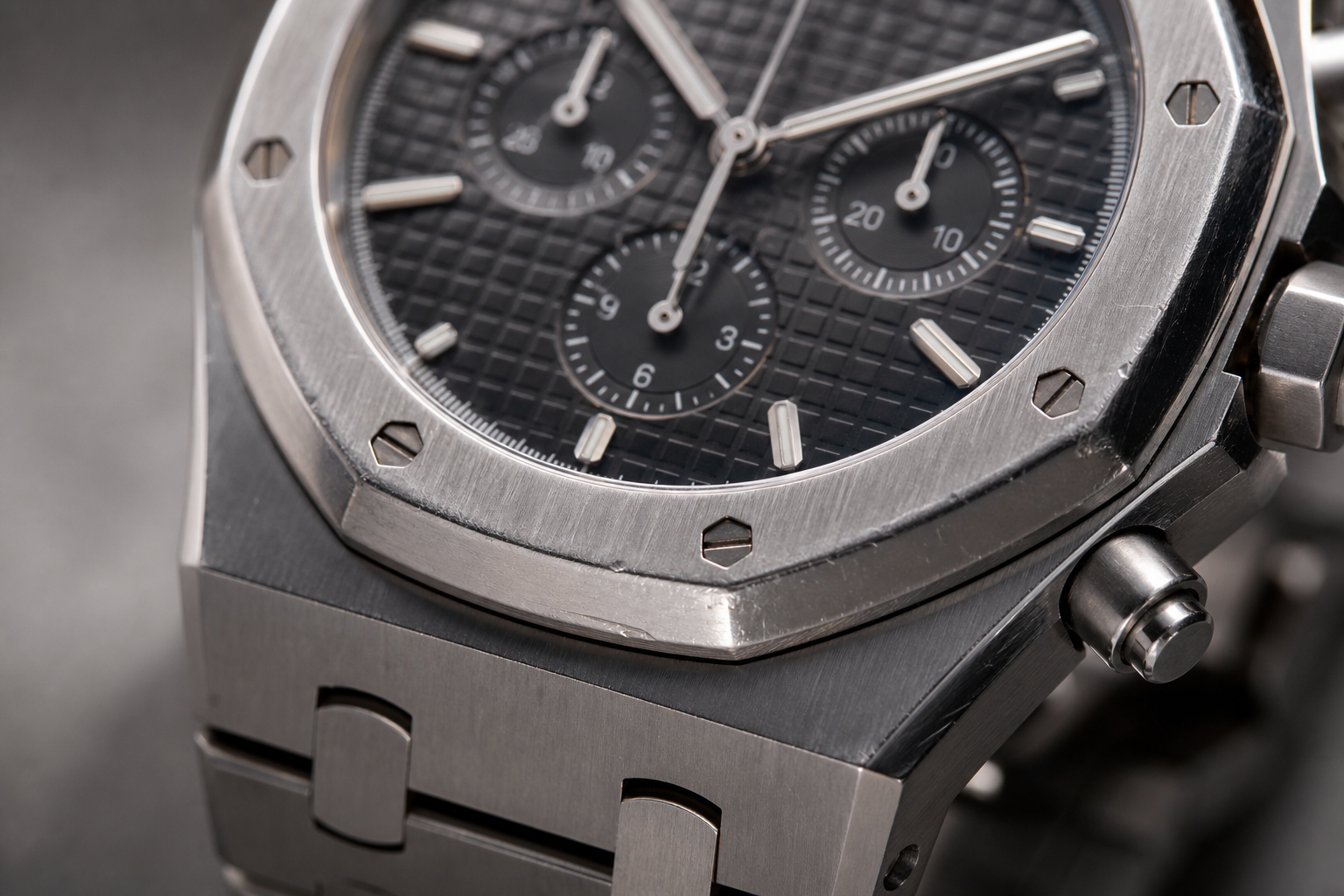
All watches scratch. The problem with an AP-style case is not that it is uniquely fragile; it is that the Royal Oak design gives scratches a very public stage. The broad brushed bezel, exposed screw layout, polished chamfers, and hard case edges all depend on clean geometry. Once that geometry picks up desk marks or small edge scuffs, the wear can feel more visible than it would on a rounder tool-watch case.
This is one of the quiet reasons some buyers move back to simpler replica watches. A Submariner-style watch with a ceramic-style bezel and more rounded case profile often hides daily wear better. A Seamaster-style case can look natural with a few marks because the design language is sportier. An AP super clone, especially a Royal Oak-style model, is built around crisp surface contrast. When the finish is no longer crisp, the visual effect changes faster.
The Octagonal Bezel Puts Wear in the Spotlight
The octagonal bezel is the first surface people notice, and it is also where Royal Oak bezel scratches tend to bother owners most. The top surface is flat, brushed, and interrupted by eight visible screw heads. That combination makes small marks easier to locate with the eye. A light scratch across a round bezel can blend into curvature; a scratch across a flat AP-style brushed bezel often cuts against the grain and becomes a line you keep seeing.
The screw positions add another layer of sensitivity. Even if the screws are aligned acceptably from the factory, the bezel creates a grid-like visual frame, so an Audemars Piguet clone comparison often depends on how these small finishing cues behave under daily use. Any mark near a screw, edge, or corner feels more noticeable because the design is already asking the eye to inspect symmetry. This is why AP clone case finishing can look excellent in clean photos but become mentally harder to live with after a few weeks of real desk wear.
The buyer mistake is expecting a brushed AP-style bezel to age like a ceramic sports bezel. It does not. Ceramic-style bezels can still chip or mark under certain impacts, but they are generally less likely to show fine desk scratches in the same way. A brushed steel Royal Oak-style bezel develops visible character quickly, and not every buyer enjoys that character on a replica watch they wanted to keep looking sharp.
Brushed and Polished Transitions Are Less Forgiving
AP-style finishing depends on contrast. The flat planes are brushed; the chamfers catch light; the edges are supposed to feel crisp and deliberate. On a strong replica, that contrast is part of the appeal. It gives the watch its architectural quality. But the same contrast makes wear less forgiving than on a simpler case where the finishing is not the main event.
Polished chamfers are especially sensitive. Once the edge picks up small dings or dulls from contact, the case can lose some of its sharp light play. This does not mean the watch is ruined, but it does mean the owner may start noticing the case more often for the wrong reason. On a round sports watch, a softened edge can disappear into the overall shape. On a Royal Oak-style case, the edge is the shape.
This is also where factory execution matters, but not in the usual “which factory is best” way. Better AP clone case finishing can make the watch look more convincing at the start, yet it can also make the owner more protective because the clean finishing is exactly what they do not want to disturb. A cheaper, rougher AP replica may not age gracefully; a better one may make the buyer more anxious about every surface mark. Both can push the same person toward a simpler daily watch.
Scratch Anxiety Can Change How Often the Watch Gets Worn
The practical issue is not the scratch itself. It is the behavior that follows. Some buyers start avoiding certain desks, jackets, door frames, luggage handles, gym lockers, or weekend activities because the watch feels too exposed. Once a watch makes the owner behave carefully all day, it stops feeling like an easy daily piece.
This is where AP super clones can lose the ownership battle to simpler watches. A buyer may still like the Royal Oak look, but the watch becomes a dinner watch, a photo watch, or a short-wear watch rather than the one they grab on Monday morning. The Submariner, GMT, Seamaster, or Datejust-style replica may not look as dramatic in photos, but it often asks less from the owner in normal use.
The clear judgment is simple: if visible wear will bother you, an AP-style replica is not the safest everyday choice. It can be a satisfying watch for someone who accepts marks as part of ownership, but it is a poor fit for buyers who want a replica watch to stay visually clean with minimal thought. The Royal Oak design rewards careful finishing, and it punishes careless wear more obviously than most conventional sports-watch shapes.
Bracelet Comfort and Sharp Case Geometry Can Push Buyers Toward Simpler Watches
AP replica bracelet comfort is more wrist-dependent than many buyers expect. The Royal Oak-style case and bracelet are not separate design elements; they form one continuous structure. That is the point of the design, but it also means the watch has fewer ways to adapt to different wrists. If the first link does not angle correctly, if the bracelet sits too flat, or if the case edges land awkwardly, the watch can feel less forgiving than a Submariner-style oyster bracelet or a Seamaster on rubber.
This does not mean every Royal Oak clone wrist fit is uncomfortable. Some buyers love the integrated feel because the watch sits broad, flat, and solid. The issue is variance. Wrist shape, case size, bracelet articulation, clasp position, and factory finishing all matter more here than they do on many conventional watches. A small fit problem on an AP-style case becomes noticeable because the design is rigid, angular, and visually wide.
Integrated Bracelets Do Not Fit Every Wrist Equally
The first link after the case is critical. On a traditional bracelet, the end link usually gives way to a chain of links that can wrap around the wrist gradually. On an integrated bracelet, the first section often continues the case line before the bracelet starts to curve. If that first link projects outward too much, the watch wears larger than the case size suggests. If it articulates poorly, the case can hover rather than settle.
This is why the same AP-style replica can feel excellent on one wrist and awkward on another. A flatter wrist may support the case and bracelet naturally. A rounder or smaller wrist may feel pressure at the edges, gapping near the first link, or uneven weight distribution. Sizing also has less margin for error because small link changes can make the watch feel either too tight or slightly loose, with less micro-adjustment flexibility than many sport bracelets.
Buyers coming from Rolex-style bracelets often underestimate this. A conventional bracelet can usually tolerate a slightly imperfect size because the case is rounder and the bracelet drapes more predictably. With an integrated AP bracelet, the case-to-bracelet transition is part of the comfort system. If that transition is off, the whole watch feels off.
Sharper Case Lines Can Feel Less Casual
Sharp geometry looks good in photos because it gives the watch definition. On the wrist, that same geometry can feel more present. The case edges, bezel corners, and bracelet links are designed to create clean angles, not soft contact. Better factories usually improve edge finishing so the watch does not feel crude, but the underlying shape remains angular.
This is the difference between visual precision and casual comfort. A crisp AP-style case may look more expensive and better finished than a simpler sports watch, yet still feel less relaxed during a long day. It can press differently when typing, bending the wrist, driving, or wearing tighter cuffs. A Datejust-style or Submariner-style case is not automatically more refined, but it is usually easier to forget.
The buyer should not judge comfort from top-down photos. Side profile, first-link angle, clasp thickness, and bracelet drape matter more than the dial shot. An uncomfortable AP replica is not always badly made; sometimes it is simply the wrong geometry for the wrist wearing it.
Small Fit Issues Become Bigger When the Watch Is Heavy or Wide
Weight and width amplify fit problems. A 41mm Royal Oak-style watch on an integrated bracelet can feel broader than a 41mm round sports watch because the case shape extends visually and physically into the bracelet. Offshore-style models increase this effect further with thicker cases, larger bezels, and more mass on top of the wrist.
If the bracelet is slightly loose, the watch may shift and remind the wearer of its weight. If it is slightly tight, the edges and clasp can become annoying by the end of the day. This is where buyers who are used to simpler sports watches often reverse course. They do not necessarily dislike the AP look; they dislike having to manage the fit all day.
A sensible rule is to treat AP-style comfort as a personal fit test, not a factory reputation test. A strong factory version can still be the wrong daily watch for a smaller wrist, a rounder wrist, or a buyer who prefers soft, flexible wear. If comfort is the priority, a simpler replica watch with a conventional bracelet or rubber strap is usually the lower-risk choice.
AP Super Clones Often Require Higher QC Expectations
AP replica QC feels more intense because the design gives flaws fewer places to hide. The Royal Oak layout is built from straight lines, flat planes, repeated screws, aligned markers, and a textured dial pattern. That geometry is attractive, but it also makes small errors easier to notice. A slightly crooked marker, uneven date window, odd bezel screw, or imperfect bracelet transition can stand out faster than it would on a busier or rounder watch.
This is not a reason to avoid every AP super clone. It is a reason to enter the purchase with the right patience. Buyers who want a low-stress QC process often do better with simpler models because the acceptable range is wider. With an AP-style watch, the buyer is not only checking whether the watch works. They are checking whether the visual architecture holds together.
Bezel Screws and Dial Texture Add More Inspection Points
The bezel screws are one of the first things buyers inspect, and for good reason. Their position, seating, and visual consistency affect the entire front view. On an AP-style replica, the screws sit inside a strong geometric frame, so even a small irregularity can pull the eye. The goal during QC is not to demand impossible perfection, but to reject obvious asymmetry, poor seating, or a screw that looks noticeably out of place compared with the others.
The tapisserie dial adds another layer. Texture can look different depending on lighting, camera sharpness, and angle, so buyers should be careful not to overreact to one harsh macro photo. Still, the dial should look balanced across the surface. If one area appears unusually flat, messy, or misaligned with the marker layout, it can affect the entire watch because the dial is such a large part of the Royal Oak identity.
A useful judgment: bezel and dial issues matter more on AP than on many simpler replica watches because they define the model. A small flaw on the underside of a clasp may be tolerable. A visibly strange screw or uneven dial texture on the front of a Royal Oak-style watch will keep bothering many owners.
Date Windows and Marker Alignment Can Stand Out
Date alignment is another pressure point. The AP dial is highly organized, so the date window does not have much visual forgiveness. If the date sits too high, too low, or too far to one side, it can look more obvious than a similar issue on a less geometric design. Buyers should check several date examples if possible, because one numeral can look centered while another reveals the problem.
Marker alignment works the same way. The applied markers sit against a patterned dial and straight case geometry. A slightly tilted marker may not ruin the watch, but on a Royal Oak super clone it can be easier to notice because the whole design is based on alignment. The more minimal the dial color and layout, the more these details matter.
The practical approach is to separate visible daily-wear flaws from macro-only concerns. If an issue is only visible in a magnified photo at an awkward angle, it may not justify rejecting the watch. If it is obvious in a normal straight-on dial photo, it is more likely to affect ownership confidence.
Bracelet Integration Leaves Less Room for Sloppy Fit
Bracelet integration is part of the AP design, not an accessory detail. The case should flow into the bracelet with believable continuity. Gaps, uneven first-link behavior, rough transitions, or a clasp that looks poorly finished can make the watch feel lower grade even if the dial looks strong.
This is especially important because AP-style bracelets are visually exposed. On a traditional bracelet, the case head and bracelet can feel more separate. On a Royal Oak-style watch, the bracelet is part of the case architecture. If the transition looks sloppy, the entire watch loses some of its intended character.
At Clean VS Factory, we usually encourage buyers to treat AP QC as a whole-watch review rather than a dial-only decision. A beautiful dial cannot fully compensate for an awkward bracelet connection, and a good bracelet cannot hide a badly aligned front view. The safer AP choice is the unit where the main visual lines agree with each other.
QC Photos to Review Carefully
For an AP-style replica, the most useful QC photos are not only the bright front shot. Buyers should ask themselves what each angle proves. A straight dial photo shows marker alignment, date position, screw balance, and dial symmetry. Angled bezel shots reveal whether the brushed surface, screw seating, and case edges look consistent. Side-profile photos help show case thickness, crystal height, and whether the case shape appears clean.
Bracelet and clasp photos matter because comfort and finishing are part of the ownership experience. Look for obvious gaps, rough link transitions, weak clasp finishing, or a bracelet that appears twisted or poorly seated. A case-back photo can help confirm the general movement presentation and rotor position, but it should not distract from the visible surfaces that affect daily wear most.
The key is balanced interpretation. Lighting can exaggerate brushing, shadows can make alignment look worse, and wide-angle phone photos can distort case shape. But AP super clones deserve stricter QC than simpler watches because the design is stricter. If you do not enjoy that level of inspection, a simpler replica watch may be the more rational long-term choice.
QC photos reduce uncertainty, but they do not remove every risk. For AP-style replicas, buyers should review dial printing, marker alignment, hand alignment, bezel screw position, datewheel centering, case thickness, first-link angle, bracelet fit, clasp engraving, caseback finishing, and movement photos where relevant. Factory labels and stock photos alone are not enough for a reliable judgment.
Seller Photos Are Useful Signals, Not Final Proof
AP-style watches photograph well, and that can make listings feel more convincing than they really are. A bright front shot can show dial texture, bezel screw balance, and overall color, but it may hide thickness, first-link projection, clasp bulk, rotor behavior, or how reflective the polished bevels look in normal lighting. A video can help, especially for bracelet drape and bezel light play, but even video does not prove long-term comfort or movement confidence.
Buyers should be careful with listing language such as “latest version,” “best factory,” or “top movement.” Those phrases only become useful when they connect to verifiable details: which movement route is inside, whether the case thickness matches the advertised version, whether the date sits correctly, whether the bracelet has improved articulation, and whether the QC photos show the actual watch being shipped. Without those details, the claim may describe a general market reputation rather than the specific unit.
This is especially important for AP because visual accuracy and ownership reliability can pull in different directions. The version with the most attractive caseback may not always be the easiest to service. The version with the sharpest finishing may also make scratches more stressful. The watch that looks most dramatic in seller photos may not be the one a first-time buyer should choose for daily wear.
Movement and Service Risk Can Feel More Stressful Than the Visual Upgrade Is Worth
An AP clone movement does more than keep time. It affects how confident the watch feels every time the owner winds it, sets it, hears the rotor, checks the power reserve, or thinks about future service. This is where some AP super clone buyers quietly change their mind. The watch may still look impressive, but the ownership experience starts to feel more fragile than a simpler replica watch with a more familiar movement route.
The issue is not that every AP-style replica is mechanically bad. Some current AP replicas may offer more convincing movement presentation than older decorative-plate approaches, depending on the model and factory version. The more practical point is that an AP-style watch creates higher expectations. A Royal Oak-style case, open display back, decorated rotor, and highly engineered appearance make the buyer expect premium behavior from the movement. If the winding feels gritty, the rotor sounds loose, or the power reserve feels inconsistent, the disappointment is sharper than it would be on a plainer daily watch.
Movement Claims Need More Than Listing Language
Movement descriptions in replica listings should be read carefully. A phrase such as “clone movement,” “super clone caliber,” “Swiss movement,” or “same structure” does not prove what is inside the individual watch. It also does not prove service compatibility with an authentic movement, long-term durability, or identical behavior. For AP-style watches especially, decoration can make a caseback look more convincing without proving that the movement architecture, parts quality, beat behavior, winding system, or service pathway matches the genuine watch.
The most useful movement evidence is specific and unit-level: clear movement photos when available, consistent seller description, known movement route for the exact version, and honest disclosure of tradeoffs. Buyers should ask whether the movement choice affects case thickness, date position, hand stack, rotor sound, power reserve expectations, and watchmaker service comfort. These are practical ownership questions, not just specification-sheet questions.
Water resistance belongs in the same caution category. A genuine AP model’s water-resistance rating, or a seller’s casual “waterproof” claim, should not be treated as proof that a replica watch is safe for swimming, showering, or diving. Unless the individual watch has been pressure-tested after purchase and the seller’s terms are clear, water resistance should be treated as unverified. For many buyers, avoiding water exposure is simply the lower-risk ownership habit.
Movement Transparency Note: Movement references in this article describe replica-market movement routes, decoration styles, or configurations, not official Audemars Piguet calibers unless supported by verifiable evidence. Buyers should check the specific version’s movement photos, winding feel, date behavior, rotor sound, service risk, and case-thickness tradeoff rather than relying on broad listing terms such as “clone movement” or “top movement.”
Movement Traceability Means Separating Appearance From Architecture
With AP-style replicas, movement discussion can become confusing because the caseback may show bridges, rotor decoration, engraving, or a layout intended to resemble the genuine reference design. Those visual elements are not the same as movement architecture. A decorated movement can improve the appearance through the display back while still using a modified base movement underneath. A closer clone-style movement may improve layout and thickness, but it can still carry parts, servicing, or long-term stability concerns.
A practical buyer should ask four separate questions instead of treating “movement” as one claim. First, what architecture is being used: integrated clone route, modified Asian movement, Miyota-based route, ETA-style route, or another configuration? Second, what does the decoration actually change: appearance only, bridge layout, rotor shape, or functional structure? Third, how does the movement affect the watch externally: thickness, date position, hand height, crown feel, and rotor sound? Fourth, what happens if it needs service later? These answers are more useful than a broad movement label.
Visual Complexity Raises Mechanical Expectations
AP-style replicas look technical even before the owner thinks about the movement. The case is angular, the bracelet is integrated, the dial has depth, and many versions show movement decoration through the caseback. That creates a psychological contract: the watch looks expensive and engineered, so the wearer expects the mechanical feel to support that impression.
This is why rotor noise can bother AP buyers more than they expected. On a simpler sports replica, a little rotor sound may be accepted as part of the compromise. On an AP-style watch, the same sound can feel out of character because the watch presents itself as refined and architectural. A loud rotor does not automatically mean the movement is failing, but it can reduce confidence quickly. The owner begins noticing the sound in quiet rooms, during desk work, or while moving the wrist in normal conversation.
Winding feel matters for the same reason. A watch that looks like a highly finished luxury sports piece but winds roughly creates a mismatch between appearance and touch. Many buyers focus heavily on dial texture and case shape before purchase, then realize later that crown feel is one of the few movement interactions they experience every week. If that interaction feels cheap or uncertain, the visual upgrade loses some of its value.
Power reserve expectations also become a pressure point. Some AP-style clone movements are advertised with stronger specifications than they deliver consistently across individual units. A buyer may not care about exact laboratory numbers, but they will care if the watch stops sooner than expected after a normal day off the wrist. For daily ownership, predictability often matters more than the movement sounding impressive in a listing.
Serviceability Matters More After the Honeymoon Period
During the first few weeks, most buyers are looking at the dial, bezel, bracelet, and wrist presence. Serviceability usually feels like a future problem. After the first timing issue, date concern, rotor noise, or rough winding moment, it becomes immediate. This is one of the less glamorous reasons buyers move back to simpler watches: they want a replica watch they can understand if something goes wrong.
AP-style replicas can use several movement routes depending on model, version, and factory. Some use integrated clone movements designed to support correct case thickness and caseback appearance. Others use modified base movements with decorative bridges or plates. Both routes involve tradeoffs. The integrated clone movement can make the watch look and wear more correctly, but parts availability and watchmaker comfort may be less predictable. The modified base movement may be easier to understand mechanically, but it can bring thickness, rotor noise, or visual compromise.
That tradeoff is often misunderstood. Buyers sometimes assume the more visually accurate movement is automatically the safer ownership choice. Not always. A more accurate-looking clone movement can still create replica watch service risk if the owner has limited access to someone willing and able to work on it. A less glamorous movement can sometimes be easier to live with because its behavior is more familiar and its problems are easier to diagnose.
At Clean VS Factory, we usually separate movement appearance from movement confidence. A decorated movement may help the caseback look better, but the more important daily question is whether the movement winds cleanly, keeps reasonable time, changes date properly, and can be serviced without turning a small issue into a major headache.
This is especially relevant for chronograph-style AP replicas. A complicated dial and working pushers can feel exciting, but more functions create more possible failure points. Many buyers rarely use the chronograph after the first week. If the extra complication mostly adds anxiety, thickness, or repair difficulty, the practical benefit may not justify the ownership risk.
Simple Movements Can Feel Easier to Trust
Simpler replica watches win many buyers back because they reduce the number of things the owner has to worry about. A time-and-date watch with a stable movement route is not as dramatic as an AP-style super clone, but it can feel more dependable in ordinary use. The owner winds it, sets it, wears it, and stops thinking about it. That lack of drama is valuable.
This is why Submariner-style, Seamaster-style, Datejust-style, and some GMT-style replicas often become default daily watches. They may not deliver the same architectural thrill as a Royal Oak replica, where a super clone Audemars Piguet guide would usually emphasize case finishing standards, rotor noise, and bracelet integration, but their movement expectations are easier to manage. The buyer is usually not staring through a display back judging bridge decoration, rotor shape, or balance position. The watch is judged more by whether it runs consistently and feels normal on the wrist.
GMT-style watches add a small layer of function, but they still tend to feel more approachable than many AP designs because the watch language is familiar. A buyer can accept a practical travel feature without feeling they have stepped into a much more delicate ownership category. The difference is not only mechanical; it is emotional. The simpler watch asks less from the owner.
The clear judgment is this: if movement confidence matters more to you than visual drama, a simpler replica watch is often the more rational daily choice. AP super clones can be satisfying for buyers who accept the extra mechanical uncertainty, but they are less ideal for buyers who become irritated by rotor noise, rough winding, inconsistent reserve, or unclear service paths.
Price Differences Do Not Always Mean a Better AP Ownership Experience
AP-style replicas can show wide price differences, and buyers often assume the higher-priced option must be the safer one. Sometimes the higher price reflects a more expensive movement, better case finishing, improved bracelet execution, limited availability, or a newer batch. Other times it reflects seller margin, market hype, or after-sale risk being built into the price. Price is a useful signal, but it is not a technical conclusion by itself.
For AP, a higher price should be connected to specific improvements the buyer can understand. Does the watch use a thinner or more correct movement route? Is the case profile closer to the intended model? Is the bracelet articulation better than the older version? Are the bezel screws, dial texture, date window, and clasp finishing visibly improved in QC photos? If the answer is only “this is the best factory,” the claim is too broad to guide a real purchase.
The value question also depends on use case. A buyer who wants a rotation piece for occasional dinners may prioritize dial texture, bezel finishing, and overall wrist impact. A buyer who wants frequent wear may care more about comfort, movement predictability, and scratch tolerance. The same AP replica can be a reasonable purchase for the first buyer and a frustrating purchase for the second, even if both buyers are looking at the same factory and price tier.
This is why some buyers return to simpler watches after paying more for AP. They discover that the added cost bought visual drama, not necessarily lower-friction ownership. A less expensive but well-sorted Submariner-style or Datejust-style replica can deliver more daily value if it is worn more often and causes fewer doubts about fit, scratches, or service.
Price Should Be Matched to Evidence, Not Excitement
Because replica pricing can vary by seller channel, version, movement route, QC process, shipping method, availability, and after-sales handling, exact value is hard to judge from a listing title alone. A higher price is more defensible when the seller can explain what changed: a clearer dial, better bracelet articulation, improved case profile, more suitable movement route, or stronger QC support. If the price premium cannot be tied to a visible or practical difference, the buyer may simply be paying for confidence language.
This matters more with AP-style watches because the category is emotionally persuasive. The watch photographs well, the caseback may look impressive, and the bracelet can create a stronger unboxing impression than a basic diver. That excitement can make a buyer ignore whether the watch is actually suitable for frequent wear. A lower-drama watch that gets worn often may be better value than a more expensive AP-style watch that mostly stays in the box.
Pricing note: Replica watch prices can change by factory label, version, movement configuration, seller channel, availability, finishing quality, and stated support terms. Buyers should compare like-for-like details and confirm current terms directly with the seller instead of relying on broad claims such as “best value,” “factory-direct,” or “lowest price.”
Why Submariner, GMT, Seamaster, and Datejust-Style Watches Feel Easier Long Term
Simpler replica watches are not automatically lower quality. In many cases, they are simply more forgiving. A Submariner replica, GMT replica, Seamaster replica, or Datejust replica usually asks the owner to manage fewer visual and emotional risks than an AP-style integrated-bracelet watch. The shape is more familiar, the case language is less severe, and the watch can blend into daily settings without constantly reminding the wearer that it is a bold object.
This is the part many buyers understand only after wearing an AP for a while. The best daily wear replica watch is not always the one that looks most impressive in photos. It is the one that still feels natural after a long workday, a casual weekend, travel, errands, and normal desk wear. A quieter design can create more wrist confidence than a more dramatic one.
Submariner-Style Watches Hide Daily Wear Better
A Submariner-style watch is one of the more forgiving replica categories because the design was built around tool-watch logic. The round case, protective bezel, simple dial layout, and familiar bracelet format all work in the owner’s favor. It does not have the same exposed flat bezel geometry as an AP-style case, so normal wear tends to feel less visually painful.
Ceramic-style bezels also help psychologically. They are not magic shields, and the rest of the watch can still scratch, but the most visible front surface often stays cleaner-looking than a brushed AP-style bezel. On the wrist, this matters. The owner is less likely to inspect every small desk mark and less likely to avoid wearing the watch during ordinary activity.
The bracelet experience is usually easier as well. Oyster-style bracelets and similar layouts tend to be more forgiving in sizing, articulation, and casual comfort than integrated AP-style bracelets. The first link does not need to flow from the case as one continuous sculpture, so a small difference in wrist shape is less punishing.
For many buyers, this is why a Submariner-style replica becomes the safer daily default. It may be less artistic than an AP, but it handles imperfect daily life better.
GMT-Style Watches Add Function Without Looking Too Fragile
GMT-style watches appeal to buyers who want more visual interest than a basic diver but do not want the full pressure of an AP-style watch. The extra hand and rotating bezel create enough complexity to feel useful, especially for travel or tracking another time zone, but the overall design remains within a familiar sports-watch shape.
This makes a GMT replica a good middle path for some buyers leaving AP. It still has personality. It still gives the wearer something to interact with. But it does not usually carry the same sharp-case scratch anxiety, integrated bracelet fit sensitivity, or highly recognizable octagonal profile.
The tradeoff is that GMT replicas still need careful movement consideration. A GMT function is more complicated than a simple three-hand watch, and not every movement route feels the same over time. Even so, the ownership pressure is usually easier to accept because the watch looks like a practical sports model rather than a delicate piece of architecture. Buyers often forgive small mechanical compromises more easily when the watch feels functional rather than theatrical.
Seamaster-Style Watches Feel More Casual and Less Status-Heavy
A Seamaster-style replica often works well for buyers who want a sportier, more relaxed daily watch. The design language is more casual than AP and often less status-heavy than Rolex-style alternatives. That matters in real settings. A Seamaster-style watch can look comfortable with a hoodie, gym bag, travel clothes, or weekend wear without feeling like the center of the outfit.
The case shape is also less demanding. Curved lugs, diving-watch proportions, and strap or bracelet options can make the watch feel more approachable than an integrated AP bracelet. Some buyers who find Royal Oak-style cases too sharp or formal discover that a Seamaster-style model gives them the sporty presence they wanted without the same daily tension.
This is not a claim that Seamaster-style replicas are always more accurate or always easier to buy. Factory version, bezel action, dial details, bracelet feel, and movement route still matter. The advantage is lifestyle fit. A Seamaster-style replica is usually easier to wear casually and easier to explain to yourself as a practical sports watch rather than a high-attention luxury statement.
Datejust-Style Watches Can Be Dressy Without the Same Pressure
Datejust-style watches solve a different problem. They can look dressier than a diver or GMT without becoming as aggressive as an AP Royal Oak-style watch. The round case, conventional bracelet design, and familiar dial layout make the watch versatile, especially in restrained configurations.
The key is configuration. A smooth bezel, simpler dial color, and oyster-style bracelet will usually feel quieter than a fluted bezel, bright dial, and jubilee-style bracelet combination. Buyers who want lower attention should think carefully here. A Datejust-style replica can be discreet or flashy depending on the build, and the wrong configuration can recreate some of the attention problem the buyer was trying to avoid.
Still, the Datejust-style format is forgiving because it does not rely on extreme case geometry. Small scratches usually do not destroy the whole visual concept. Bracelet comfort is generally easier to manage. The watch can move between office, dinner, and casual use without feeling as specialized as an AP-style design.
The practical takeaway is simple: buyers who move back from AP are not always lowering their standards. They are often choosing a watch that fits more situations with less effort. That is a legitimate upgrade in daily ownership, even if the watch looks less dramatic in a photo.
The Buyer Scenario: From AP Excitement to a Simpler Daily Watch
A common AP super clone buyer journey starts with photos. The watch looks sharp, expensive, and different from the usual sports-watch choices. The octagonal bezel, integrated bracelet, textured dial, and flat case planes make the watch feel like a bigger step than another Submariner-style or GMT-style replica. For a buyer who wants something more distinctive, the decision makes sense at first.
The reversal usually does not happen because the buyer suddenly dislikes AP. It happens because the watch becomes harder to wear often. The AP may remain the most impressive piece in the watch rotation, but another watch becomes the one that actually gets worn on ordinary days.
The First Month Is About Visual Impact
In the first month, the AP-style watch often feels like the right decision. It looks special under indoor lighting, it photographs well, and the bracelet gives a different experience from a conventional sports watch. The buyer notices the case shape from across the room. The dial has more texture than a plain diver. The watch feels like an event.
This stage is real, and it should not be dismissed. Many AP-style super clones are bought because the design delivers an immediate emotional payoff. Compared with a simpler replica watch, the AP has stronger wrist presence and a more architectural personality. The buyer may enjoy wearing it to dinner, trying it with different outfits, and seeing how different it feels from a round-case watch.
The early mistake is assuming that first-month excitement predicts long-term use. It often does not. A watch can be enjoyable as an object and still be too demanding as a daily choice.
The Second Phase Is About Friction
After the first month, the buyer starts noticing friction. Someone at work comments on the watch. The bezel picks up a small desk mark. The bracelet feels a little sharp during a long day. The rotor sounds louder than expected in a quiet room. QC details that looked acceptable in photos become things the owner checks again under different light.
None of these problems has to be severe. The issue is accumulation. AP-style ownership can make the wearer more aware of the watch than they want to be. A small scratch feels more visible because it sits on a flat brushed surface. A little rotor noise feels more disappointing because the watch looks mechanically refined. A slightly imperfect fit feels more annoying because the integrated bracelet has fewer ways to disappear on the wrist.
This is where some buyers begin asking whether they regret buying an AP replica. The more accurate answer is often narrower: they do not regret the watch, but they regret expecting it to behave like an effortless daily piece.
The Final Pattern Is About Reaching for the Easier Watch
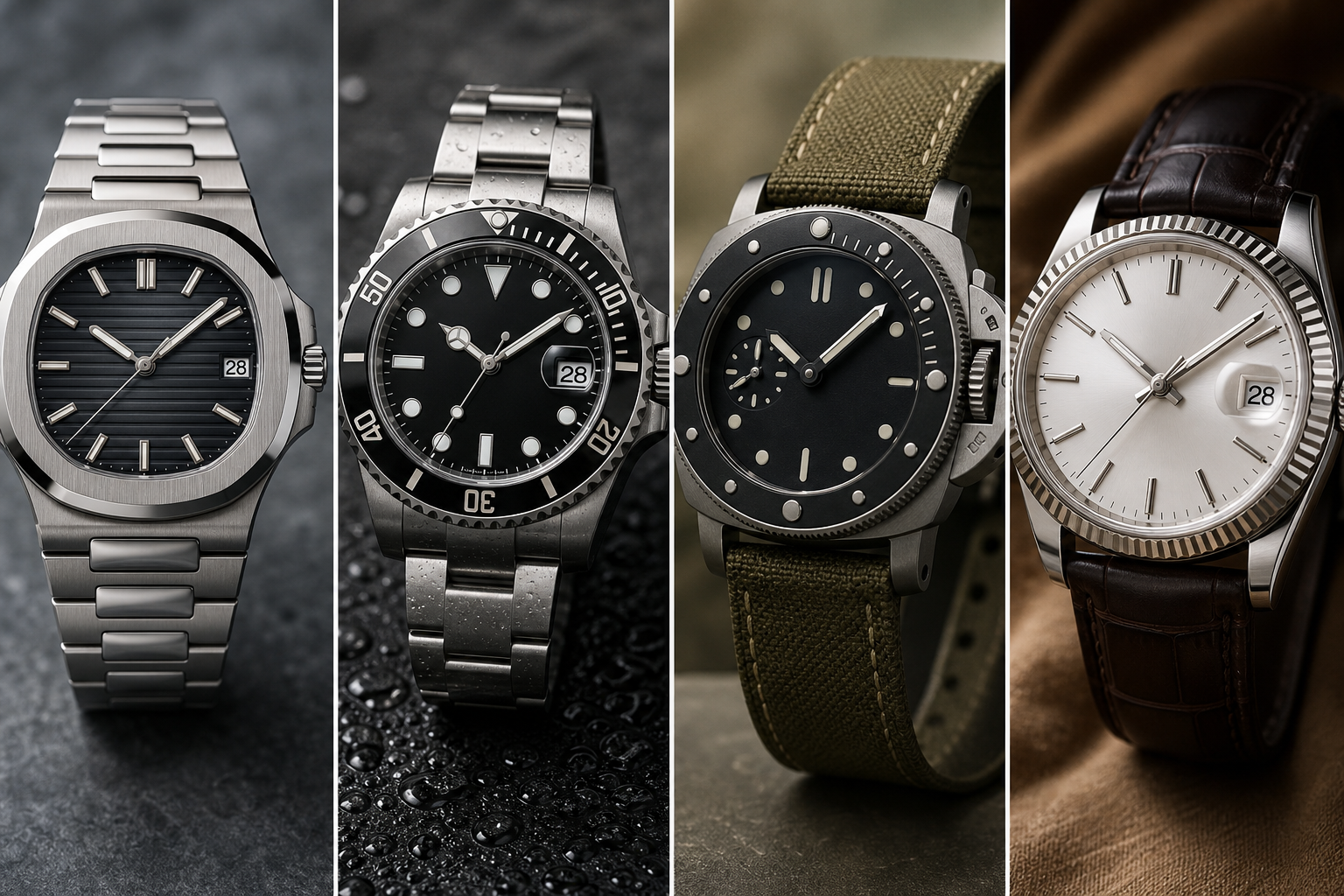
Over time, the owner starts making small choices. For errands, the Submariner-style watch goes on. For travel, the GMT-style watch feels more useful and less fragile. For weekends, the Seamaster-style watch feels more casual. For office wear, a restrained Datejust-style watch feels dressy without demanding as much attention.
The AP stays in the box more often, not because it failed, but because it requires a certain mood and setting. The buyer still likes the design, but the simpler watch becomes the better daily wear replica decision. It is easier to size, easier to scratch without emotional damage, easier to service conceptually, and easier to wear around people who may notice watches.
This is the honest lesson from many AP reversals: the watch that creates the strongest first impression is not always the watch that earns the most wrist time. For a collector with a rotation, an AP-style super clone can still make sense as a high-presence piece. For someone seeking one comfortable daily replica, the simpler watch often wins because it asks less and delivers more consistent confidence.
Self-Check: Should You Choose AP or Move Toward a Simpler Replica Watch?
The right answer is not “AP is better” or “simple is safer.” The better question is whether the watch matches the way you actually wear watches. An AP-style replica asks for more attention tolerance, more scratch tolerance, more QC patience, and more comfort with visible compromise. A simple replica watch asks less from the owner, which is exactly why many buyers return to Submariner, GMT, Seamaster, or Datejust-style models after trying something louder.
If you want to choose AP replica ownership wisely, treat it as a lifestyle decision first and a factory decision second. A strong factory version can improve the case, dial, bracelet, and movement presentation, but it cannot make the Royal Oak shape quiet, soft, or invisible. The octagonal bezel, integrated bracelet, and sharp finishing are the whole point of the design. If those traits fit your personality and settings, AP can be satisfying. If they make you self-conscious, the watch will spend more time in the box than on the wrist.
Choose AP If You Enjoy Design Drama and Accept Visible Compromise
An AP super clone makes the most sense for a buyer who wants architectural design rather than a background daily watch. You should like the flat case planes, hard bezel geometry, exposed screw layout, textured dial, and integrated bracelet enough to accept the extra ownership effort that comes with them. This is not the best choice for someone who wants the watch to disappear under a sleeve and never start a conversation.
The non-obvious test is not whether you admire the watch in photos. It is whether you can wear it through a normal week without managing your behavior around it. If you would avoid certain restaurants, office meetings, travel situations, or casual activities because the watch feels too noticeable, that is useful information. The watch may still be impressive, but it may not be your daily-wear watch.
AP is also a better fit if you can live with visible wear. Brushed bezels, polished chamfers, and sharp case edges will show use differently from a round tool-watch case. If a small mark on the bezel would bother you every time you check the time, the AP ownership experience may become more stressful than enjoyable. Buyers who accept that a replica watch is still a compromise, not a museum object, usually handle AP ownership better.
Choose a Simpler Watch If You Want Comfort and Lower Attention
A simpler replica watch is usually the smarter long-term choice if you care more about daily comfort than visual impact. Submariner-style, GMT-style, Seamaster-style, and restrained Datejust-style watches are easier to wear because their shapes are more familiar, their bracelets are generally less demanding, and their flaws are often less exposed in normal use.
This does not mean they are automatically more accurate or higher quality. It means they are more forgiving. A round sports case hides small fit and finishing issues better than an integrated-bracelet AP-style case. A ceramic-style sports bezel can be less emotionally stressful than a brushed octagonal bezel. A conventional bracelet can be easier to size and live with than an integrated bracelet where the first link and case shape decide how the whole watch sits.
If your question is “should I choose a Submariner instead,” the honest answer depends on what problem you are trying to avoid. If the problem is attention, a quieter sports watch is usually easier. If the problem is scratch anxiety, a tool-watch design is often more forgiving. If the problem is movement-service confidence, a simpler time-and-date or familiar GMT-style route may feel less risky than a watch whose appearance creates higher expectations at every touchpoint.
At Clean VS Factory, we usually encourage buyers to separate visual accuracy from ownership confidence. A watch can look more exciting in photos and still be the wrong choice if it makes the owner worry about comments, scratches, fit, QC details, or future service every time it is worn.
Version-Specific Judgment Before the Final Choice
Before choosing AP or moving back to a simpler watch, buyers should make the comparison version-specific. A Royal Oak-style replica, Offshore-style replica, Submariner-style replica, GMT-style replica, Seamaster-style replica, and Datejust-style replica do not share the same difficulty profile. Case shape, bracelet structure, movement layout, dial printing, bezel finishing, and datewheel position all change the ownership risk. A factory may produce a strong version of one model and a weaker version of another, so the safer judgment is model by model.
A practical final review should include three layers. First, check the visible watch: dial, hands, markers, date, bezel, case profile, bracelet, clasp, and finishing. Second, check the movement claim: whether it describes architecture, decoration, layout, or simply a seller-used market name. Third, check the ownership fit: whether the watch will be comfortable, socially manageable, and acceptable to wear with normal scratches. If any one of those layers creates doubt, the simpler watch may be the more traceable and more wearable decision.
Disclosure, Resale, and Expectation Setting
Replica watches can raise trademark, customs, import, resale, and disclosure issues depending on jurisdiction and transaction context. This article is not legal advice, and buyers should not assume that an imitation watch is risk-free to import, sell, gift, or represent as genuine. The safest ethical position is clear disclosure: a replica should not be described, sold, or presented as an authentic Audemars Piguet, Rolex, Omega, Cartier, or any other authorized brand product.
This disclosure point also affects ownership confidence. A buyer who feels uncomfortable explaining the watch may enjoy it less, especially with a highly recognizable AP-style design. Simpler watches do not remove the legal or ethical distinction, but they may reduce social pressure because they attract fewer close questions. If the thought of someone asking directly about the watch makes you uneasy, that is another sign that a quieter model may fit your lifestyle better.
The Best Watch Is the One You Actually Keep Wearing
The most impressive replica watch is not always the most useful one in a real rotation. Many buyers do not move away from AP because the watch is bad. They move away because the simpler watch becomes the one they naturally reach for on Monday morning, during travel, at dinner, or on a casual weekend. That pattern matters more than the first unboxing reaction.
A good AP-style replica can be a strong second or third watch for someone who already has easier daily options. It gives visual drama when the setting suits it. As a first or only replica watch, it is less forgiving. The buyer has to be ready for stronger wrist presence, more visible wear, more careful QC review, and a higher standard for movement feel and bracelet execution.
For many owners, the lower-risk replica is not the one with the most complex design. It is the one that requires the least explanation, the least adjustment, and the least mental energy. That is why a simple replica watch often wins after the novelty fades. It becomes part of the day instead of becoming something the owner has to keep managing.
Final Decision Check
Use these five questions before choosing between an AP-style replica and a simpler daily watch:
- Attention tolerance: Are you comfortable wearing a watch that people may notice quickly, or do you prefer low attention in offices, travel, and casual settings?
- Scratch tolerance: Will visible bezel and bracelet marks bother you, or can you accept normal wear without becoming overly careful?
- Wrist comfort: Do you like firm, angular, integrated-bracelet watches, or do you usually prefer rounder cases and more flexible bracelet fit?
- QC patience: Are you willing to inspect alignment, dial texture, bezel screws, case finishing, and bracelet integration carefully, or do you want a watch with fewer obvious inspection points?
- Movement-service confidence: Are you comfortable with the movement expectations and possible service uncertainty of an AP-style super clone, or would a simpler movement route give you more peace of mind?
If you answer strongly in favor of attention, design drama, and visible finishing complexity, AP can make sense. If your answers lean toward comfort, quiet wear, easy confidence, and fewer ownership worries, a Submariner, GMT, Seamaster, or Datejust-style replica is usually the more rational long-term choice. The better watch is not the one that looks strongest in a close-up photo. It is the one you can wear often without negotiating with it.
Disclosure: This article is for general educational and comparison purposes only. Replica watches are not genuine products from the original luxury brands, and brand names are used only to identify reference designs or comparison topics. Factory names, movement descriptions, prices, availability, QC details, seller policies, and version information can change, so readers should verify important details with the seller before making a purchase decision. Replica watches should not be represented, resold, or used as genuine watches.