
Case Study: The Evolution of IWC Mark Series Replica Watches
This case study examines how IWC Mark replica watches moved from crude homages to genuinely high-grade reproductions, tracing the replica IWC Mark history through specific factories, movements, and version inflection points. The goal is not to catalog every release, but to explain why certain Mark series replicas crossed the line from “wearable imitation” to objects that can withstand prolonged ownership, comparison, and daily use. For readers already familiar with the broader IWC Replica Watches Guide: Best Factories, Movements & Models Explained, this article narrows the lens to one lineage where progress is unusually visible and measurable: the Mark series.
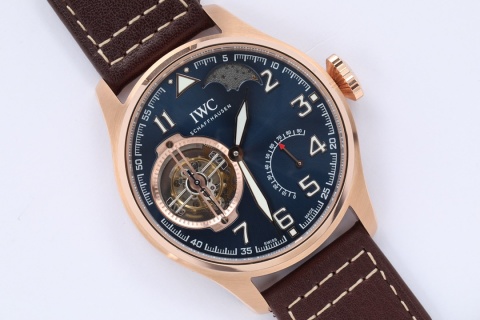
The IWC Mark series replica evolution is instructive because it exposes how small design tolerances, movement choices, and manufacturing discipline compound over time. The best IWC Mark replica watches did not appear suddenly. They emerged through failure, partial fixes, and a few factories willing to correct details that most buyers could not initially articulate but would eventually feel.
Introduction: Why the IWC Mark Series Matters to Replica Enthusiasts
The IWC Mark line has always been about restraint. Its military roots favored legibility over decoration, proportion over flourish, and functional clarity over novelty. That simplicity is precisely why the Mark series became a proving ground for replica factories. When a dial has fewer elements, every error becomes louder. When a case is thin and undecorated, proportion mistakes cannot hide behind polish or complexity.
For replica enthusiasts, the Mark series offers a clean diagnostic surface. Crown size, lug taper, dial font weight, and lume geometry are not secondary details here; they are the watch. Factories that could not control these fundamentals were exposed quickly. Factories that learned to respect them gained credibility far beyond this single model line, especially within the broader IWC Pilot category.
This article moves chronologically, beginning with the first-generation cheap IWC Mark replicas, then identifying the technical and philosophical shifts that allowed later versions—particularly the MKS Mark replica and the V7 Mark replica—to reach a level that many long-term owners consider stable, wearable, and internally consistent.
The Early Days: First-Generation Cheap IWC Mark Homages
Origins of Low-Cost Replicas
In the early 2010s, most IWC Mark replicas were not replicas in any meaningful sense. They were generic pilot-style watches wearing an IWC logo. Production relied on whatever components were cheapest and easiest to source: off-the-shelf Asian quartz or low-grade automatic movements, pre-stamped cases shared across multiple brands, and dial printing that treated font accuracy as optional.
These early Mark homages often claimed to resemble models like the IWC Mark XVII, but the resemblance rarely survived more than a glance. Case diameters drifted, lug widths were guessed rather than measured, and crown profiles ignored the original entirely. For a clearer picture of where modern replica quality has progressed — particularly in complex models such as pilot chronographs with ceramic cases — you can refer to a detailed breakdown that examines ZF factory breakthroughs and how they compare with Spitfire references in this guide to IWC Pilot’s Chronograph Top Gun replicas. The intent was not accuracy but recognition at a distance.
What Defined “Low End” Back Then
Poor Case Finishing & Material Choices
Cases were typically made from soft, generic steel with minimal quality control. Brushing patterns were inconsistent, sometimes switching direction mid-lug. Polished areas bled into brushed surfaces because masking was rushed or absent. Edges that should have been crisp were rounded, not by design but by over-polishing. Over time, these cases showed wear quickly, revealing how little material integrity they had to begin with.
Incorrect Dial Details & Hands
Dial execution was the most obvious failure point. Fonts were wrong in weight and spacing, often borrowed from unrelated pilot watches. Numerals appeared too thick, too tall, or unevenly printed. The iconic triangle at 12 o’clock frequently missed its proportions, with lume dots oversized or misaligned. Hands were another giveaway: too wide, too short, or finished with blunt ends that flattened the Mark aesthetic into something generic.
These were not subtle errors. They altered how the watch read at a glance, undermining the very legibility that defines the Mark heritage.
Movement Limitations
Movement choice sealed the low-end classification. Many early replicas used basic Chinese automatics without hacking seconds, or quartz movements hidden behind automatic claims. Timekeeping was erratic, hand-setting imprecise, and servicing often impractical. The absence of hacking seconds alone broke the experience, especially for a line historically associated with military synchronization. To understand how modern advancements, like the ZF factory’s ceramic case and technical improvements, elevate the Top Gun chronograph, check out this in-depth guide.
What made these watches “cheap” was not just price, but the short ownership cycle they encouraged. Owners outgrew them quickly, not because of forum comparisons, but because daily interaction revealed their shortcomings. They looked like Mark watches, but they did not behave like them.
The rest of this case study exists because some factories eventually understood that distinction and decided it mattered.
Turning Point: The Rise of Third-Generation Mark Replicas
The Mark series did not improve gradually. It pivoted. That pivot happened when at least one factory stopped treating the Mark as a logo exercise and started treating it as a tolerance problem. Third-generation Mark replicas were not perfect, but they were the first to feel internally consistent. You could wear them daily, adjust them without friction, and stop thinking about their flaws for long stretches of time. That shift matters more than any single specification.
First Quality Leap: MKS Factory
MKS, originally operating under the MK name, marked the first real break from the low-end lineage. Their early focus on the IWC Mark XVII and later the Mark XVIII was not accidental. These models exposed errors quickly, and MKS seemed willing to accept that risk. Instead of chasing novelty, they narrowed their scope and iterated.
The earliest MKS Mark replicas were not flawless, but they crossed a psychological threshold. Owners stopped describing them as “good for the price” and started describing them as “correct enough.” That distinction signals a different category of product. The MKS Mark XVII and MKS Mark XVIII became reference points, not because they eliminated all inaccuracies, but because they aligned the watch’s physical behavior with its visual intent.
This is why MKS is often described as the origin of the earliest quality Mark replicas. They were not the most expensive, nor the most hyped, but they were the first to feel like they belonged on the wrist for reasons beyond appearance.
Technical Improvements of MKS Versions
Movement Upgrade & Stability
The most consequential decision MKS made was abandoning generic Chinese automatics in favor of the Miyota 9015. This change alone reshaped the entire Mark replica category. The 9015 brought a higher beat rate, reliable hacking seconds, and a thinner profile that allowed the case to sit correctly on the wrist.
Thinness mattered more than many realized at the time. The IWC Mark series is unforgiving to excess height. A case that is even half a millimeter too thick alters the side profile and changes how the lugs break away from the wrist. With the 9015, MKS could finally control that dimension. Timekeeping also stabilized. Owners reported fewer unexplained gains or losses, and regulation held longer between services. The watch stopped feeling temperamental.
The Miyota 9015 did not make the MKS Mark replica luxurious, but it made it predictable. In daily use, predictability is often the dividing line between novelty and ownership.
Case Proportions & Lug Accuracy
Movement choice enabled, but did not guarantee, better case execution. MKS still had to correct proportions that earlier replicas consistently missed. Case thickness was reduced to a range that visually matched the genuine Mark XVII and Mark XVIII, and alongside these structural refinements, understanding how to maintain water resistance and movement longevity becomes equally important — for practical care, including winding, strap selection, and daily use guidance, check out this IWC replica watch care and maintenance guide. Lug taper was refined so that the watch no longer appeared slab‑sided when viewed from above. Crown diameter and height were brought closer to IWC’s restrained sizing, avoiding the oversized crowns that plagued earlier homages.
These changes did not shout for attention. They worked quietly. When the watch was worn on a strap, it stopped looking “off” in profile. When handled, the crown no longer felt like an afterthought. This is where MKS began to show an understanding that replica watch case accuracy is not about matching numbers on a spec sheet, but about matching how those numbers interact in three dimensions.
Night Legibility & Lume Issues
Early Mark replicas failed badly at night. Lume was uneven, weak, or tinted incorrectly, often applied without regard for marker geometry. MKS did not completely solve lume, but they improved it enough to restore function. By moving to more consistent C3 and C1 luminous compounds and applying them with better control, MKS achieved usable night legibility.
The improvement was practical rather than theatrical. Lume did not blaze like a dive watch, but it lasted through the night and aligned properly within numerals and indices. For a pilot watch lineage built on legibility, this mattered. Owners stopped excusing poor lume as “normal for replicas” and started expecting it to work.
Taken together, these changes explain why MKS occupies a pivotal place in the IWC Mark series replica evolution. They did not create a final product. They created a foundation that later factories would refine, challenge, and, in some cases, surpass.
Modern High-End Era: V7 and Collab Approaches
By the time V7 entered the Mark series, the basic problems had already been solved. The watch could be thin. It could hack. It could keep time without drama. What remained were the details that only surface after prolonged ownership or direct comparison. V7’s contribution was not reinvention, but compression: taking what MKS established and tightening tolerances where experience had shown they still drifted.
Arrival of V7 Factory
V7 positioned itself as an evolution rather than a replacement. The factory focused almost exclusively on the Mark XVIII, offering black and blue dial variants first, then expanding into more niche executions such as titanium versions with solid end links. This narrower model strategy mattered. Instead of spreading resources across multiple lines, V7 treated the Mark as a long-term platform.
In practice, V7 Mark replica watches feel calmer. That is the most accurate description after extended wear. There are fewer small irritations: crowns seat more cleanly, dial printing holds up under magnification, and case finishing remains consistent from one example to the next. This points to stronger OEM-style quality control rather than any single dramatic upgrade. The watch does not announce itself as “better,” but it resists scrutiny longer.
What Technically Changed with V7
Movement Refinement & Optional ETA 2892
V7 did not abandon the Miyota 9015 outright. Instead, it refined how the movement was integrated, improving alignment and reducing rotor noise through better case tolerances. More importantly, V7 introduced optional ETA 2892 configurations for certain batches.
This option matters less for raw performance and more for ownership logistics. The ETA 2892 offers familiar servicing paths for watchmakers outside Asia, smoother winding feel, and long-term parts accessibility. Timekeeping stability is marginally better over extended intervals, but the real advantage appears years later, when maintenance decisions arise. For owners planning long-term use rather than rotation, the 2892 swap shifts the watch from a disposable object to something closer to a serviceable instrument.
Lume, Dial Printing & Detail Fidelity
This is where V7 quietly separated itself. Lume application gained depth and uniformity, with cleaner edges inside numerals and more consistent color temperature between markers and hands. Under magnification, the difference becomes clearer. Fonts tightened. Serif shapes on numerals corrected. Spacing between the IWC logo and surrounding text normalized.
Details like “SWISS MADE” placement at 6 o’clock stopped drifting. On earlier generations, this text often sat a fraction too high or too wide, invisible in isolation but obvious in side-by-side comparison. V7 addressed these issues not through bold redesigns, but through accumulated correction. The result is a dial that tolerates scrutiny rather than collapsing under it.
Case Materials & Finishing
Case finishing is where experienced owners tend to focus last, and judge hardest. V7 improved brushing consistency, especially along the lugs and mid-case, where earlier versions sometimes lost directionality. Polished bevels became narrower and cleaner, avoiding the soft, over-rounded edges that betray replicas during light reflection.
Crown texture also improved. Knurling gained definition without becoming sharp, and the crown sat closer to the case flank, reducing the visual gap that plagued earlier Mark replicas. These changes matter most in side-by-side comparisons, but they also affect daily handling. The watch feels more deliberate, less improvised.
Timeline of Key Versions & Breakthrough Milestones
Version Chart: Mark Replica Evolution
| Era | Factory | Movement | Defining Improvement | Typical Price Range |
|---|---|---|---|---|
| Early 2010s | Generic / No-name | Quartz / Low-grade auto | Logo-based homages, basic shapes only | Low |
| Mid 2010s | MK / Early MKS | Asian auto | Improved dial layout, partial case correction | Low–Mid |
| Late 2010s | MKS | Miyota 9015 | Thin profile, hacking seconds, stable daily wear | Mid |
| Early 2020s | V7 | Refined 9015 | Dial accuracy, case finishing discipline | Mid–High |
| Recent | V7 (Optional) | ETA 2892 | Serviceability, long-term stability | High |
Engineering Breakthroughs Across Generations
From Generic Movement to Hacking Thin-Profile Engines
The transition from generic movements to the Miyota 9015 was the first real functional breakthrough. Hacking seconds restored the Mark’s military logic, and thin profiles restored its silhouette, creating a baseline that serious buyers could trust. To understand how this shift fits into the broader landscape of replica quality — including how movement choices interact with case execution, dial proportions, and overall performance — refer to this comprehensive IWC replica watches guide, which breaks down what matters most across different models. The later availability of ETA 2892 did not replace this foundation but extended it, allowing the same case architecture to support different ownership priorities.
Night-Lume Evolution
Lume evolved from decorative failure to functional adequacy. Early replicas barely glowed. MKS made lume usable. V7 made it consistent. The shift from sloppy, uneven application to controlled C1 and C3 usage improved both brightness and duration, but more importantly, alignment. The lume began to sit where it belonged.
Case & Proportion Refinement
Millimeter-level corrections accumulated slowly. Case thickness reductions mattered first. Lug angle corrections followed. Crown sizing and placement finished the job. Each step alone seemed minor. Together, they changed how the watch wore, how it balanced, and how long it could remain on the wrist without reminding the wearer of its compromises.
The Mark series replica story is not about chasing perfection. It is about identifying which imperfections matter over time, and which factories were willing to address them without distraction.
Factory Showdown: MKS vs V7 vs Legacy Versions
At this stage, the Mark replica landscape is not crowded. It is stratified. Most watches fall clearly into one of three categories: legacy low-end versions, MKS-era stabilizers, and V7-era refinements. Understanding the differences is less about memorizing specifications and more about recognizing how each factory’s decisions reveal their priorities.
MKS vs V7: Side-by-Side Feature Comparison
The comparison below reflects long-term ownership patterns rather than isolated unboxing impressions. None of these versions are “bad,” but they reward different kinds of users.
| Aspect | MKS Mark XVIII | V7 Mark XVIII |
|---|---|---|
| Movement | Miyota 9015 | Miyota 9015 or optional ETA 2892 |
| Case Accuracy | Correct thickness, improved lugs, slightly soft bevels | Tighter tolerances, cleaner lug breaks, refined crown fit |
| Dial Details | Good font accuracy, minor spacing inconsistencies | Corrected serif fonts, improved logo and text spacing |
| Lume Strength | Usable C3/C1, occasional uneven fill | More uniform application, better edge control |
| Wearing Experience | Stable, predictable, slightly utilitarian | More composed, closer to OEM feel |
| Typical Price | Mid-range | Mid–high (ETA version higher) |
MKS remains the baseline for what a competent Mark replica should be. V7 refines that baseline. The difference is not dramatic in photos, but it accumulates during daily use. V7 watches tend to disappear on the wrist. MKS watches remain noticeable, though rarely irritating.
Legacy Versions: When Low End Still Has Value
Not every owner needs or wants the newest execution. Older MK and early MKS variants still serve a purpose, particularly for newcomers or budget-conscious buyers. These watches often lack refined lume, have softer cases, and show minor dial inconsistencies, but they function.
For someone learning how the Mark series wears, how a pilot watch fits into rotation, or simply exploring interest without long-term commitment, a budget Mark replica can still make sense. The key is expectation. These are entry-level IWC replicas, not hidden gems. They teach proportion and design language, not finishing nuance. If you’re specifically interested in exploring the Top Gun chronograph and its ceramic case, this detailed guide on IWC Pilot’s Chronograph Top Gun replicas offers a deep dive into the ZF factory’s breakthroughs and comparisons to Spitfire models.
Deep Dive: Case Studies With Photos
High-magnification inspection reveals changes that casual viewing misses. The following case studies describe what typically becomes visible under macro photography or extended wear.
MKS Mark XVIII V5
Compared to earlier MK versions, the V5 introduced consistent case thickness and reliable hacking via the Miyota 9015. Dial fonts were mostly corrected, though under magnification the “MARK XVIII” text often shows slightly uneven stroke weight. Lume fills are functional but sometimes shallow at numeral edges. Crown diameter is correct, but knurling appears softer than genuine.
V7 Mark XVIII with Miyota 9015
Relative to MKS, this version tightens execution rather than redefining it. Dial printing sharpens noticeably under magnification, especially the “IWC” logo and minute track alignment. Lume fills sit more evenly within numerals, reducing dark gaps. Crown proportions feel better integrated with the case flank, and brushing direction across the lugs is more consistent.
V7 Mark XVIII with ETA 2892
This version changes little visually but alters the ownership experience. The movement winds more smoothly, rotor noise diminishes, and long-term regulation tends to hold. Under macro inspection, finishing differences remain subtle, but the watch feels less mechanical in daily interaction. For owners planning to service rather than replace, this distinction matters.
Buying Guide: What to Look for Today
Key Features for Quality Authentication
Several details consistently separate higher-quality Mark replicas from weaker executions:
- Lume geometry: Lume dots should align proportionally with numeral width, not overflow or recede unevenly.
- Crown engraving depth: Shallow or overly sharp engravings indicate rushed finishing.
- Case brushing patterns: Brushing should maintain direction through lugs without breaking into polished bleed.
These elements rarely appear in listings, but they define how the watch ages on the wrist.
Recommended Versions by Budget
Premium Player Picks (V7 ETA 2892)
Best suited for long-term ownership, international servicing, and collectors who value stability over novelty. This is the most “settled” Mark replica configuration available.
Mid-Tier Daily Wear (V7 Miyota 9015 / MKS 9015)
The most balanced choice. Reliable, thin, hackable, and accurate enough to wear without thought. Differences between V7 and MKS at this tier are real but not decisive for most users.
Entry Level (Older MK / First-Gen Homages)
Acceptable for learning, gifting, or short-term use. These watches still communicate the Mark design language, but their compromises surface quickly with experience.
The Mark series does not reward chasing the newest release; it rewards choosing the version whose compromises you are willing to live with.
Expert Tips: Care, Maintenance & Avoiding Pitfalls
High-quality Mark replicas reward restraint. Most failures do not come from factory defects but from owners treating these watches as if they were either disposable toys or indestructible tools. They are neither.
Servicing 9015 vs 2892
The Miyota 9015 is tolerant and forgiving. It can run acceptably for long periods with minimal intervention, but that tolerance often leads owners to neglect it entirely. When serviced, it benefits from simple cleaning and regulation; parts availability is strong, and most competent watchmakers can handle it without hesitation. The ETA 2892, by contrast, demands more discipline but gives more back. Its smoother winding and long-term stability only remain advantages if it is serviced on a realistic interval. Ignore it, and its precision advantage erodes. Maintain it, and it becomes the most ownership-friendly Mark replica movement available.
Common Pitfalls
Lume aging is frequently misunderstood. Poor lume does not simply fade; it discolors unevenly. If numerals begin to yellow while hands remain green, this is not “patina,” but mismatched compound quality. Crown wobble is another warning sign. A properly seated crown should feel deliberate, not loose or gritty. Wobble usually indicates poor tube tolerances or wear accelerated by excessive manual winding. Neither issue fixes itself over time.
Water Resistance Expectations
Mark replicas should be treated as splash-resistant instruments, not aquatic ones. Even when seals are present, tolerances vary. Hand washing and rain are reasonable. Swimming is not. Owners who expect more often discover the limits the hard way, and water damage remains the fastest way to end an otherwise long ownership cycle.
Conclusion: The Mark Series Replica Legacy
The evolution of IWC Mark replica watches—from crude homages to genuinely accurate, stable instruments—shows that a great replica Mark is defined not by novelty or claims, but by proportion, restraint, and how little it asks of its owner once on the wrist.
Related IWC Articles: If you found this helpful, you might also enjoy How Good Are IWC TOP GUN Pilot’s Chronograph Replicas?, and The Future of Super Clone IWC Watches: Next-Level Accuracy, Materials, and Complications, which discusses next-level accuracy, materials, and complications in future IWC clones. You may also like IWC Portuguese 7 Days IW5007 Replica Deep Dive (ZF vs V9 + Real Power Reserve Reality), and IWC Pilot’s Chronograph Top Gun Replica Guide: Ceramic Case, ZF Factory Breakthroughs & Spitfire Comparison.