
Why the IW5007 “7 Days” Replica Is a Different Kind of Purchase
What buyers think they’re buying vs what they’re actually buying
Most people come to the IW5007 because of one number. Seven days. It sounds definitive, almost contractual, as if the watch either delivers a full week or it does not.
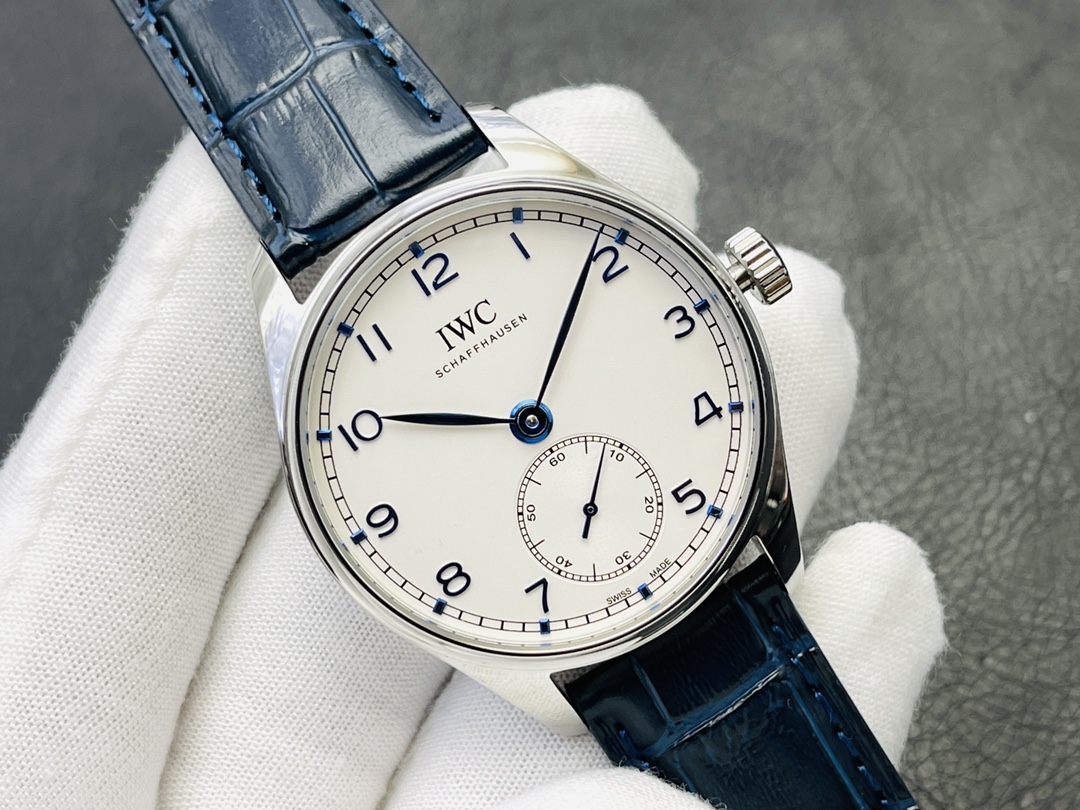
That framing is wrong.
“Seven days” is not a promise of duration. It is a description of system behavior. What matters in daily ownership is not whether a replica can limp to day six on a desk. What matters is whether it behaves like a long-reserve watch during normal wear, especially across repeated cycles.
In real use, the buying goal shifts quickly. You stop caring about the headline runtime and start caring about consistency. Does the watch feel strong on day two. Does it still hold amplitude on day three. Does the rate remain stable after the first night off the wrist. Those first seventy-two hours tell you almost everything about whether the movement architecture is doing its job.
A replica that technically runs five or six days but loses composure after forty-eight hours is not a successful long-reserve build. A replica that stays steady through day three, even if it never reaches a perfect seven, usually is.
That is the core misunderstanding. You are not buying a number. You are buying repeatable behavior.
The factory landscape
Top-tier IW5007 replicas come from competing letter factories like ZF and V9, with smaller players appearing in batches and disappearing just as quickly. But the factory label matters less here than it does on simpler models. The Portuguese 7 Days is primarily a long-reserve engineering problem. Dial finish, case polish, and strap quality still count, but they are secondary. The real separation happens inside the barrel system, the torque delivery, and how well the rest of the movement copes with that stored energy.
Once you understand that, brand loyalty fades. You start judging outcomes instead.
Genuine Baseline: What a Real IW5007 Feels Like (Wear + Behavior, Not Spec Dump)
The wear profile anchors
A genuine IW5007 feels balanced in a way that is hard to describe until you’ve worn one for a few days. The case does not announce its thickness even though the watch is not thin. The height distributes across three layers rather than stacking in one place: mid-case, crystal dome, and caseback each carry part of the volume.
On the wrist, that translates into stability. The lugs arc gently downward and settle without creating pressure points. The crown sits where your thumb expects it to be, not digging into the hand. The dial feels open, not crowded, because the rehaut depth and crystal curvature create visual air around the numerals.
These things sound cosmetic, but they shape perception every time you glance at the watch. When replicas miss here, they usually miss quietly. The watch just feels bulkier than it should, or the dial feels flatter than expected, even if you cannot immediately explain why.
The genuine power-reserve experience
On a real IW5007, the long reserve announces itself through torque, not duration.
After a full wind, the first few days feel almost identical. The seconds hand stays energetic. The balance amplitude remains strong. The watch does not feel like it is slowly giving up. The power-reserve hand moves in a predictable way when you wind manually, and it responds logically to a day of wear.
At forty-eight hours off the wrist, a genuine long-reserve architecture still feels fresh. That is the benchmark.
The decline comes later, and it comes smoothly. There is no sudden collapse in rate on day two. No erratic behavior just because the barrel is no longer at peak tension. This controlled descent is what separates true long-reserve design from movements that merely store more energy than usual.
Factory Version Map: What “ZF” and “V9” Typically Mean for IW5007
Why version naming is unreliable in the market
Version names travel faster than facts.
The same watch can be sold under multiple labels depending on batch, dealer, or moment in time. Instead of chasing factory stories, it is more reliable to identify an IW5007 replica by how it behaves and how it presents itself.
Start with the power-reserve hand. Look at its usable range and how it reacts to winding. Then study the date window: font weight, vertical centering, and how cleanly the window is cut. Flip the watch over if it has a display back and note the engraving style and overall finishing language. Finally, listen to the rotor during normal movement. A smooth, muted winding feel usually points to tighter tolerances than a loud, chattery spin.
Those outcomes tell you more than any sticker.
What ZF is usually optimizing on IW5007
ZF tends to chase the complete package.
On the IW5007, that usually means stronger emphasis on dial finishing, case profile accuracy, and an attempt at a more faithful long-reserve movement layout rather than a purely cosmetic solution. Their better batches show cleaner numeral printing, more disciplined subdial placement, and a case silhouette that feels closer to genuine when viewed from the side.
Inside, ZF typically aims for a “true-ish” long-reserve approach. It is not a perfect clone of IWC’s 52010 architecture, but it behaves like a long-reserve system should, provided the individual piece is well assembled. When ZF gets it right, day-two stability is usually respectable, and the power-reserve indicator responds in a reasonably linear way.
What V9 is usually optimizing on IW5007
V9 approaches the same watch from a different angle.
Their versions often prioritize availability and price, sometimes at the expense of certain finishing cues, and as the winding and ergonomic compromise discussion in the IWC Aquatimer replica guide to movement choice and finish trade-offs highlights, you may see acceptable overall appearance paired with weaker dial discipline or less refined case transitions; on the movement side, V9 builds can lean more heavily on modified base architectures dressed in Portuguese cosmetics, a choice that shows up in winding feedback and reserve behavior under daily wear.
That does not make them unusable. It simply shifts the trade-offs. You are comparing priorities, not morality. Some buyers accept softer finishing if the watch wears comfortably and keeps decent time. Others will not tolerate a sloppy date window even if the price is attractive.
The important point is to understand which compromises you are making.
Case + Thickness + Crystal: Where IW5007 Replicas Either Win or Instantly Lose
Thickness: number vs silhouette
Total thickness is easy to measure. Silhouette is harder, and far more important.
Two IW5007 replicas can share the same overall height and feel completely different on the wrist. What matters is where that height lives. A thick mid-case creates a slab-like profile. A taller crystal with a slimmer mid-case preserves elegance. A protruding caseback changes how the watch sits against the wrist.
When evaluating a piece, look at it from the side. Separate the layers mentally. How much of the height comes from the mid-case. How much from the dome. How much from the back.
Then do the shirt cuff test. Slide a cuff over the watch and notice where resistance appears. If the cuff catches on the mid-case, the watch will always feel bulky. If it glides over the crystal and only barely meets resistance, the proportions are working in your favor.
Bezel and rehaut transitions
The bezel-to-rehaut transition is one of the quiet tells on this model.
On a good IW5007 replica, the edge where the bezel meets the dial opening feels sharp but controlled. The polishing remains consistent around the circumference. The dial sits with a sense of depth rather than looking pasted onto a flat surface.
Small changes in rehaut depth dramatically alter how “open” the Portuguese dial feels. Too shallow and the numerals crowd the edges. Too deep and the watch starts to resemble a tunnel. Genuine examples strike a delicate balance here. Better replicas approximate it. Weaker ones miss it by just enough to change the character of the watch.
Dial, Printing, and the Portuguese “Open Space” Problem
Numeral typography and print density
The Portuguese dial is unforgiving.
There is a lot of empty space, and that space amplifies every mistake. If one numeral is thicker than the others, you will see it. If spacing varies from digit to digit, your eye catches it immediately. Crisp corners matter because rounded edges cheapen the entire presentation.
Check the Arabic numerals one by one. Look for uniform stroke width. Pay attention to how the curves terminate. On better examples, the printing feels deliberate. On weaker ones, it feels soft, even if you cannot pinpoint exactly why.
This is where many replicas quietly fail.
Subdial geometry: the twin-eye balance
The two subdials define the personality of the IW5007.
Their distance from the center pinion, their symmetry around the vertical axis, and the texture of their snailing all contribute to visual balance. If one subdial sits a fraction closer to the center than the other, the watch feels cross-eyed. If the snailing is too aggressive, the subdials dominate instead of supporting the main dial.
A well-executed replica keeps these elements restrained. The subdials should feel present but not loud.
Hands: length, finish, and stack height
Hands reveal assembly quality faster than almost anything else.
The minute hand must land cleanly on the track. If it falls short or overshoots, the illusion breaks. The power-reserve hand should sweep smoothly without visible wobble. Any lateral shake suggests loose tolerances in the hand stack.
Stack height matters too. When hands sit too high, the dial loses depth and starts to look layered in a cheap way. On stronger IW5007 replicas, the hands sit low and close, preserving the flat, calm look that defines the Portuguese line.
Get these right, and the watch feels cohesive. Get them wrong, and no amount of polishing will save it.
Date Window: The Small Rectangle That Breaks the Illusion
Window geometry: bevel, cut cleanliness, depth
On the IW5007, the date window does not compete for attention. That is precisely why it matters.
A genuine example shows a clean, sharply defined aperture with a subtle bevel that catches light without calling attention to itself, and as the dial and case finishing fidelity criteria in the MKS IWC Portofino Moonphase replica review versus YLF dress-watch comparison detailing aperture geometry and edge finish make clear, the internal walls look finished, not torn, and the depth feels intentional, as if the date disk sits in a measured pocket rather than behind a punched hole.
Most replicas get the size roughly right. Fewer get the cut right.
Look closely at the edges. A soft perimeter, fuzzy bevel, or uneven internal wall finish will cheapen the entire dial, even if everything else looks acceptable. This is one of those details your eye processes subconsciously. You may not immediately identify it, but you will feel that something is off.
Depth matters too. If the window feels shallow, the date floats. If it is too deep, it looks recessed and disconnected. The genuine IW5007 lives in the middle. Better replicas approach that balance. Weaker ones miss it by just enough to break the illusion.
Date font: weight, centering, and color
The font tells the second half of the story.
Start with thickness. The numerals should feel confident but not heavy. Too bold and the date dominates the dial. Too thin and it looks washed out. Then check vertical centering. The number should sit calmly in the window, not creeping toward the top or sagging toward the bottom.
Color is the final check. Genuine IWC date wheels use a true black that reads cleanly against the white background. Many replicas drift into gray, especially under natural light. That subtle fade robs the date of contrast and makes the whole dial feel tired.
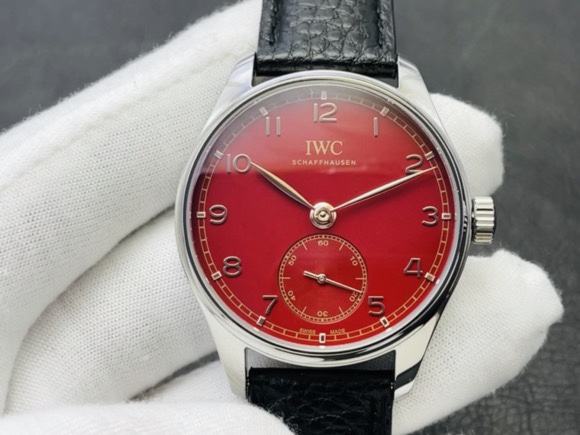
Common replica drift shows up here. Dates that sit slightly low. Numbers that lean. Fonts that change weight from one digit to the next. Any one of these might seem minor. Together, they announce that you are not looking at a cohesive system.
Long Power Reserve Reality: What “7 Days” Means in Replica Engineering
The mechanical logic: why long reserve is hard to clone
Long power reserve is not achieved by stretching a spring and hoping for the best.
It requires controlled torque delivery across time. That usually means twin-barrel architecture, careful gear train ratios, and a movement designed to remain stable as energy declines. The more power you store, the more opportunities you create for friction, amplitude drop, and timing inconsistency.
This is why torque curve stability matters more than maximum days.
A movement that delivers smooth, predictable energy for three days will always feel better in real life than one that technically runs six days but falls apart after forty-eight hours. Long reserve without control is just extended failure.
Replicas struggle here because they often start from base architectures that were never designed for this load. Adding capacity is easier than maintaining balance.
Power reserve indicator: accuracy vs “looks correct”
The power-reserve display is where marketing and mechanics part ways.
On some replicas, the indicator is mechanically linked and roughly meaningful. Wind the watch and the hand moves. Wear it for a day and it responds. Leave it overnight and you see a small, logical change. These systems are imperfect, but they reflect real energy flow.
On others, the display is cosmetically cooperative. It moves when expected, but not in a linear or reliable way. The hand may stay high long after torque has dropped, or sink quickly without corresponding changes in timekeeping. It looks right until you start paying attention.
A healthy IW5007 replica should show three behaviors:
Manual winding produces immediate, proportional movement of the PR hand.
A normal wearing day nudges the indicator upward or at least holds it steady.
An overnight rest results in a small, predictable decline.
If those relationships feel random, the display is decorative, not informative.
The honest runtime expectation
Here is the conservative rule that holds up in practice.
If the watch runs strongly at forty-eight hours and remains consistent past seventy-two, it is doing its job.
A perfect seven-day stretch is rare in replicas, especially without ideal conditions. Do not buy this model for the headline number. Buy it for how it behaves on day two and day three. That is where long-reserve ownership actually lives.
Anything beyond that is a bonus.
Testing Protocol: How to Measure Real Run-Time Without Lab Gear
Baseline setup
You do not need instruments to learn a lot.
Fully wind the watch until resistance increases. Set the time precisely. Note the starting position of the power-reserve hand. Then place the watch off-wrist in a stable position and leave it alone. Avoid picking it up, shaking it, or rotating it. Consistency matters more than orientation.
This creates a simple, repeatable baseline.
Checkpoints that reveal quality
Come back at twenty-four, forty-eight, and seventy-two hours.
At each point, look for three things.
Does the seconds hand still look energetic, or has it begun to drag.
Has the rate drifted enough that you notice it without timing tools.
Does the power-reserve hand move in a way that makes sense relative to elapsed time.
Day-two behavior is the key test for long-reserve replicas. Many watches look fine on day one. Fewer hold themselves together on day two. That is where torque curve weaknesses usually surface.
Failure signatures
Some problems repeat across batches.
If the power-reserve hand still reads high but the watch stops early, you are seeing indicator gearing mismatch. The display is lying about stored energy.
If the watch manages five or six days but becomes wildly inaccurate after forty-eight hours, that points to torque instability. The movement is running, but not coherently.
Both scenarios miss the point of long reserve. Duration without stability is not success.
A good IW5007 replica is one that behaves predictably before it behaves impressively.
Movement Reality: What’s Inside IW5007 Replicas and Why It Matters
“Clone-like” 52010/52011 claims vs base architecture reality
Most IW5007 replicas sit somewhere on a spectrum.
At one end are attempts at true long-reserve architecture, using enlarged barrel systems and modified gear trains that at least try to behave like IWC’s 52010/52011 family. These are the versions that can feel stable through day two and sometimes into day three.
At the other end are modified base movements wearing Portuguese cosmetics. They borrow familiar automatic platforms and dress them with decorative bridges, power-reserve displays, and extended mainsprings. On paper, they look similar. On the wrist, they behave very differently.
The distinction matters less in marketing language and more in outcomes. A replica with real long-reserve intent tends to show smoother energy decline, more predictable power-reserve indication, and better rate stability after forty-eight hours. A cosmetic build might still run for several days, but it usually reveals itself through erratic timing once the initial torque drops.
For buyers, the takeaway is simple. Ignore the claims. Watch the behavior.
Automatic winding efficiency and rotor behavior
Rotor sound is not just an annoyance. It is a tolerance signal.
A quiet, smooth rotor usually means tighter bearing tolerances and a better-fitted winding module. A loud, chattery rotor often points to looser construction, where the winding system transfers energy inefficiently and vibrates under motion.
That inefficiency shows up later in daily reserve.
If the rotor struggles to convert wrist movement into stored energy, the watch never fully recovers from overnight losses. You start each day with a slightly weaker baseline. Over time, this creates inconsistent reserve patterns, even if the movement technically supports long runtime.
On a healthy IW5007 replica, a normal day of wear should at least hold the power-reserve indicator steady. Ideally, it nudges it upward. If daily wear cannot maintain reserve, the problem is not the barrel. It is the winding system.
Serviceability and parts reality
Long-reserve movements live under higher mechanical load.
Larger mainsprings exert more force on the gear train. Power-reserve modules add complexity. Automatic winding systems work harder to refill bigger energy stores. All of this accelerates wear compared to a simple three-hand automatic.
This is why preventive servicing matters more here.
A basic replica can often run for years without attention. A long-reserve replica benefits from earlier inspection, fresh lubrication, and basic regulation. Ignoring this does not usually lead to dramatic failure. It leads to slow degradation. Day-two stability fades. Rotor noise increases. Rate consistency drifts.
If you plan to keep an IW5007 replica long term, treat it like a higher-stress mechanism. It rewards care more than most.
Replica vs Genuine: A Buyer-Grade Side-by-Side Breakdown
What top replicas can match convincingly
At normal viewing distance, strong IW5007 replicas do very well.
Dial proportions feel right on the wrist. The open Portuguese layout reads correctly. Case finishing on top-tier versions can approach genuine levels, especially in brushing consistency and edge transitions. To a casual observer, the watch presents as an IW5007 without effort.
This is where modern replicas excel. Presence, silhouette, and first impressions are no longer the weak points.
Where genuine still separates itself
The differences appear over time and under attention.
Power-reserve behavior is the first divider. Genuine watches show linear, predictable decline across days. Replicas tend to move in steps, plateaus, or sudden drops.
Date execution is another. The genuine date font carries a specific weight, and the window bevel is clean and deliberate. Replicas often compromise one or both.
Crystal behavior at angles tells its own story. Genuine anti-reflective treatment manages distortion gracefully as you tilt the watch. Many replicas look perfect head-on but reveal uneven reflections or edge warping when viewed obliquely.
Finally, hand stack height and center pinion depth give away assembly quality. Genuine hands sit low and calm. Replica hands sometimes float just enough to flatten the dial’s depth.
None of these are obvious in isolation. Together, they form a pattern.
The “if you only check three things” rule
If time is limited, focus here.
First, observe power-reserve behavior at forty-eight hours.
Second, inspect the date window and font alignment.
Third, tilt the watch and study crystal reflections and edge distortion.
Those three checks catch most meaningful differences.
Pricing Bands and Value
What changes the price in real terms
IW5007 replica pricing moves for practical reasons.
Movement complexity is the biggest factor, especially whether the build attempts true long-reserve behavior or relies on cosmetic modification. Case finishing quality follows closely behind, particularly in mid-case shaping and bezel transitions. Batch-to-batch QC consistency also matters. Some factories produce excellent runs followed by uneven ones.
Strap and buckle quality influence price less than sellers imply, but as the materials and assembly tolerance comparison in the IWC replica watches series comparison for Portuguese, Pilot, Ingenieur, and Portofino component prioritization analysis shows, they still affect ownership experience; when prices diverge it is usually because one version invests more in the movement or the case, not because of branding.
Who should buy an IW5007 replica, and who shouldn’t
This watch suits people who want the Portuguese aesthetic paired with a long-reserve experience. It rewards those who value day-to-day consistency more than headline specifications.
It is not ideal for buyers who expect “seven days exactly” without variance, servicing, or behavioral nuance. Long reserve in replicas is a living system, not a fixed promise.
QC Checklist Before Acceptance
Dial alignment checks
Start with the numerals. Look for consistent print thickness across all digits. Study subdial symmetry relative to the vertical axis. Confirm that the minute track aligns cleanly with the tip of the minute hand.
These are structural tells. They do not improve with time.
Power reserve and date functional checks
Wind the watch and confirm that the power-reserve hand responds immediately, not after a delay.
Observe the date change near midnight. It should advance cleanly, not creep across hours. Once changed, the date should sit centered in the window, neither high nor low.
These checks reveal whether the movement and display systems are communicating properly.
Case and strap checks
Test the crown for wobble. Inspect lug symmetry from above. Examine strap fit at the lugs and the sharpness of buckle engraving.
Poor alignment here usually reflects rushed assembly.
Ownership Reality: Daily Use, Water, and Longevity
Conservative water guidance
Assume splash-safe unless the watch has been pressure tested.
Long-reserve dress watches are not water lifestyle pieces. Gaskets vary by batch, and power-reserve modules add potential leak paths. Treat the IW5007 replica as something to keep dry unless proven otherwise.
Longevity strategy
Set realistic service intervals. Avoid forcing the crown or date during risky windows near midnight. Let the movement breathe instead of chasing maximum runtime.
Consistency beats chasing “max days” every time.
A good IW5007 replica is built to behave well across repeated cycles, not to impress once on a calendar.
FAQ
Does an IW5007 replica really last 7 days?
Some do, occasionally, under ideal conditions and with a fresh full wind. Most do not in meaningful daily use. What matters is whether the watch feels stable at forty-eight hours and remains coherent past seventy-two. If it does that, it behaves like a long-reserve watch. If it chases five or six days while losing accuracy after day two, the number is irrelevant.
How accurate is the power reserve indicator on ZF vs V9?
On better ZF batches, the indicator is usually mechanically linked and roughly proportional to real energy. Wind it and the hand moves immediately. Wear it for a day and it responds. Leave it overnight and you see a sensible drop. V9 versions more often show cooperative behavior rather than linear behavior. The hand moves, but not always in step with actual torque. This is why day-two observation tells you more than watching the scale.
What’s the most common tell on the IW5007 replica?
The date window.
Even strong replicas often miss the combination of sharp aperture bevel, correct font weight, and vertical centering. One of those usually drifts. When it does, the entire dial loses discipline, even if the rest of the watch looks convincing.
Is the date window and font correct on top versions?
Closer, but rarely perfect.
Higher-end builds usually get the window size right and approach the correct font thickness, but centering still varies by batch, and ink tone often leans gray instead of true black. These are small deviations that become obvious once you know where to look.
How do I test real run-time at home?
Fully wind the watch, set the time, note the power-reserve position, then leave it off-wrist in a stable place.
Check at twenty-four, forty-eight, and seventy-two hours. At each point, observe three things: whether the seconds hand still looks energetic, whether the rate has drifted noticeably, and whether the power-reserve hand moves in a way that makes sense. Day two is the decisive moment. Many replicas pass day one. Fewer hold themselves together on day two.
Is a “clone 52010” claim always true?
No.
Treat it as a spectrum. Some builds attempt genuine long-reserve behavior with enlarged barrels and modified gear trains. Others are standard automatic movements dressed in Portuguese architecture with a power-reserve display added on top. The difference shows up in torque stability, indicator behavior, and accuracy after forty-eight hours, not in the wording of the listing.
Is rotor noise a quality problem or normal?
Some sound is normal. Excessive chatter is not.
Rotor noise usually reflects bearing quality and winding module fit. A smooth, muted rotor tends to recharge the reserve more efficiently during daily wear. A loud, rattly rotor often correlates with weaker winding performance, which leads to inconsistent starting reserve each morning.
What maintenance matters most for long-reserve replicas?
Preventive servicing.
Long-reserve systems run under higher load. Larger mainsprings stress the gear train. Power-reserve modules add friction points. Fresh lubrication and basic regulation matter more here than on a simple three-hand watch. Ignore that, and day-two stability slowly erodes even if the watch keeps running.
Engineering Summary: The Decision Rule for IW5007 Replicas
Don’t buy the promise of “7 days”—buy the day-two stability and the dial discipline, because a good IW5007 replica is a consistency machine, not a calendar promise.
Related IWC Articles: If you found this helpful, you might also enjoy Best IWC Replica Factories Compared (ZF vs V7 vs MKS & Others), and IWC Replica Watches by Series (Portuguese, Pilot, Ingenieur & Portofino). You may also like Guangzhou IWC Watch Market Explained: How IWC Replicas Actually Move From Factory to Buyer, and 2026 IWC Replica Factory Ranking: ZF, V7, and MKS — A System-Based Evaluation, Not a Popularity Contest.