
Why This Model Matters: IW3714 Is the “Benchmark” IWC Chronograph Replica
Where the Demand Comes From
The IW3714 sits in a rare middle ground. It looks formal enough for a jacket, casual enough for daily wear, and simple enough that people recognize it without knowing reference numbers. The design has been stable for decades. Thin bezel. Open dial. Two-register chronograph. Arabic numerals that feel architectural rather than decorative.
That combination creates predictable demand.
Buyers who arrive at the Portuguese Chronograph usually come from three directions. Some want a first mechanical chronograph that does not feel sporty. Some already own dive watches and want something lighter on the wrist. Others simply recognize the silhouette from years of exposure and want that specific look without navigating vintage references or modern in-house pricing.
This is why IW3714 dominates Portuguese replica searches. It is not the most complex IWC. It is the most wearable one.
Once people narrow down to this model, the real question becomes practical, not emotional: is ZF the safest choice, and what should I actually inspect when the watch arrives?
Everything else is noise.
ZF’s Position in the IWC Replica Landscape
Across IWC replicas, ZF, APS, and VS occupy different roles.
VS focuses on complex calendar architecture and long power reserve projects. APS leans into experimental chronograph layouts and newer ceramic executions. ZF concentrates on traditional mechanical layouts and case geometry discipline.
On the IW3714 specifically, ZF became dominant for a simple reason: they solved thickness and chronograph behavior earlier and more consistently than the others.
APS has produced capable Portuguese pieces, especially in complicated references, but their IW3714 offerings never stabilized across batches. VS largely skipped this reference in favor of higher-margin long-reserve and perpetual models.
ZF stayed with the 3714 until it behaved correctly.
That persistence is why, in practical terms, ZF defines the current baseline for this model.
Not because of branding. Because of repeatable outcomes.
Genuine Reference Snapshot: What a Real IW3714 Feels Like on Wrist
Key Physical Parameters to Anchor Your Comparison
A genuine IW3714 wears lighter than its size suggests.
The case diameter sits just over 40 mm, but the thin bezel opens the dial visually, making it feel larger. Lug-to-lug is moderate, and the downward curvature lets the case hug flatter wrists without floating. Thickness is the defining number. On the wrist, it feels slim for a chronograph, with most of the height coming from the crystal rather than the mid-case.
Pushers sit low and close to the case. They do not protrude aggressively. The crown is small but usable, and it never digs into the back of the hand.
Cuff clearance is easy. Shirt sleeves slide over it without catching. That is part of the appeal. This is a chronograph that behaves like a dress watch in daily movement.
These are not abstract measurements. They are wear behaviors. If a replica feels tall, snags cuffs, or balances top-heavy, something fundamental is off.
Dial Architecture That Defines the Genuine Look
The Portuguese identity comes from space.
The dial breathes. Arabic numerals are thin and tall, never chunky. The minute track sits close to the edge, reinforcing the illusion of size. Subdials are widely spaced and vertically aligned, creating symmetry without crowding.
The bezel is narrow, almost disappearing when viewed straight on. That forces attention inward, toward the numerals and hands.
Nothing feels compressed.
This is why subdial placement and case thickness matter so much on this model. Any deviation collapses that open feeling and turns the watch into just another generic chronograph.
ZF Version Overview: Which “Generation” Are You Reviewing?
Common Market Labeling and Why It Confuses Buyers
Terms like V1, V2, or “latest batch” rarely mean anything consistent.
Different sellers apply them to different production runs. Some use them to justify pricing. Others simply repeat what they were told.
If you want to know what you actually have, ignore the listing title and inspect the watch.
Start with the caseback engraving. ZF’s later batches have cleaner perimeter text and more uniform depth. Earlier runs often show uneven pressure around the serial ring.
Move to dial printing. ZF refined numeral thickness over time. On newer pieces, the Arabic numerals appear lighter and more evenly filled, especially at “12” and “8.”
Check the date font and alignment. Later ZF batches center the date more consistently in the window, with less vertical drift.
Finally, look at the crystal: ZF’s newer AR shows a controlled blue flash at angles, not a purple haze, and as the anti-reflective and optical quality trade-offs in the IWC complication replicas — perpetual calendar vs tourbillon vs repeater coating and component fidelity review illustrate, patchy reflections usually indicate older stock or mixed components rather than a consistent AR application.
The rule is simple: review the watch in hand, not the name attached to it.
What ZF Is Trying to Solve on IW3714
ZF’s work on this reference revolves around two problems that defeat most average replicas.
The first is thickness control.
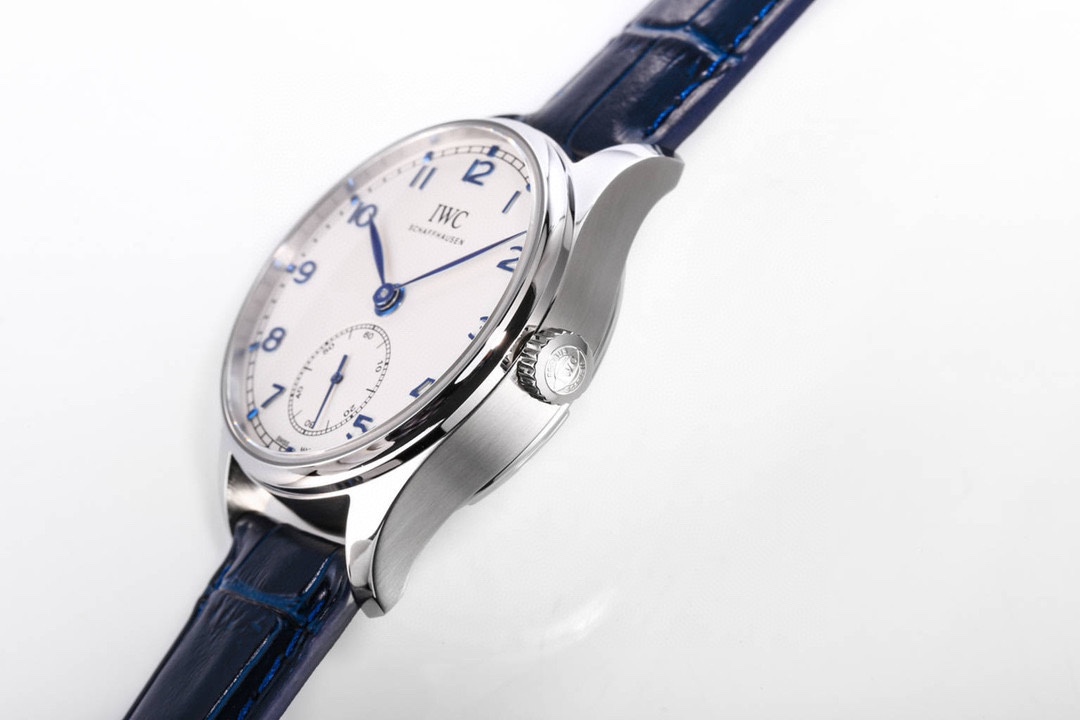
Many IW3714 replicas technically match the diameter but fail in profile. They stack too much height in the mid-case or rely on overly domed casebacks to hide movement bulk. The result is a watch that measures close on paper but feels wrong immediately.
ZF focused on redistributing that height. More of it lives in the crystal. Less in the mid-case. The side view looks flatter, and the watch sits lower on the wrist.
The second problem is chronograph behavior consistency.
Standard 7750-based builds often suffer from uneven start force, seconds hand jump, or lazy reset alignment. ZF spent multiple production cycles refining engagement tolerances so that start, stop, and reset feel predictable across units.
This matters more than decoration.
Most average IW3714 replicas fail here. They may look acceptable in photos, but the pushers feel soft, the reset misses center, or the running seconds stutters under load. ZF’s advantage is not visual perfection. It is that the watch behaves the same way every day.
That consistency is what makes it usable as a daily chronograph rather than a fragile display piece.
In replica form, ZF gives the closest approximation of the Portuguese Chronograph as a wearable instrument, not just a photographed object, and whether that trade-off is worth it is ultimately your decision.
Case, Thickness, and Profile: Where Replicas Usually Lose
Thickness: Measured Number vs Perceived Thickness
Most buyers stop at the headline number. They ask whether the watch is 12.3 mm or 12.8 mm and assume that settles it.
It doesn’t.
Two IW3714 replicas can share the same total thickness and still wear completely differently. What matters is how that thickness is distributed across the crystal, mid-case, and caseback.
When you evaluate a ZF IW3714 in hand, work through this simple checklist:
Start with total thickness, measured from crystal peak to caseback edge.
Then isolate the mid-case in side view. This is the vertical wall between bezel and caseback. On a good build, this section stays slim. On weaker replicas, this is where excess height hides.
Look at crystal protrusion. The genuine watch carries height in the sapphire, not in the steel. A replica with a flat crystal and tall mid-case will always look blocky, even if the calipers agree.
Finish with the caseback. Some factories compensate by using a domed back to swallow movement height. That changes how the watch sits and often creates a top-heavy feel.
This is why two watches with the same measurement can feel worlds apart on wrist. Crystal geometry and caseback shape decide whether the watch reads as slim or chunky.
ZF’s advantage here is redistribution. More height lives in the domed sapphire. Less lives in the mid-case. The side profile stays clean, and the watch clears cuffs the way the genuine does.
Bezel and Rehaut: The Silent Tells
The Portuguese Chronograph lives or dies on bezel thinness.
On the genuine IW3714, the bezel flows directly into the crystal with almost no visual interruption. The transition is soft, continuous, and symmetrical.
Replicas usually fail in three places.
First is bezel width. Too thick, and the dial shrinks visually.
Second is the transition into the crystal. Poor builds show a sharp step instead of a smooth ramp.
Third is finishing. Uneven polishing or slightly rounded edges create asymmetry that your eye catches even if you can’t articulate why.
Check symmetry from multiple angles. Look for edge sharpness consistency around the full circumference. Inspect how evenly the bezel reflects light.
ZF gets this mostly right. The bezel remains thin, the transition feels natural, and the polishing stays consistent enough that nothing jumps out during normal wear.
Lugs: Shape, Drill Angle, Strap Fit
Lugs tell you more about a case than almost any other feature.
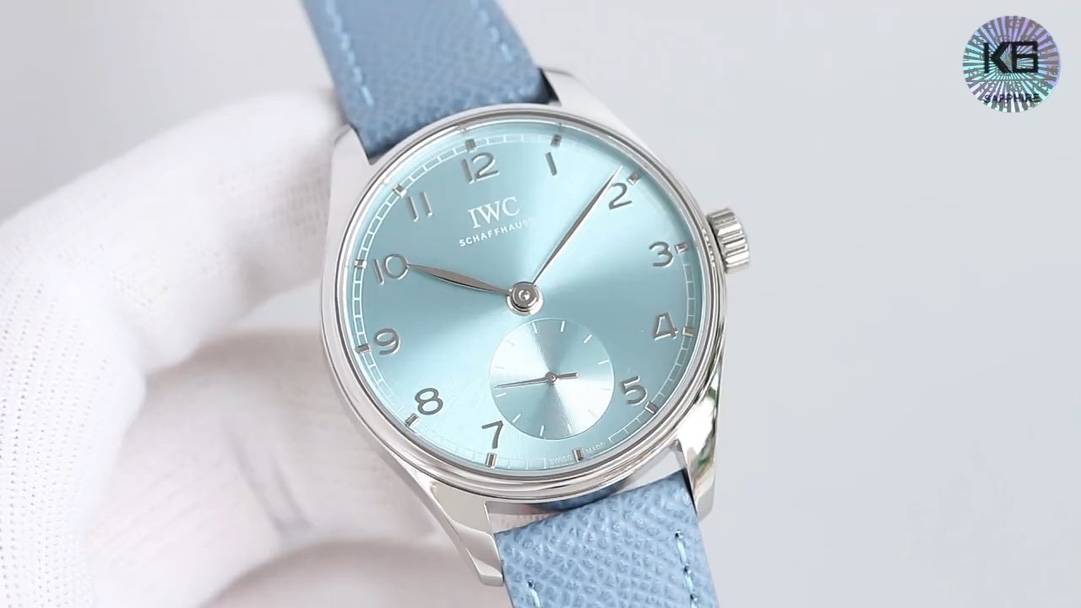
On a genuine IW3714, the lugs curve downward gently and evenly. They do not flare. They do not flatten abruptly. From side view, the arc is continuous from mid-case to strap.
Common replica issues show up fast here.
Incorrect lug curvature makes the watch float on smaller wrists.
Poorly drilled springbar holes create visible strap gaps.
Misaligned holes force the strap to sit at an odd angle, breaking the visual line of the case.
When you mount a strap, look for daylight between leather and case. There shouldn’t be any. The strap should meet the lug cleanly, with the springbar seated fully and symmetrically.
ZF’s lug geometry is one of its quieter strengths. The curvature matches the genuine closely, and strap fit is usually tight without forcing. It sounds minor, but this is one of the details that separates a wearable chronograph from a display-only replica.
Sapphire Crystal and AR Coating: Clarity, Blue Hue, Distortion Tests
Transparency Test in Real Light
Anti-reflective coating is not something you judge under studio lights.
You judge it walking through a room.
Hold the watch at roughly a 45-degree angle in natural daylight. A good crystal controls glare without muting the dial. You should still see crisp numerals, not a gray wash.
Move indoors under LED lighting. Watch for milky haze. Poor AR makes the dial look fogged, especially on white or silver surfaces.
Finally, inspect the edge near the minute track. Cheap crystals introduce distortion at the perimeter, bending markers and numerals as they approach the rehaut.
ZF’s current crystal performs well in daily conditions. Reflections stay controlled, the dial remains readable, and edge distortion is minimal. This matters because you experience it every time you check the time, not just during inspections.
AR quality is not a specification. It is a behavior.
AR Color: Acceptable Variation vs Obvious Mismatch
Some variation in AR hue is normal. Lighting changes everything.
What you want to avoid are extremes.
Overly purple flashes usually signal older coating formulas.
Aggressively blue reflections can overpower the dial.
Patchy AR, where parts of the crystal reflect differently, indicates uneven application.
The worst offender is AR that turns the dial gray. That kills contrast and makes the watch feel lifeless.
ZF’s coating tends toward a controlled blue with even coverage. It does not dominate the dial, and it does not shift color dramatically across the surface. That balance is what you want for a daily-wear chronograph.
Dial and Printing: The 6 Tells That Actually Matter
Arabic Numerals, Minute Track, and Spacing Discipline
Start with numeral consistency.
Print thickness should remain uniform from “12” to “1” to “11.” Variations here signal rushed pad printing.
Then follow the minute track around the dial. Watch its relationship to the rehaut at 15, 30, and 45. Drift at these points is common on weaker replicas and immediately breaks symmetry.
The Portuguese dial only works when spacing discipline holds. Once alignment slips, the whole design feels off.
ZF maintains decent consistency here. Numerals stay even, and the minute track remains centered relative to the case opening.
Subdials: Placement, Depth, and Texture
Subdial spacing is the classic tell for IW3714 replicas.
Check the distance from each subdial edge to the center pinion. Both sides should mirror each other. Then confirm vertical alignment with “12” and “6.” Any offset becomes obvious once you know where to look.
Depth matters too. Genuine subdials sit slightly recessed, not stamped flat.
Texture finishes the story. Subdial snailing should be subtle. Overly aggressive concentric grooves look theatrical and fake.
ZF’s subdials land in the right zones. Spacing is close to genuine, recess depth feels natural, and snailing stays restrained.
Hands: Length, Finish, and Stack Height
Hands need to land where they belong.
The minute hand should reach the minute track cleanly.
The chronograph seconds hand should touch its markers without overshooting.
If either falls short, the dial immediately feels cheap.
Stack height matters just as much. When hands sit too high above the dial, the watch gains an unwanted sense of bulk and loses refinement.
ZF keeps hand length within acceptable tolerance, and stack height stays low enough that the profile remains elegant rather than layered.
Date Window and Date Font
The date window exposes shortcuts faster than almost anything else, and as the aperture geometry and typographic fidelity criteria in the IWC replica watches series comparison for Portuguese, Pilot, Ingenieur, and Portofino date aperture finish and font alignment evaluation make clear, start with the bevel — the edge should be sharp and well-defined, not rounded or fuzzy — then inspect the date font where numerals should be thin, upright, and centered, with the shapes of “2,” “4,” and “7” revealing font mismatches quickly.
Common replica flaws include dates sitting slightly low, leaning to one side, or appearing too bold.
ZF’s date execution is not perfect, but it is consistent. Alignment tends to be centered, font weight stays reasonable, and the window bevel is clean enough that it does not draw attention during normal wear.
Movement Reality Check: What ZF Is Using and What It Means
The Practical Movement Family Behind Most IW3714 Replicas
Nearly every IW3714 replica on the market starts from the same place: the 7750 movement family.
ZF is no exception.
What changes from factory to factory is not the underlying architecture, but how that architecture is adapted to match the Portuguese layout.
In practical terms, this means the base gear train, winding system, and chronograph module still behave like a 7750. ZF modifies the display layer so the subdials land in the correct positions, removes unnecessary calendar components, and refines tolerances around the chronograph engagement. Bridges may be reshaped. Plates may be cosmetically altered. But the core mechanics remain 7750-derived.
This distinction matters.
The modifications affect what you see: subdial spacing, hand positions, and visual symmetry. They do not fundamentally change how power is delivered, how the chronograph loads the movement, or how winding efficiency behaves over time.
If you understand that, you set the right expectations.
You are buying a well-executed 7750-based chronograph, not a true architectural clone of IWC’s in-house caliber.
Chronograph Behavior Tests (the “Feel” Test)
Decoration tells stories. Behavior tells truth.
When you handle a ZF IW3714, ignore the caseback first and go straight to the pushers.
Start the chronograph. The resistance should feel crisp, not spongy. A mushy start usually means loose engagement tolerances.
Watch the central seconds hand at start. A small initial jump is normal on 7750-based systems. A large kick or hesitation is not.
Stop the chronograph. There should be no bounce-back.
Reset it. Both hands should snap cleanly to zero. If they float, hesitate, or land slightly off-center, that is not cosmetic. That is mechanical alignment.
This leads to a simple rule: chronograph behavior reveals build quality more reliably than engraving or polishing ever will.
ZF’s strength here is consistency. Across batches, start-stop feel tends to remain predictable, and reset alignment is usually on point. That repeatability is the real value.
Timekeeping Stability and Winding Efficiency (Daily Wear)
Do not judge this movement by single-day accuracy.
Judge it by how it behaves across power cycles.
Common symptoms of weak builds include rate drifting after low power, difficulty maintaining amplitude when the chronograph runs continuously, and noticeable slowdowns after overnight rest.
In daily terms, this feels like a watch that runs fine one day and oddly the next.
ZF’s IW3714 typically maintains usable stability across normal wear cycles. Winding efficiency is sufficient to keep amplitude healthy if you wear the watch regularly. Running the chronograph full-time will reduce stability, as it does on all 7750-family movements, but ZF’s builds usually recover once the chrono is stopped and the watch is worn.
This is not about laboratory precision.
It is about whether the watch behaves predictably week after week.
Replica vs Genuine: Side-by-Side Breakdown (Buyer-Grade)
What ZF Gets Convincingly Right
From a normal viewing distance, three things stand out in ZF’s favor.
Dial proportions feel correct. The openness of the Portuguese layout remains intact.
Case finishing holds up in real light. Polishing transitions and lug geometry look natural unless you start hunting for flaws.
Most importantly, overall wrist presence feels authentic. The watch sits low enough, wears balanced, and carries itself like a Portuguese Chronograph rather than a generic thick replica.
These are the attributes that matter in daily use.
Where Trained Eyes Still Find Differences
Even strong replicas leave fingerprints.
AR hue and edge distortion still differ slightly from genuine, especially under mixed lighting.
Subdial depth and texture remain a common tell when viewed closely.
Date font thickness and centering can drift from piece to piece.
Pusher feel, while good on ZF, lacks the refined resistance curve of the genuine.
If you inspect the caseback, micro-level engraving sharpness and spacing also reveal differences.
None of these ruin the watch. But they are repeatable tells once you know them.
“If You Only Check 3 Things” Rule
If you want a fast inspection without going obsessive, focus on three areas:
First, thickness and profile. Side view tells you more than calipers.
Second, subdial geometry. Spacing and depth expose shortcuts immediately.
Third, chronograph reset alignment. Hands must return cleanly to zero.
If these three pass, the rest is usually within acceptable tolerance.
Pricing, Value, and Who This Is For
Realistic Price Bands and What Pushes Price Up or Down
ZF IW3714 pricing typically lives in the upper replica tier.
Movement specification is the primary driver. Better-regulated builds and tighter chronograph tolerances cost more.
Batch consistency matters next. Cleaner production runs command higher prices because fewer pieces fail QC.
Finishing level follows. Dial printing, case polishing, and crystal quality all add incremental cost.
Finally, strap and buckle quality can shift pricing slightly, especially when upgraded hardware is included.
You are not paying for branding. You are paying for reduced risk.
Buyer Personas: Who Should Choose ZF IW3714
The daily-wear buyer benefits from ZF’s stability. If you intend to actually use the chronograph and wear the watch regularly, consistency matters more than theoretical perfection.
The detail-oriented buyer appreciates that ZF minimizes the most visible tells. It is not flawless, but it avoids the common traps.
The “one-and-done” buyer usually lands here as well. If you want the safest default without chasing marginal upgrades, ZF remains the practical choice.
ZF does not deliver a perfect Portuguese Chronograph, but it delivers a repeatable one, and for most buyers that is the difference between owning a watch and constantly second-guessing it.
QC Checklist Before You Accept the Watch (Practical and Strict)
Alignment and Printing Checks
Start with the rehaut-to-minute-track relationship. Rotate the watch slowly and confirm the track remains centered relative to the case opening at 12, 3, 6, and 9. Drift here is not subtle once you learn to see it.
Move to numeral printing. Compare the thickness of “12,” “1,” and “11.” They should feel cut from the same stencil. If one looks heavier or softer, that is uneven pad printing.
Finish with the date. The numeral must sit centered in the window, not riding low, not leaning left. A misaligned date is rarely fixable without disassembly, so this is a pass-or-fail item.
These three checks take less than a minute and eliminate most weak pieces immediately.
Chronograph Checks
Press start. The pusher should feel defined, not rubbery.
Watch the central seconds hand as it begins. A tiny jump is acceptable. A noticeable kick is not.
Stop the chronograph and reset it. Both hands must snap back to zero and land exactly at 12. No hesitation. No floating. No half-click corrections.
Then let the chronograph run for a few minutes. Look for hand stutter or uneven motion. Smooth travel indicates proper engagement. Any jitter usually means internal misalignment.
Chronograph behavior is not cosmetic. If this part fails, nothing else matters.
Case and Strap Checks
Gently wiggle the crown. A small amount of play is normal. Excessive wobble is not.
Inspect lug symmetry. Both sides should mirror each other in curvature and length. Uneven lugs affect wear comfort and strap fit.
Mount the strap and look for gaps. Leather should meet steel cleanly. Check springbar seating. Then inspect the buckle engraving. Letters should be sharp and evenly spaced, not shallow or blurred.
These details decide whether the watch feels finished or improvised.
Ownership Reality: Maintenance, Water Resistance, and Longevity
What to Expect from a 7750-Family Chronograph in Real Life
This is a mechanically dense chronograph. It rewards reasonable use and punishes abuse.
The chronograph module adds stress to the movement, especially if you run it continuously. Occasional timing is fine. Treating it like a permanent seconds hand shortens service intervals.
Expect periodic maintenance if you plan to keep the watch long term. Lubrication dries. Amplitude drifts. This is normal for any 7750-derived system.
Avoid forcing the date during risky hours, roughly between late evening and early morning. Calendar gears are engaged then, and forcing adjustment is one of the fastest ways to cause damage.
None of this is alarming. It is simply the ownership reality of a mechanical chronograph.
Water Resistance: Conservative Guidance
Do not assume anything.
Unless the watch has been pressure tested, treat it as splash-resistant only. Hand washing and light rain are usually fine. Swimming is not.
If you intend any water exposure beyond incidental contact, get a pressure test first. Gaskets vary by batch, and factory assembly does not guarantee sealing.
Practical rule: assume splash-resistant unless proven otherwise.
FAQ
Is ZF the best IW3714 replica?
ZF remains the most consistent option for this reference, mainly because thickness control and chronograph behavior are more stable across batches than competing versions.
How close is ZF IW3714 thickness to genuine?
Total thickness is close, but the more important match is profile. ZF distributes height through the crystal rather than the mid-case, which is why it wears similarly even when numbers vary slightly.
Does ZF use a true clone movement or a modified base?
ZF uses a modified 7750-family architecture. Display layout changes, but the core movement remains 7750-derived.
What are the fastest tells versus genuine?
AR hue and edge distortion, subdial depth, date font, and pusher feel are the most repeatable differences.
Is the chronograph reliable for daily use?
Yes, if used reasonably. Occasional timing is fine. Continuous running increases wear and shortens service intervals.
Should I choose solid caseback or display back?
If both are available, solid caseback hides cosmetic movement differences and usually feels closer to the genuine experience.
What QC problems are most common in IW3714 replicas?
Misaligned dates, imperfect reset alignment, uneven dial printing, and inconsistent AR coating appear most often, and as the tolerance and finish irregularity breakdown in the ZF IWC Portofino chronograph construction and quality review shows, these issues are the most frequent indicators of inconsistent production runs rather than isolated defects.
Engineering Summary: What This Watch Is, and What It Is Not
ZF delivers the closest Portuguese Chronograph experience available in replica form today, but it remains a 7750-based chronograph with real behavioral limits, and if you accept that reality, it becomes a dependable daily companion rather than a fragile illusion.
Related IWC Articles: If you found this helpful, you might also enjoy Top 5 Best IWC Replica Watches: Super Clone Models Ranked & Explained, which ranks the top 5 best IWC replica watches available, and What “7-Day Power Reserve” Means on a Real IWC. Another related article is 2026 IWC Replica Factory Ranking: ZF, V7, and MKS — A System-Based Evaluation, Not a Popularity Contest.