





1 — Product Identity & First-Wear Experience
This 42 mm configuration feels like a classic modern Chronomat: heavy enough to feel serious, but balanced well enough that the weight doesn’t dominate the experience. When you first fasten the pilot bracelet, the cylindrical links flex in a way that distributes the weight more naturally than flat-link designs. That first flex tells you more about the watch’s character than any specification sheet ever could.
You feel the coolness of the steel at first touch. Within ten or fifteen minutes, the case warms and settles, the bracelet softens slightly, and the champagne dial starts playing with ambient light as your wrist moves. It’s a Chronomat for someone who enjoys mechanical feedback — not just from the movement, but from the steel, the bracelet, and the bezel as well.
2 — Background Story & Original Chronomat Design Logic
The Chronomat wasn’t built as decoration. It came from aviation timing, where pilots needed a chronograph that responded predictably: thick pushers, readable hands, and a bezel that could be operated by feel. The rider tabs at 15, 30, 45, and 60 weren’t ornamental — they were physical markers for grip and orientation.
Over time, the Chronomat evolved into a steel sports chronograph with a very specific personality: presence, structure, and a kind of mechanical honesty that doesn’t rely on thinness or minimalism. The pilot bracelet followed the same logic. Its tube-shaped links make the bracelet move almost like fabric while still feeling robust. It is unmistakably Breitling.
Guangzhou’s replica workshops — especially BLS factory — approach this model by trying to recreate the behavior rather than only the look. They focus on steel shaping, end-link fit, bezel engagement, and consistent pusher feel. And for a Chronomat, behavior is the point.
3 — Dial, Bezel & Visibility in Real Light
The champagne dial is the most active part of this watch. Indoors, under soft warm lighting, it leans toward rose gold. Step outside, and it brightens into a pale metallic gold that contrasts sharply with the black subdials. On cloudy days it becomes almost matte, making the markers appear stronger. This wide range of behavior makes the watch surprisingly easy to read, even though the dial is decorative at first glance.
The black subdials remain stable regardless of lighting, anchoring your eyes when you check elapsed time or glance for the running seconds at 6 o’clock. The tachymeter ring doesn’t shout for attention but becomes more visible when sunlight hits the outer edge at an angle.
The rider-tab bezel, a signature Chronomat feature, offers a clean and predictable click. The grip feels deliberate even with slightly wet or oily fingers. BLS factory is consistent with bezel tension, and this piece reflects that: no wobble, no skipping, no uneven resistance.
4 — Case, Steel Structure & Wrist Behavior
This 42 mm case has the familiar Chronomat stance: muscular lugs, blended crown guards, and enough thickness to feel like a proper tool rather than a dress chronograph. When you move your wrist during driving or typing, the watch stays centered without rolling. That stability comes from a combination of the case curvature and the pilot bracelet’s natural articulation.
The steel catches light in layers. Morning light brings out the brushed surfaces on the lugs; midday light pulls stronger reflections from the polished bezel ring; evening light softens the entire watch into warmer tones. That changing surface character works especially well with the champagne dial.
On the wrist, the case feels firm but not aggressive. You’re aware of the watch throughout the day, but in a comforting way — it feels like an engineered object, not jewelry.
5 — Movement & Functional Behavior
Chronomat enthusiasts often judge a watch by how the pushers feel. The BLS factory Chronomat gets this right:
-
Start pusher: firm, clean, not overly stiff
-
Stop pusher: lighter but still controlled
-
Reset: crisp snap back to zero with no hesitation
Winding the crown in the morning gives a steady and even resistance. You feel the mainspring catch gradually rather than abruptly. Setting the time is smooth; the minute hand responds without jumpiness.
This piece behaves predictably across multiple days. The chronograph continues to operate smoothly even as the case warms or cools, and the watch doesn’t require mid-week adjustments unless you’re extremely precision-driven. It’s built for reliability rather than fragility.
6 — Bracelet & Long-Term Comfort
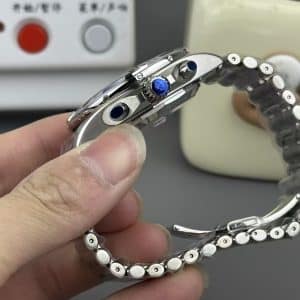
The pilot bracelet is one of the most comfortable steel bracelets in this price category, and the BLS factory version captures that feeling convincingly. The cylindrical links rotate slightly as the wrist moves, which spreads pressure evenly and keeps the bracelet from pinching or creating hot spots.
In warm conditions, the bracelet warms quickly but never becomes sticky. In cooler rooms or during early morning wear, it may feel slightly cold at first, but the steel warms within minutes. The brushed surfaces resist fingerprints well, and the edges feel cleanly polished — an area where some cheaper replicas stumble.
If you spend a lot of time using a computer, you’ll notice how quietly the bracelet moves. It doesn’t rattle or buzz when the wrist brushes the desk, which makes it easier to wear for long workdays.
7 — Factory Execution Logic
BLS factory tends to prioritize:
-
Solid steel case finishing
-
Smooth pilot bracelet articulation
-
Clean dial printing
-
Strong bezel feel and rider-tab alignment
-
Reliable pusher response
Their usual trade-off is micro-level dial texture depth, but this champagne dial hides that limitation extremely well. The sunburst pattern and warm tones make the watch feel richer than the price suggests.
This specific piece sits at the stronger end of BLS’s Chronomat output. The color execution is the star, but the bracelet quality and bezel feel complete the experience.
8 — Real-Life Usage Scenarios
9:25 AM — Walking Into the Office
The dial catches cool daylight and shifts to a pale gold tone. The steel feels warm from the morning commute, and the bracelet moves quietly as you pull back a sleeve. Even in indirect light, the black subdials stay clear.
4:05 PM — Afternoon Errand Run
Under brighter outdoor light, the champagne dial brightens significantly. The chronograph seconds hand becomes easier to track. The watch feels secure while carrying bags or reaching for the steering wheel. You press the stop pusher out of habit — the feel remains clean and consistent.
9 — Who This Chronomat Is Actually For
This is a watch for someone who enjoys steel presence but wants more personality in the dial than a simple black or blue can offer. It’s for people who appreciate a chronograph that behaves mechanically rather than simply looking the part. It fits someone who wants a bit of warmth in the design without losing the tool-watch foundation.
If you want a watch that disappears on the wrist, this won’t be it. But if you enjoy something that responds to light and movement, it fits beautifully.
10 — Neutral Difference vs Original
Compared with the authentic version, this BLS factory Chronomat feels slightly lighter in bracelet density and slightly softer in the chronograph pushers. The dial color behaves very similarly in sunlight, and the rider-tab bezel offers nearly the same tactile logic.
It doesn’t attempt to outdo the real Chronomat. It focuses on behaving like one — steady, readable, and intentional.
Final Attitude
I see this champagne-dial Chronomat as a warm, expressive steel chronograph that still carries the structure and confidence the line is known for. But that’s only my view — the decision is yours.
Watch Specifications
- Factory version
- BLS Factory
- Movement
- Not specified on this product page
- Case size
- 42 mm
- Thickness
- Not specified on this product page
- Bracelet / strap
- Stainless steel pilot bracelet
- Crystal
- Not specified on this product page
- Dial details
- Champagne dial with black subdials; product copy describes the dial as light-reactive indoors and outdoors
- Bezel
- Chronomat-style rider-tab bezel described in the product copy
- Caseback
- Not specified on this product page
- Model / reference family
- Breitling Chronomat 42 descriptive product family
- Colorway
- Champagne dial, black subdials, stainless steel case and bracelet
- QC focus
- Check dial printing, black subdial alignment, rider-tab positioning, bezel centering, chronograph hand reset, bracelet articulation, end-link gaps, clasp finishing, and visible brushing or polishing transitions
QC Checklist
- Champagne dial color consistency: check straight-on and angled photos for even tone across the dial, without cloudy patches, staining, or uneven sunburst behavior.
- Black subdial alignment: confirm the subdials sit level and evenly spaced, with clean circular edges and no visible tilt against the champagne background.
- Dial printing and logo spacing: zoom in on the brand text, minute track, and subdial markings to make sure the print is sharp, centered, and not crowded or broken.
- Applied marker alignment: inspect each hour marker against the minute track, especially at 12, 3, 6, and 9, for straight placement and matching spacing.
- Chronograph hand reset: request or review a reset photo showing the central chronograph hand returning exactly to 12, with subdial hands also sitting cleanly at their reset points.
- Rider-tab bezel positioning: check that the raised tabs at the bezel quarters line up cleanly with the dial orientation and do not appear rotated off-center.
- Bezel and crystal view: use angled photos to look for obvious crystal distortion over the champagne dial and confirm the bezel sits evenly without visible lifting or uneven gaps.
- Stainless steel finishing transitions: inspect lug tops, case sides, bezel edges, and bracelet surfaces for clean brushing, polished edge definition, and no rough over-polished areas.
- Pilot bracelet and SEL fit: check the end links where the bracelet meets the case for tight, even gaps, then review link articulation for straight alignment without twisting or uneven spacing.
- Clasp finishing and engraving: review clasp close-ups for centered engraving, smooth edges, firm closure alignment, and finishing that matches the rest of the stainless steel bracelet.
Best For / Not Ideal For
Best For
- Buyers who want a 42 mm steel Chronomat-style chronograph with clear wrist presence rather than a compact or discreet watch.
- Buyers who prefer a warmer champagne dial that changes in different light, while the black subdials keep the layout readable.
- Buyers who value the feel of a stainless steel pilot bracelet, especially bracelet articulation and end-link fit in QC photos.
- Buyers comparing this against black or blue Chronomat-style variants and wanting a less common colorway without moving into a full gold-tone look.
- Buyers who are comfortable judging the final piece through QC photos, including dial printing, rider-tab alignment, hand reset, bracelet gaps, and clasp finishing.
Not Ideal For
- Buyers who want a thin dress watch or a chronograph that disappears under a cuff; the product copy positions this as a steel sports chronograph with noticeable case presence.
- Buyers who prefer a very understated dial, since the champagne finish is described as light-reactive and more expressive than typical black or blue choices.
- Buyers who need a fully specified movement, thickness, crystal, clasp type, or water-resistance rating before deciding; those details are not provided on this page.
- Buyers expecting official-brand authenticity, manufacturer warranty, or certified original components; this is presented as a BLS Factory replica-style product.
- Buyers with low tolerance for QC variation who are not willing to inspect close-up photos of the dial, bezel, bracelet, end links, and chronograph reset before confirming.
Product Visuals
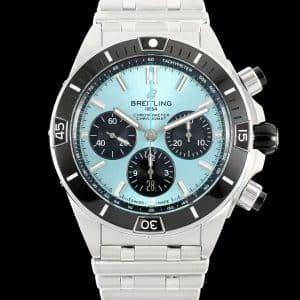
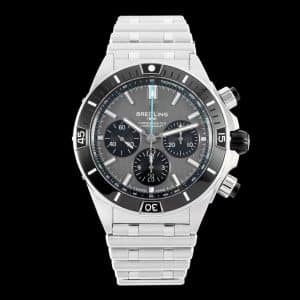
Champagne Dial Front View
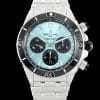
Use the straight-on dial photos to inspect the champagne tone, black subdial contrast, applied marker alignment, and printed text sharpness. This view is most useful for judging whether the warmer dial color stays even across the Chronomat 42 layout.
Rider-Tab Bezel and Crystal Detail
Angled case photos help show the Chronomat-style rider tabs, bezel centering, crystal clarity, and how the outer ring frames the champagne dial. Check that the raised bezel markers appear evenly positioned and that the dial remains readable through the crystal.
Stainless Steel Case Profile
Side and three-quarter views are useful for evaluating the 42 mm case presence, crown guard shape, pusher placement, and visible brushing or polishing transitions. These photos also help buyers judge whether the watch has the wrist stance expected from a steel sports chronograph.
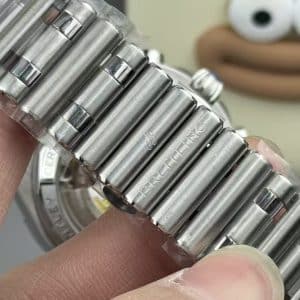
Pilot Bracelet and End-Link View
Bracelet photos should show the stainless steel pilot bracelet articulation, link spacing, and how the end links meet the case. Look for even gaps, straight link alignment, and finishing consistency between the bracelet and case.
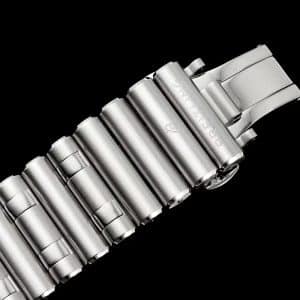
Clasp and Bracelet Finishing
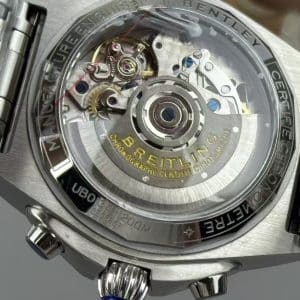
Close-up clasp or underside photos support QC review of edge finishing, closure alignment, engraving placement if visible, and the transition between brushed and polished surfaces. This is the best view for checking daily-wear details that are easy to miss in front-facing product images.
Frequently Asked Questions
Is this the BLS Factory Chronomat 42 champagne dial version?
Yes. The product title identifies this as a BLS Factory Chronomat 42 replica-style watch with a champagne dial, black subdials, stainless steel case, and pilot bracelet. The main decision point is the warmer dial tone: it is less conventional than black or blue Chronomat-style versions, while the black subdials keep the layout visually grounded.
What movement is used in this Chronomat 42?
The movement is not formally specified on this product page. The description discusses winding feel, pusher response, and chronograph reset behavior, but it does not name a caliber or movement type. Buyers should confirm the movement version and chronograph layout in QC communication before approving the watch.
How will the 42 mm case wear on the wrist?
The page positions this as a 42 mm stainless steel sports chronograph with noticeable case presence, not a thin dress watch. It is best for buyers who want a structured Chronomat-style feel, a strong bracelet profile, and a dial that reacts to changing light. Thickness and weight are not specified, so wrist fit should be judged from side-profile and wrist photos when available.
What should I check on the stainless steel pilot bracelet?
Focus on bracelet articulation, straight link alignment, end-link fit against the case, and clasp finishing. The product copy emphasizes the pilot bracelet as part of the wearing experience, so QC photos should show whether the cylindrical links sit evenly, whether the end-link gaps are consistent, and whether brushed and polished surfaces look clean.
What are the key QC checks for the champagne dial and black subdials?
Review close dial photos for even champagne tone, sharp printed text, centered markers, clean black subdial edges, and correct chronograph hand reset. Also check rider-tab alignment, bezel centering, visible case finishing transitions, and whether the hands sit cleanly over the subdials without obvious misalignment.
Who is this watch best for, and who should avoid it?
It is best for buyers who want a warm-toned steel Chronomat-style chronograph with black-subdial contrast, visible wrist presence, and a bracelet-focused wearing feel. It is not ideal for buyers who need official-brand authenticity, a fully specified movement listing, confirmed thickness or crystal details, or a very understated watch that disappears under a cuff.
Chronomat models are often chosen by collectors who want a Breitling that feels versatile rather than extreme. Instead of leaning fully into a tool-watch aesthetic, the Chronomat line focuses on balance — how the case proportions sit on the wrist, how the bracelet articulates during daily wear, and how the dial layout reads in different lighting conditions.
If you are comparing Chronomat options and trying to understand which versions tend to offer the most consistent experience across different factories, this Breitling super clone buying guide provides a broader breakdown of factory choices, common configuration differences, and what actually matters once the watch is worn regularly.