
Why QC Matters More for IWC Than Most Other Brands
Clean designs expose small errors
Most watches from IWC Schaffhausen live or die by visual discipline rather than ornament. Portugieser, Portofino, and Mark references don’t hide behind skeleton bridges, rotating bezels, or layered complications. They present wide, quiet dials with long hands, sparse markers, and generous negative space. That restraint is exactly what makes quality control unforgiving.
On these models, a single crooked index becomes obvious from across the room. A date that sits half a millimeter low starts to dominate the entire right side of the dial. A chronograph seconds hand that doesn’t land cleanly at twelve turns every reset into a reminder that something is off. There is no decorative noise to absorb those errors. The design itself amplifies them.
That’s why IWC replicas punish casual inspection. You can miss a marginal polish line on a Submariner case and still enjoy the watch. You don’t get that forgiveness here. IWC’s aesthetic gives you nowhere to hide.
QC is not about perfection — it’s about risk management
Good QC is not a hunt for flawless watches. It’s a decision system built around long-term ownership risk.
In practice, every arrival falls into one of three outcomes. Some watches are clean enough that you wear them immediately. Some are acceptable but carry a note in your head: slightly stiff winding, marginal rate, a strap that will need replacing. Others are rejects, not because they look terrible, but because they show early signs of problems that tend to grow with time.
Replica production is batch-based. Even strong factories produce outliers. QC exists to separate the stable majority from the small percentage that will cost you service time, parts, or frustration later. If you approach inspection as risk triage instead of cosmetic nitpicking, your decisions become much clearer.
When to Perform QC (Timing Matters)
Before removing protective films
Your first inspection should happen while every sticker is still in place.
This is the moment to study dial alignment, date centering, hand position, crystal clarity, and case symmetry. Many sellers tie return eligibility to “unworn condition,” and once you peel films or size bracelets, that leverage disappears. A careful visual pass at this stage protects your options.
It also keeps your judgment cleaner. Without fingerprints or strap creases, you see the watch as it arrived, not as it looks after you’ve already started bonding with it.
After a short functional warm-up
Once the visual check passes, give the movement time to wake up.
Wear the watch or place it on a winder for two to four hours before you start interacting with complications or evaluating feel. Freshly shipped pieces often behave differently after lubricants redistribute and mainsprings settle into their working range. Crowns that feel dry on arrival sometimes smooth out. Chronograph engagement can change slightly after a few cycles.
Skipping this warm-up is one of the most common QC mistakes. Some problems only reveal themselves after the movement has been active for a while.
Step 1: Case and Crystal (Structural Integrity First)
Case geometry and finishing
Start with structure, not the dial.
Look at the watch head straight on and from both sides. The lugs should mirror each other in length and angle. The bezel should sit concentrically on the midcase without drifting left or right. Brushing should flow continuously across surfaces instead of breaking abruptly at edges.
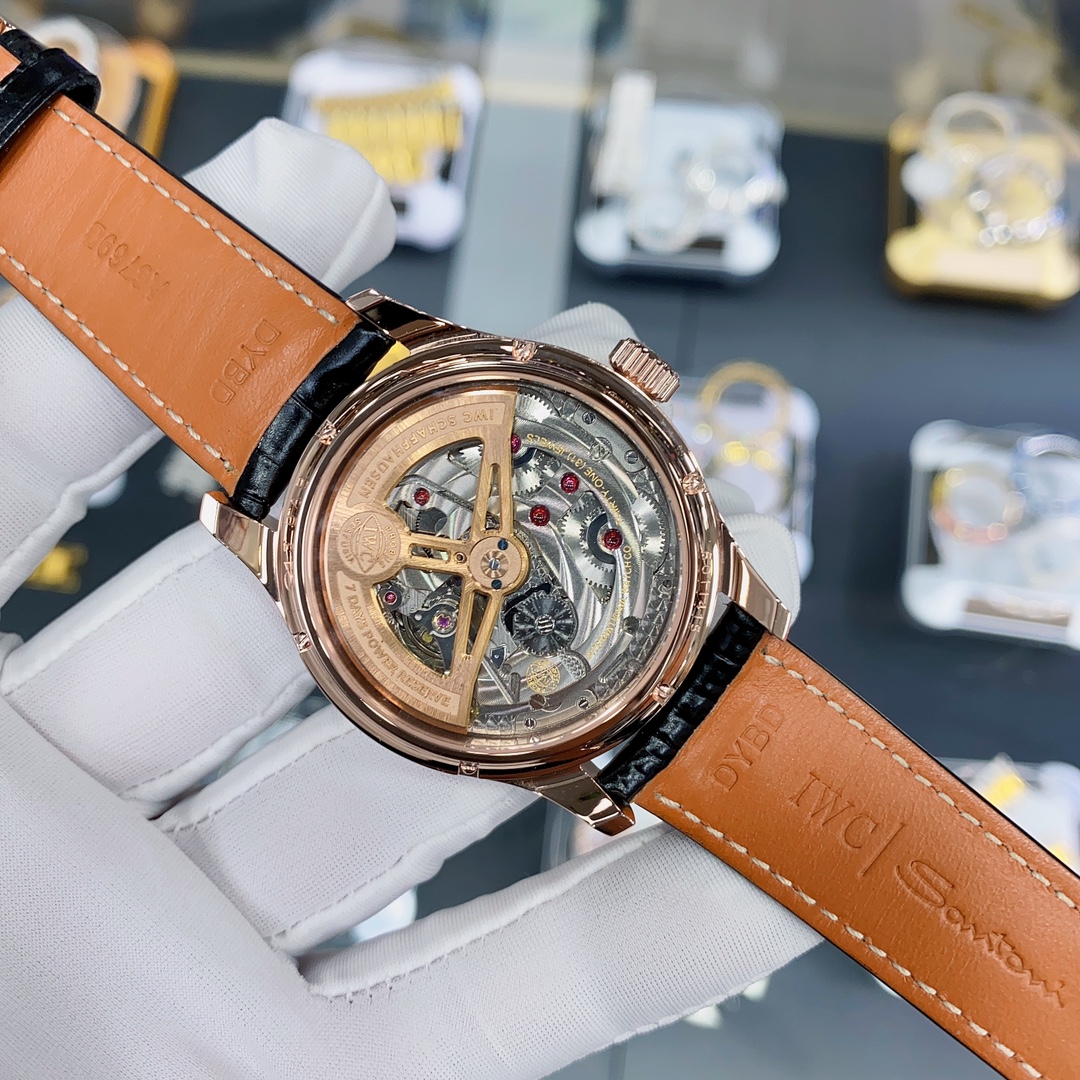
One of the most reliable ways to spot poor finishing is the straight-line reflection test. Hold the case under a window frame or a narrow LED strip and slowly rotate it. On a well-finished case, the reflected line stays straight as it travels across the metal. If it bends, waves, or jumps, that tells you the polishing wheel lost control somewhere. Those distortions don’t get better with wear.
This matters because uneven case geometry isn’t just cosmetic. It often correlates with sloppy assembly tolerances elsewhere.
Crown and tube alignment
Before you touch the dial, interact with the crown.
It should seat squarely against the case with no visible tilt. When you unscrew or pull it out, the motion should feel deliberate rather than sandy. Pay attention to the first few threads on screw-down crowns. Gritty engagement or inconsistent resistance usually predicts premature tube wear.
A crown that doesn’t sit straight is more than an aesthetic issue. It increases lateral stress on the stem every time you wind or set the watch, and that stress accumulates.
Crystal and AR behavior
Finish the structural check at the crystal.
Under normal indoor light, reflections should appear even across the surface. When you tilt the watch, you want to see a controlled blue flash at certain angles, not blotchy purple haze scattered across the glass. Patchy coloration often points to mixed or older crystal stock, and it usually comes with inconsistent anti-reflective performance.
Good AR doesn’t announce itself. It simply disappears until you move the watch, then returns in a restrained, uniform way. Anything loud or uneven here tends to stay annoying long after the novelty wears off.
Step 2: Dial Discipline
This is where most rejections should happen, because dial errors don’t age gracefully. A marginal case finish can fade into the background once you start wearing the watch. A dial problem stays in your line of sight every time you check the time, and IWC designs make those problems louder because there is so little visual clutter to mask them.
The goal here is not to chase microscopic perfection; it’s, as detailed in the niche IWC replica factory error mode prioritization and quality discrimination framework, to catch the kinds of errors that break the illusion at arm’s length: print that looks soft, markers that sit like they were glued by hand, and hands that don’t land where the watch is telling you to trust it.
Printing quality
A phone camera is a better lie detector than a loupe because it shows you what you’ll actually notice in daily use. Take a clean, well-lit photo straight on, then zoom in until the numerals and minute track fill the screen. You are looking for edge behavior, not “overall sharpness.” On a good dial, the edges of numerals and text look like they were cut with a fine blade: clean boundaries, consistent line weight, no fuzz at the corners.
Start with the minute track. On Mark dials and many Portugieser layouts, the minute hashes are evenly spaced and mechanically regular. If spacing drifts, or the thickness of the hashes changes as you move around the dial, it reads as printing inconsistency rather than character. Then look at the logo edges. A crisp logo has clean interior angles and stable curves. A soft logo often shows “ink bloom,” where the edges look slightly swollen or ragged under zoom. That kind of fuzziness tends to show up first around small text like “AUTOMATIC” or “CHRONOGRAPH,” where replicas sometimes lose control of stroke thickness.
Uneven spacing is the silent killer. You won’t always notice it immediately, but once your brain catches it, you can’t unsee it. If one numeral sits slightly high, or the minute track looks tighter near one quadrant, treat it as a real flaw. IWC dials are meant to feel disciplined. When discipline slips, the whole watch feels cheap.
Applied markers and hand alignment
Applied indices must sit flat and behave like parts of the dial, not like pieces placed on top of it. Tilt the watch under a single light source and watch how each marker catches light. If one index throws a different reflection, it often means it sits higher, lower, or slightly twisted. That doesn’t just look wrong; it can also become a functional issue if it creates uneven clearance for the hands.
Hand alignment is where IWC replicas can betray themselves even when the dial looks perfect. Set the time to exactly 12:00 and check whether the minute hand points precisely at the twelve marker. Then advance the minute hand in small steps and watch whether it lands cleanly on the minute hashes at 5, 10, 15. A minute hand that consistently rides half a hash off is not a “tiny preference issue.” It changes how the whole watch reads, because your eye expects instrument-like precision from these designs.
Also look for clearance and scraping. Slowly rotate the hands through a full cycle and listen for faint ticks that don’t belong, or watch for any point where the minute hand seems to dip near applied markers. Hand scraping is often intermittent, which is why you test it slowly and deliberately. If the hands touch anything, it usually gets worse as tolerances loosen with wear.
Date window inspection
The date is the fastest way to expose shortcuts, and on many IWC references it sits in a clean, open part of the dial where there’s nothing else competing for attention. Treat it like a critical control surface.
Use a three-part rule that reflects what actually matters in real ownership. First, judge the bevel. The edge of the date window should look sharp and intentional, not rounded or soft. A weak bevel makes the window look stamped rather than cut, and that cheapens the dial immediately. Second, judge the font, especially the numerals that reveal shape errors quickly: “2,” “4,” and “7.” These expose inconsistencies in stroke angle, serif shape, and spacing that can’t be hidden by lighting. Third, judge centering across multiple dates. Don’t test one date and move on. Roll through at least three consecutive dates and watch whether the numerals stay centered vertically and horizontally. A date that looks fine on “8” and wrong on “11” is still a problem, because you’ll live with the worst dates, not the best ones.
If any one of these three fails, mark it as a QC issue, and as highlighted in the comparative IWC replica factory performance and defect incidence benchmarking, date problems are not the kind you learn to love; they are the kind you notice more after the honeymoon.
Step 3: Movement Behavior
Ignore engravings and decorative rotor text. Those are marketing surfaces. What matters is how the movement behaves in your hand over time, because behavior predicts ownership cost.
Manual winding feel
Winding should feel progressive, smooth, and consistent. You want a steady increase in resistance as the mainspring loads, not sudden spikes or gritty patches. A gritty crown often points to poor lubrication, debris in the keyless works, or rough crown/tube interaction. Any of those can become a service problem later, especially if you wind frequently.
Pay attention to what happens at the end of the wind. If resistance arrives abruptly and feels like hitting a wall, that’s not always a failure, but it is a warning. Healthy winding feels like a controlled ramp, not a jump. Also notice whether the crown wobbles while you wind. Excess play under load suggests poor stem fit or tube alignment, and that kind of looseness tends to expand over months, not shrink.
Timekeeping stability
A basic home test is more valuable than chasing single numbers. Set the time precisely against a reliable reference, wear the watch for 24 hours as you normally would, and record the deviation. For many replicas, a daily range around ±10 to ±20 seconds can be a normal, livable reality. What matters more than the absolute number is stability. A watch that runs +12 seconds every day is easier to live with than one that swings between +2 and +35 depending on position and temperature.
Large swings usually point to regulation problems, inconsistent lubrication, or a movement that was never properly settled. If you see erratic behavior early, you should treat it as a risk signal, because instability tends to become more annoying as you start trusting the watch for daily timing. This is especially true on simple three-hand IWC references, where accurate, calm behavior is part of the entire point.
Power reserve behavior
If your model has a long reserve or a power reserve indicator, test it like you actually plan to own it. Fully wind the watch, then observe how it behaves as it runs down. Hands should not stutter, hesitate, or jump. Stuttering near low power is one of the clearest signs of friction or poor amplitude as torque drops.
If a power reserve hand is present, it should move smoothly and predictably. A jittery PR hand often signals slack in the linkage or roughness in the indicator mechanism, and those issues tend to worsen with wear. Long-reserve replicas can look impressive on paper, but in real life you buy them for day-two stability, not for the claim of “seven days.”
Step 4: Complication Checks
Complications aren’t just features. They are stress tests for build quality, because every additional mechanism introduces friction, alignment requirements, and new failure modes.
Chronograph models
Chronographs should be tested in cycles, not once. Run a simple sequence: start, stop, reset, and repeat it three to five times. You are testing repeatability more than function. The central chronograph seconds hand must return dead-on twelve. Not “almost.” Not “a hair off.” On IWC-style clean dials, a crooked reset is visible every time you look at the watch, and it gets more irritating the longer you own it.
Check the subdials as well. A minute counter that resets slightly off center, or that creeps after reset, is a red flag because it suggests loose coupling or poor tolerance control. Also judge pusher resistance. Consistent resistance across multiple cycles is a good sign. Inconsistent resistance—one reset crisp, the next mushy—often indicates uneven lubrication or internal drag. That’s the kind of problem that doesn’t stay stable.
Date and calendar functions
Test date change behavior the conservative way. Manually advance the hands toward midnight and observe when the date begins to move and when it completes. Many watches change roughly between 10pm and 2am. The window can be broad, but the motion should be decisive, not hesitant. If the date “half jumps” and then hangs, or if the crown feels like it is binding during quickset, don’t treat it as a minor annoyance. Calendar parts are delicate, and forcing them is how owners create damage.
If your model has day and date, check alignment on both discs and confirm that they switch cleanly. Misalignment here is both cosmetic and mechanical: it can reflect poor disc seating or weak tension, which can worsen over time.
Moonphase, annual, and perpetual calendars
These modules punish rushed adjustment because they stack mechanisms on top of mechanisms. Set them slowly, with low force, and pay attention to resistance spikes. A smooth module feels like controlled engagement. A problematic one feels like catching teeth that don’t want to mesh.
Watch for skipping, half-clicks, or moments where the indicator advances unevenly. Those are early warning signs that something is misaligned or under-lubricated. If you feel you need to “help” the complication move, it’s telling you something about its future. Complicated replicas can be satisfying when they behave, but they are also the first place where minor manufacturing variance turns into real ownership risk.
Step 5: Strap, Bracelet, and Clasp
People tend to treat straps and bracelets as accessories, but as made clear in the ZF vs V7 IWC replica hardware interface and wear-quality evaluation, they’re mechanical interfaces that decide whether a watch feels composed on the wrist or constantly reminds you that it’s a replica, and poor hardware doesn’t just look cheap, it changes how you interact with the watch every single day.
Leather straps
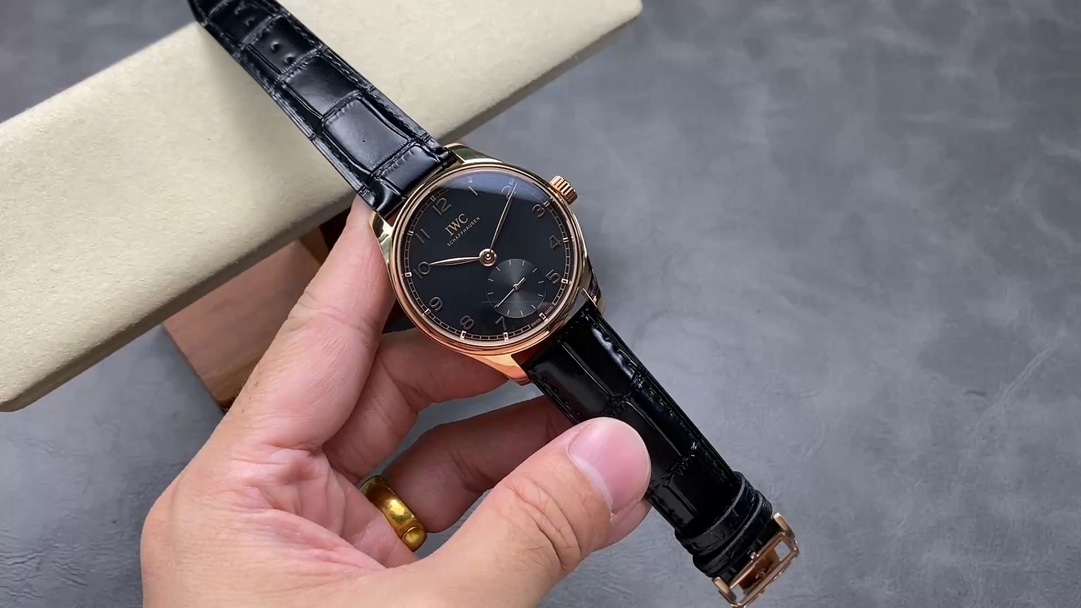
Start with the stitching. It should run straight and evenly along both edges, without wandering closer to one side or tightening unpredictably around the lugs. Crooked stitching is more than cosmetic. It usually comes with uneven tension, which accelerates edge separation once sweat and flexing enter the picture.
Then inspect the edge paint. Flex the strap gently near the lugs and buckle and look for micro-cracks or flaking. Early cracking almost always means the coating was applied too thick or cured poorly, and that kind of edge treatment fails quickly in real wear.
Be realistic about lifespan. Big Pilot–style wide straps carry more weight and bend through a larger arc every time you move your wrist. They wear faster than slim dress straps, especially around the first hole and the lug junction. That isn’t a defect. It’s physics. If the strap already feels stiff or shows edge fatigue out of the box, plan on replacing it sooner rather than trying to “break it in.”
Steel bracelets
A good bracelet moves like a chain, not like a hinged plank.
Articulate the links back and forth in your hands. They should move freely without catching, and they should settle naturally instead of snapping back into a flat line. Resistance usually means burrs inside the links or pins that were pressed too tightly, both of which lead to squeaks and uneven wear.
Run a fingertip along the underside. There should be no sharp edges. Comfort issues often start here, especially on integrated designs where the first links sit close to the wrist bone.
End-link fit deserves special attention. Check both sides of the case. The end links should sit flush, without daylight gaps or visible tilt. Poor end-link fit doesn’t just look wrong. It transfers stress into the spring bars and case holes, which eventually shows up as rattling or looseness.
Clasp behavior
The clasp tells you a lot about overall assembly discipline.
It should close decisively, with a clear, confident snap. Avoid clasps that hesitate halfway or require extra pressure to seat fully. That “half-click” feeling is often a sign of weak springs or misaligned locking geometry.
Open and close the clasp ten to fifteen times in a row. You’re checking for consistency. The resistance should feel the same each time. If the action changes from one cycle to the next, something inside is already shifting. That kind of inconsistency usually gets worse, not better.
Step 6: Conservative Water Resistance Check
Never assume a replica is ready for swimming, regardless of what the spec sheet claims. Gaskets vary, crown tubes aren’t always seated perfectly, and assembly tolerances change from batch to batch. Treat water resistance as unproven until you test it yourself.
What you can safely test at home
There’s a simple, low-risk way to screen for obvious sealing problems.
Make sure the crown is fully secured. Wrap the watch head in dry tissue paper, leaving the strap outside. Place it near a steamy bathroom or hot shower for several minutes, but do not submerge it. You’re using warm, humid air to create a pressure differential, not water.
Afterward, inspect the crystal carefully. Any fogging or moisture under the glass is an immediate reject. Condensation means air is moving in and out of the case, and where air goes, water eventually follows. This test won’t certify dive readiness, but it will catch the worst offenders before they ruin a dial.
How to Decide: Accept, Monitor, or Reject
This is where QC stops being mechanical and becomes judgment. You’re not tallying defects. You’re projecting ownership.
Accept immediately if…
The dial and date are clean and centered, the movement winds smoothly, all functions behave consistently, and the only issues you can find are tiny cosmetic marks that won’t grow with time. In this category, the watch feels coherent. Nothing about it makes you hesitate when you interact with it.
These are the pieces you wear right away.
Accept with monitoring if…
You see minor time drift that stays stable, slightly stiff winding that improves after use, or strap-related issues that don’t affect the watch head itself. These are manageable conditions. They don’t threaten the core mechanics, and they don’t compromise the visual discipline that makes IWC designs work.
Make a mental note, enjoy the watch, and reassess after a few weeks of real wear.
Reject if…
The date isn’t centered, the chronograph won’t reset cleanly, the crown feels gritty or misaligned, condensation appears under the crystal, or the hands fail to line up. These aren’t cosmetic preferences. They are early indicators of mechanical or assembly problems that almost always worsen with time.
A replica that starts life with these symptoms rarely settles into reliability. It usually moves in the opposite direction.
In QC, restraint matters. Passing on a problematic piece early saves you far more effort than trying to rationalize issues once the honeymoon fades.
Common QC Mistakes Buyers Make
Rushing approval
The most common failure isn’t technical. It’s emotional. People approve too quickly because they’re excited, tired of waiting, or afraid of slowing the process down.
That impatience costs real money.
Many mechanical problems don’t show up in the first ten minutes. Crown feel can change after a few winding cycles. Chronograph reset alignment can drift after repeated use. Timekeeping often looks fine at first and only reveals instability after a full day on the wrist. If you rush approval, you’re betting that nothing hidden will surface later. That’s rarely a good bet.
Slow down. Let the watch run. Interact with it more than once. QC rewards restraint.
Trusting factory claims over physical behavior
Factory reputation is not a substitute for inspection.
Strong factories still ship weak pieces. Batch variance is real. Assembly is done by humans. Lubrication isn’t perfectly uniform. A respected name on the movement or case does not override what your hands are telling you.
If a crown grinds, it grinds. If a chronograph doesn’t reset cleanly, it doesn’t reset cleanly. It doesn’t matter who made it. Physical behavior always outranks marketing or community consensus.
The watch in front of you matters more than the logo on the box.
Ignoring interaction feel
Most buyers obsess over visuals and forget how the watch feels.
That’s backwards.
Crown engagement, winding smoothness, pusher resistance, and clasp action predict long-term reliability better than dial printing ever will. These are the interfaces you use every day. They reveal tolerance issues, lubrication quality, and assembly precision long before anything breaks.
If something feels off now, it won’t magically improve with age.
A Simple QC Workflow You Can Reuse
You don’t need a complicated system. You need a repeatable order that prevents tunnel vision.
Visual pass
Start with structure, then move inward.
Case first. Then dial. Then date. Finish with hardware.
This sequence keeps you from falling in love with a clean dial while ignoring a twisted lug or misaligned end link. Visual QC works best when you move from big geometry to small details.
Functional pass
Next comes behavior.
Wind the watch. Set the time and date. Let it run. Test complications if present. Repeat key interactions more than once. You’re not confirming that functions exist. You’re confirming that they behave consistently.
Consistency is what you’re buying.
Wear pass
Finally, put the watch on your wrist for two to four hours.
Pay attention to comfort, balance, and stability. Does the case rotate? Does the bracelet pinch? Does the crown dig into your hand? Does the rate change noticeably after real movement?
This short wear test often reveals issues that don’t appear on a desk.
FAQ
How long should QC take before I approve shipment?
At minimum, a visual inspection plus several hours of runtime. Ideally, a full day that includes winding, setting, and wearing. Anything less is guesswork.
What’s the most common IWC replica QC failure?
Date window problems. Mis-centering, weak bevels, and incorrect fonts show up more often than any other defect, and they’re the hardest to ignore once noticed.
Is ±20 seconds/day acceptable?
For many replicas, yes, if the rate is stable. A consistent +15 is easier to live with than a watch that swings wildly between fast and slow. Stability matters more than the headline number.
Should I pressure-test replicas?
Only if you plan to expose the watch to water regularly and have access to proper equipment. Otherwise, treat replicas as splash-resistant and rely on conservative home screening. Never assume dive readiness.
What issues get worse if ignored?
Crown grit, chronograph reset drift, hand misalignment, and moisture ingress. These don’t stay static. They compound with use.
Building Your Own QC Discipline Over Time
Start strict, then calibrate
Early in collecting, reject aggressively. You don’t yet know which flaws you personally tolerate and which will bother you six months later.
As you gain experience, you’ll learn what’s livable. Some people accept minor rate deviation. Others can’t stand a slightly off-center date. That calibration only comes from ownership, not from reading.
Err on the side of strictness until you have your own reference points.
Keep notes across watches
Pay attention to patterns.
Write down what failed, what needed service, and what aged well. After a few watches, trends emerge. You’ll start to see which issues are cosmetic and which predict real problems. That knowledge compounds faster than any forum advice.
QC isn’t a checklist. It’s a skill built through repetition, attention, and honest feedback from your own experience—and once you develop it, you stop buying watches and start choosing them.
Related IWC Articles: If you found this helpful, you might also enjoy IWC Replica vs Genuine: How to Spot the Differences (Big Pilot & Portuguese 7 Days), which shows how to spot differences between IWC replica and genuine Big Pilot & Portuguese models, and Guangzhou IWC Watch Market Explained: How IWC Replicas Actually Move From Factory to Buyer. You may also like How to Identify What Movement Your IWC Replica Uses, and IWC Replica Watches by Series (Portuguese, Pilot, Ingenieur & Portofino).