

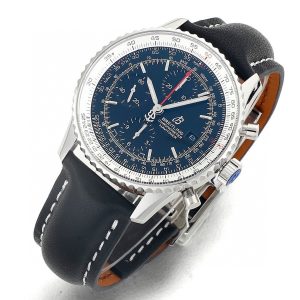

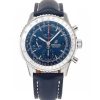
BLS Factory Navitimer Blue Dial Chronograph Overview
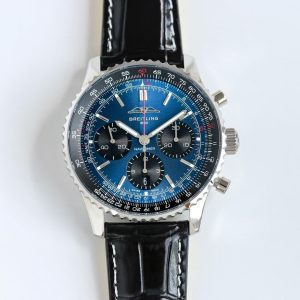
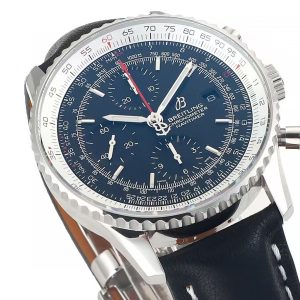
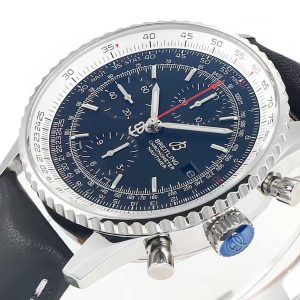
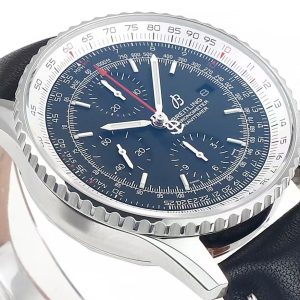
This Breitling Navitimer super clone is presented as a BLS Factory stainless steel chronograph with a blue dial, black leather strap, slide-rule bezel, and original-spec open-mold movement wording. The page focus is the restrained blue dial, 43mm Navitimer-style case presence, and buyer-visible checks around dial printing, bezel alignment, chronograph hand reset, and strap fit.
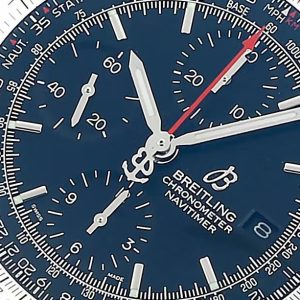
The blue dial is described as controlled rather than bright, with the slide-rule scale and chronograph sub-dials giving the watch its dense instrument-style layout. The black leather strap keeps the configuration more restrained than a bracelet version while still retaining a broad chronograph profile.
Confirmed Product Details
| Product Type | BLS Factory Navitimer-style replica chronograph |
|---|---|
| Collection Token | Breitling Navitimer |
| Factory | BLS Factory |
| Case Material | Stainless steel |
| Case Size | 43mm, as described in the product copy |
| Dial | Blue dial with chronograph sub-dials and red chronograph seconds hand |
| Bezel | Slide-rule bezel with described firm, stepped resistance |
| Strap | Black leather strap |
| Movement Wording | Original-spec open-mold chronograph movement, as stated by the product title and description |
| Not Specified | Exact reference number, exact caliber, thickness, crystal material, clasp type, lug width, caseback style, lume details, and water resistance |
QC Photo Checkpoints
Before ordering, use current QC photos to confirm the visible details that matter most on this blue dial Navitimer-style layout.
- Check that the slide-rule scale lines up evenly around the dial and bezel.
- Inspect outer bezel printing for centering, spacing, and clean scale alignment.
- Review the recessed sub-dials for even spacing, balanced depth, and symmetrical placement.
- Confirm baton marker alignment against the minute track and surrounding printed scales.
- Check that the red chronograph seconds hand resets to zero when shown in seller-provided checks.
- Inspect the date window for centered positioning and clean edge alignment.
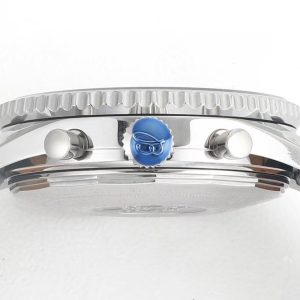
- Review crown and pusher alignment from side-angle photos.
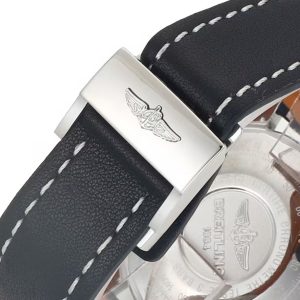
- Check leather strap stitching, lug seating, and how the strap sits between the lugs.
- Review case brushing, polished transitions, and overall finishing around the bezel, lugs, and case flank.
Key Wearing and Design Notes
43mm Case Presence
The stainless steel case is described as 43mm, but the slide-rule bezel and dense dial layout can make the visual footprint feel more contained than the number suggests. Buyers concerned about broad chronographs should review wrist-angle photos rather than judging by diameter alone.
Calm Blue Dial
The blue dial is positioned around depth and restraint instead of a bright sunburst effect. Its appeal is strongest for buyers who want a controlled chronograph look with visible scale detail and a less decorative color impression.
Slide-Rule Bezel Layout
The Navitimer-style identity comes from the slide-rule bezel, outer scale printing, chronograph sub-dials, and dense instrument-style dial structure. Alignment and print clarity are the most important visible checks in QC photos.
Open-Mold Chronograph Positioning
The product copy describes this version as using an original-spec open-mold chronograph movement. Exact caliber details are not provided, so buyers should treat movement discussion as seller-described configuration wording and request functional checks when needed.
Black Leather Strap
The black leather strap gives this configuration a more restrained daily-wear character than a bracelet layout. New leather can feel structured at first, so strap stiffness, stitching, and lug fit should be inspected in QC images.
Inspection Cautions
On this type of Navitimer-style replica chronograph, the most important compromises are usually visible in photos rather than hidden in broad descriptions. Buyers should inspect scale printing, bezel alignment, sub-dial spacing, hand reset position, and date-window centering before confirming details.
The 43mm case is not intended for buyers seeking an ultra-thin profile. The dense dial also will not suit buyers who prefer minimal text, open negative space, or a softly decorative dress-watch look.
Best Fit
This BLS Factory Navitimer configuration is best suited to buyers who want a blue dial chronograph with a restrained color tone, black leather wearability, a 43mm stainless steel case presence, and a functional instrument-style look.
It is less suitable for buyers who want a bright sunburst dial, bracelet configuration, ultra-thin case feel, minimal dial printing, or a lightweight decorative watch profile.
FAQ
What is confirmed about this BLS Factory Navitimer-style model?
The product is presented as a BLS Factory Breitling Navitimer super clone with a stainless steel case, blue dial, black leather strap, slide-rule bezel, chronograph layout, 43mm case size, and original-spec open-mold movement wording.
How does the 43mm case wear visually?
The existing description frames the 43mm case as visually moderated by the slide-rule bezel and dense dial layout. Buyers should still review wrist photos because case thickness and lug shape are not fully specified.
What should be checked first in QC photos?
Start with slide-rule scale alignment, bezel print centering, sub-dial spacing, baton marker alignment, red chronograph seconds hand reset, date-window centering, pusher placement, strap stitching, and lug seating.
Is the exact movement caliber specified?
No. The page uses original-spec open-mold chronograph movement wording, but it does not provide an exact caliber identification. Buyers who care about movement behavior should request seller-provided winding, start-stop-reset, and date-change checks.
Who is this blue dial leather-strap configuration for?
It fits buyers who prefer a controlled blue dial, leather strap comfort after break-in, chronograph functionality, and a Navitimer-style instrument layout without a bright or highly reflective dial effect.
Request Current Details
Before ordering, request current QC photos for this BLS Factory blue dial Navitimer-style chronograph and confirm the slide-rule alignment, dial printing, chronograph reset position, date-window centering, leather strap fit, and any movement-behavior checks that matter to you.
Watch Evaluation Highlights
BLS Factory Positioning
This version is framed as a BLS Factory Navitimer-style chronograph with stainless steel case construction, a blue dial, black leather strap, and open-mold movement wording. Treat the factory label as a configuration point to confirm against current QC photos and seller checks.
Open-Mold Chronograph Focus
The product copy describes an original-spec open-mold chronograph movement, with emphasis on winding feel, pusher feedback, hand reset, and register synchronization. Exact caliber details are not specified, so movement behavior should be verified through seller-provided function checks.
43mm Navitimer Case Profile
The case is described as 43mm, but the slide-rule bezel and dense dial structure can make the watch read more compact visually than a plain broad-case chronograph. Buyers should review wrist-angle photos because thickness and lug dimensions are not provided.
Restrained Blue Dial
The blue dial is presented as controlled rather than bright, with chronograph sub-dials, scale printing, and a red chronograph seconds hand creating the instrument-style layout. QC review should focus on print sharpness, marker alignment, sub-dial spacing, and date-window centering.
Black Leather Wearability
The black leather strap gives this configuration a quieter daily-wear profile than a bracelet version. Before confirming, inspect strap stitching, leather stiffness, lug seating, and how the strap sits against the stainless steel case in current photos.
Known Flaws
- Inspect the slide-rule scale and outer bezel printing for even alignment around the blue dial. This matters because the Navitimer-style layout is dense, so small scale shifts can be easier to notice than on a simpler chronograph. For most buyers, minor print variation is moderate rather than critical if the bezel and dial still read cleanly.
- Check baton marker alignment, sub-dial spacing, and recessed register symmetry in straight-on QC photos. These details affect how balanced the chronograph layout appears, especially on a blue dial with multiple printed scales. Slight spacing tolerance is usually acceptable, but obvious marker tilt or uneven sub-dial placement should be treated as a higher-priority concern.
- Review the red chronograph seconds hand reset position and any seller-provided start-stop-reset check. The product copy describes chronograph reset behavior, but the exact movement caliber is not specified, so function should be verified on the actual watch. For most buyers, a clean reset to zero is an important usability check rather than a cosmetic-only issue.
- Inspect the date window for centering and clean edge alignment. A dense dial can make an off-center date more visible because it sits among many nearby scales and markers. Minor date-wheel position variation may be tolerable, but a visibly high, low, or clipped date should be considered a meaningful QC issue.
- Check side-angle photos for case thickness impression, crown and pusher alignment, and how the 43mm stainless steel case sits on the black leather strap. This matters because the watch is not specified as ultra-thin, and the strap fit affects daily comfort. For most buyers, a thicker chronograph profile is expected, but uneven pusher seating or poor lug fit deserves closer review.
- Review the black leather strap stitching, leather stiffness, and lug seating before confirming. Leather can feel structured at first, so the main concern is whether the strap is cleanly finished and centered between the lugs. For most buyers, early stiffness is low severity, while crooked stitching or poor seating is more noticeable in wear.
Best For / Not Ideal For
Best For
- Buyers who want a 43mm Navitimer-style chronograph with noticeable wrist presence, but prefer a dial and slide-rule layout that can visually contain the case size.
- Buyers who prefer a restrained blue dial over brighter or more reflective colorways, especially with dense scale printing and chronograph sub-dials.
- Buyers who want a black leather strap configuration instead of a bracelet, with the expectation that new leather may feel structured before break-in.
- Buyers who care about QC-photo checks, including slide-rule alignment, bezel printing, sub-dial spacing, date centering, and red chronograph seconds hand reset.
- Buyers comparing factory-version movement wording who are comfortable confirming open-mold chronograph behavior through seller-provided function checks.
Not Ideal For
- Buyers looking for an ultra-thin or minimal wrist profile, since this is described as a 43mm stainless steel chronograph with a dense Navitimer-style layout.
- Buyers who prefer a bright sunburst dial, strong color flash, or a softer decorative dress-watch appearance.
- Buyers who want a bracelet configuration rather than black leather, or who do not want to account for strap stiffness and stitching checks.
- Buyers who need sparse dial text or simple legibility at a glance, as the slide-rule scale and chronograph registers create a busier instrument-style face.
- Buyers who are not willing to review QC photos closely for alignment tolerances, hand reset behavior, date-window position, and case finishing before confirming details.
Navitimer models tend to attract collectors who enjoy a more information-rich dial rather than a minimalist layout. The appeal is not just visual complexity, but how the scale arrangement, sub-dials, and bezel markings work together once you spend time reading the watch in different situations.
Because small differences in dial printing, hand proportions, and bezel alignment can significantly affect how a Navitimer feels in daily use, it is often worth comparing versions beyond surface appearance. This Breitling super clone buying guide offers a broader look at factory variations and common Navitimer configurations, helping you understand which details tend to matter most over time.