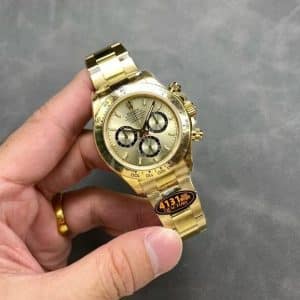
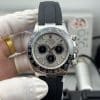
Engineered Excellence — VS 4131 Movement
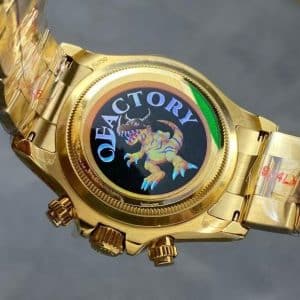
Inside beats the upgraded VS 4131 caliber, a fully functional chronograph engine that mirrors the structure of Rolex’s latest in-house movement.
-
Column-wheel and vertical-clutch system
-
72-hour power reserve
-
28 800 vph smooth sweep
-
Anti-magnetic escapement
-
Chronograph pushers with authentic resistance feel
Every unit is tested for stability and accuracy within ±2 seconds per day, giving collectors a truly reliable 1:1 mechanical experience.
Technical Comparison — Genuine vs VS Factory
Crafted in the Heart of Guangzhou
“The 116508 taught us the importance of warmth — not just in color, but in balance.
Every dial must glow, never glare.”
— VS Factory Senior Technician (2024)
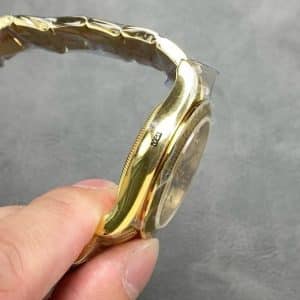
VS Factory engineers finish each case through multi-axis CNC polishing to achieve Rolex’s mirror-smooth transitions between lugs, bezel, and crown guards — a detail that even seasoned collectors admire.
The Wearing Experience
On the wrist, the Daytona 116508 4131 feels powerful yet refined.
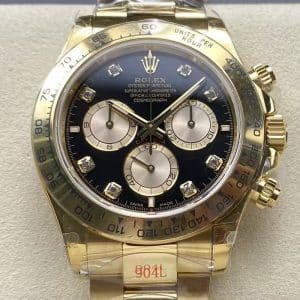
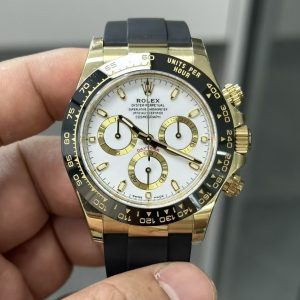
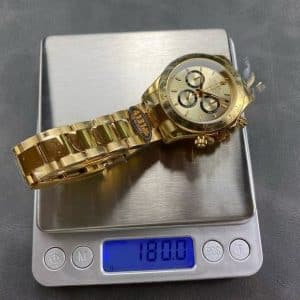
Its gold-tone radiance, smooth chronograph action, and solid 904 L weight give it the unmistakable aura of a high-luxury chronograph.
For those who want the feel of pure Rolex prestige without the six-figure price, this VS Factory edition delivers excellence that transcends imitation.
QC Checklist
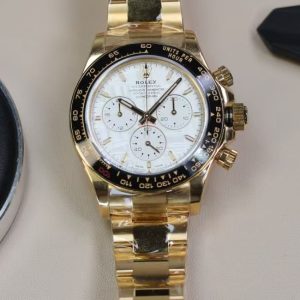
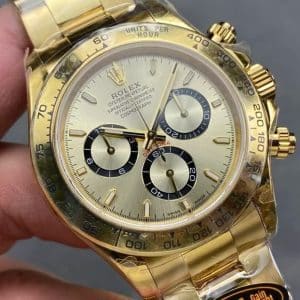
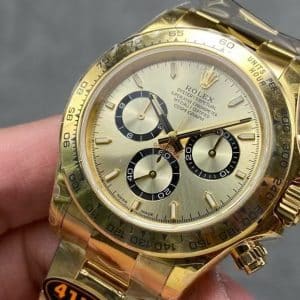
- Straight-on champagne dial photo: check that the sunburst tone looks even across the dial, with no patchy brushing, dust marks, or uneven color near the sub-registers.
- Crown logo and dial text spacing: confirm the crown logo sits centered under 12 o’clock and that the printed text is sharp, level, and not crowded toward the hour markers.
- Hour marker alignment: inspect each applied marker against the minute track, especially at 3, 6, and 9, to ensure none are tilted or set too close to the black sub-registers.
- Chronograph hand reset photo: ask for the central chrono hand reset to 12 and verify it lands exactly on the top marker without leaning left or right.
- Black sub-register layout: compare the three sub-dials for clean printing, balanced spacing, centered hands, and consistent contrast against the champagne background.
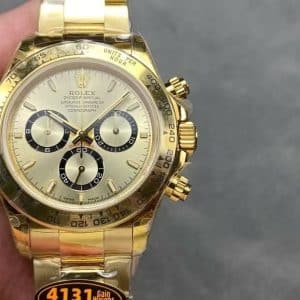
- Tachymeter bezel close-up: look for crisp black-filled numerals, even bezel alignment, and polished yellow-gold-tone edges without obvious waviness or over-polishing.
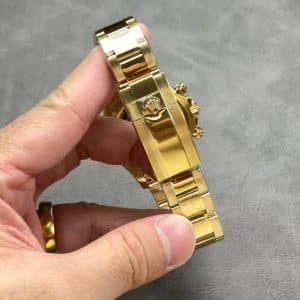
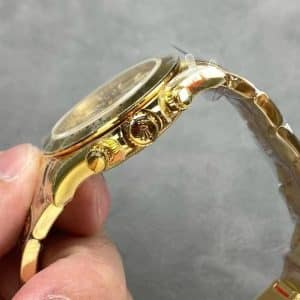
- Case side, crown, and pusher profile: review side-angle photos to check that the chronograph pushers sit straight, the crown guards are symmetrical, and the case thickness does not look bulky.
- Crystal distortion at dial edge: inspect angled shots for excessive warping around the minute track, logo, or sub-registers, especially where the crystal meets the bezel.
- SEL fit and bracelet links: check the solid end links for tight, even gaps at the lugs and confirm the yellow-gold-tone bracelet links show consistent polish and color from case to clasp.
- Clasp engraving and finish: request a clasp close-up to verify clean engraving, smooth folding action, and matching gold-tone finish without rough edges or visible plating inconsistency.
Known Flaws
- Champagne dial tone and print: inspect straight-on and angled photos for even sunburst brushing, sharp text, and clean printing around the black sub-registers. This matters because the warm dial is the main visual reason to choose this 116508-style version; minor tone variation is usually acceptable, but dust, fuzzy text, or uneven brushing should be treated as a meaningful QC concern.
- Marker and chronograph hand alignment: check that the applied hour markers sit square to the minute track and that the central chronograph hand resets cleanly to 12. Alignment issues are easy to see on a champagne dial, so small shifts may bother detail-focused buyers even if most wrist-wear impressions remain acceptable.
- Sub-register spacing and hand centering: compare the three black sub-dials for balanced placement, clear numerals, and centered hands. This is important because the Daytona-style layout depends on symmetry; slight variation is common in QC review, while visibly uneven spacing or tilted sub-dial hands should be considered more serious.
- Tachymeter bezel printing and polish: review close-ups for crisp black-filled numerals, clean alignment, and smooth yellow-gold-tone bezel edges. The bezel frames the entire watch, so soft printing or wavy polishing can reduce the finished look; for most buyers this is a moderate issue unless it is obvious in normal viewing.
- Bracelet, SEL fit, and color consistency: inspect the end links, bracelet links, clasp, crown, hands, and markers for even yellow-gold-tone color and tight fit at the lugs. This matters because a full gold-tone Daytona-style bracelet shows mismatched finishing quickly; tiny gap differences are usually tolerable, but clear color mismatch or loose SEL fit should be questioned before approval.
- Movement behavior during chronograph use: ask for confirmation that the VS 4131 chronograph starts, stops, and resets smoothly, with pushers that feel even and do not stick. This is a functional check rather than a confirmed flaw; most buyers should treat inconsistent reset, dragging hands, or rough pusher action as a higher-priority issue than small cosmetic variation.
Curious how China’s super clone factories handle Daytona movement reliability versus dial accuracy — especially with 4130-style rotor behavior, sub-dial spacing, and ceramic bezel printing? Our full China super clone Rolex Daytona guide breaks down which versions actually justify the premium price difference.