


Case & Presence — How the Body Learns Its Weight
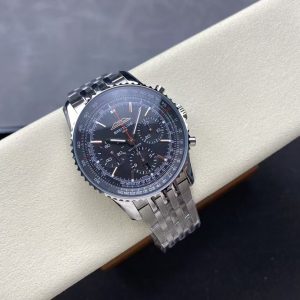
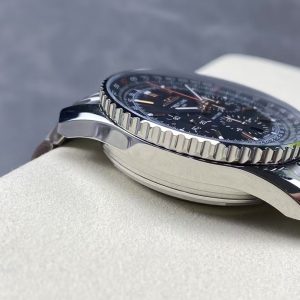
At first contact, the silver case feels immediately cold. The temperature contrast is direct and unmistakable. Over the first twenty to thirty minutes, that cold fades into steady neutrality, but the mass remains clearly legible on the wrist.
While walking, the weight stays centered. It does not tip forward despite the added chronograph depth. It does not pull downward. When your wrist bends toward a desk, the case presses with slightly firmer presence than the three-hand models, then releases as the hand relaxes. The structure feels denser. Not wider. Denser.
This is not a floating Navitimer. This one lives lower and closer to the wrist.
Dial & Bezel — How Visibility Changes With Time
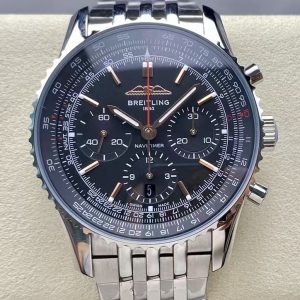
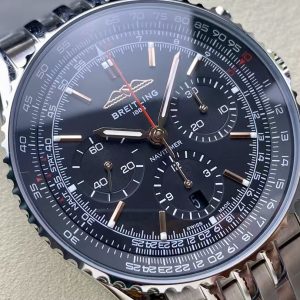
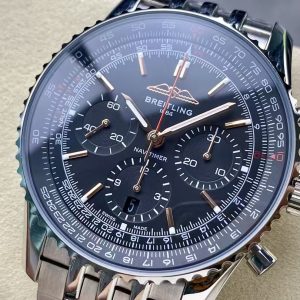
In daylight, the black dial reads darker and more layered than the three-hand versions. The sub-dials absorb light rather than reflect it. The rose-toned markers rise gently from the surface instead of flashing.
Under indoor lighting, the contrast tightens. The minute track sharpens while the center becomes visually heavier. The three sub-registers separate themselves clearly without demanding attention.
At oblique angles, reflections slide across the crystal in narrow bands. They do not erase the sub-dials, but they interrupt them briefly before restoring full clarity as the wrist turns. At night, streetlight reflections move in thin streaks across the bezel scale without flooding the dial.
The bezel rotates with firm resistance and slightly drier feedback than three-hand versions. The movement feels more mechanical, less damped. Each turn lands with controlled certainty.
Movement & Control — Chronograph Interaction, Not Theory
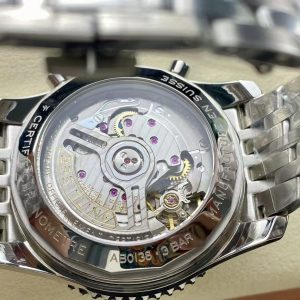
Inside this BLS factory Chronograph edition is a modified automatic chronograph movement structure. But what defines it here is not architecture. It is button behavior.
The crown winding remains consistent and linear. There is no hollow section in rotation. Tension builds gradually and holds.
When engaging the chronograph:
-
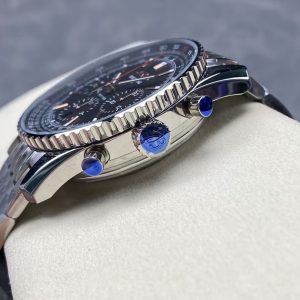
The upper pusher delivers a firm, clean start. There is a distinct mechanical click with resistance before engagement.
-
The stop action carries slightly firmer braking than the start. You feel a clear interruption in motion.
-
The reset pusher snaps the hands back with decisive force. No hesitation. No float.
The chronograph seconds hand does not glide. It advances with crisp intention.
The date changes near midnight with predictable delay rather than snapping exactly at twelve. Lift the watch close to your ear and the rotor becomes clearly audible. On the wrist, the sound dissolves into motion. This China super clone Navitimer Chronograph does not pretend to be silent. It accepts that complication brings sound.
Steel Bracelet & Wrist Behavior — Cold Weight, Active Feedback
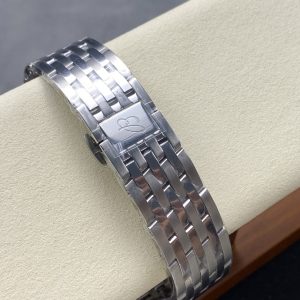
The steel bracelet introduces immediate cold on first contact. The sensation is sharper than on rose gold steel versions. The mass spreads evenly across the links and grounds the watch firmly.
During movement, the bracelet shifts in short, crisp increments. There is a faint metallic whisper when the wrist turns quickly. It never rattles loosely. It never becomes silent.
When resting on a desk, vibration travels directly through the links and into the case. You feel the surface through the watch. There is no insulation here. It behaves as a solid mechanical object.
After several hours, the cold sensation fades into predictable weight. After several days, the mass begins to feel aligned rather than imposed.
Structural Balance — How the Chronograph Holds Itself
With the chronograph movement and steel bracelet combined, the structure becomes vertically grounded. The added internal mass pushes presence closer to the wrist. Sudden arm motion does not introduce wobble. The watch follows the wrist without delay.
The Guangzhou-built super clone structure shows its logic clearly here. It does not chase thinness. It stabilizes through distribution. This chronograph version feels planted rather than floating.
Factory Interpretation — What This Version Chose to Be
This BLS factory Chronograph edition chooses mechanical honesty over refinement. The case avoids exaggerated mirror polish. The black dial avoids decorative depth. The chronograph function is presented as a working mechanism, not a display feature.
What it sacrifices is softness. It does not aim to feel gentle or elegant. What it tries to mirror is the behavior of a functional instrument. What it does not attempt to fake is ceremonial luxury. There is no illusion here. The feedback is direct.
Psychological Fit — Who It Aligns With, Who It Conflicts With
This version aligns with people who enjoy interaction. Those who start, stop, and reset without hesitation. Those who like feeling resistance through buttons and weight through steel.
It conflicts with wearers who want passive presence. If you prefer a watch that fades away instead of engaging back, this chronograph will feel demanding. It responds. It does not observe quietly.
It also resists nervous tapping. The pushers demand deliberate force. They punish indecision with stiffness.
My Personal Take — Physical Memory Only
After several hours of wear, the initial cold of the bracelet settled into mechanical neutrality. The chronograph buttons remained firm throughout repeated use. I became most aware of the watch when resetting the timer. The snap back of the hands carried physical authority. After several days, the added weight stopped feeling heavy and started feeling anchored. The rotor sound was noticeable only when the environment became silent.
Factory vs Original — Difference in Nature
| Aspect | Super Clone Nature | Original Nature |
|---|---|---|
| Case material | Silver-toned alloy with sharp thermal response | Denser precious steel with slower heat change |
| Dial behavior | Black layered surface with controlled reflection | Deeper lacquer with stronger depth |
| Movement class | Modified automatic chronograph movement | In-house chronograph movement |
| Bezel behavior | Firm mechanical rotation with dry feedback | Crisper detent structure |
| Wearing comfort | Cold steel mass with direct vibration transfer | Denser mass with smoother isolation |
Closing Thought — Decision Ownership
My own attitude toward this chronograph version is shaped by how actively it responds to touch. It never feels passive.
We can show how it is built and how it behaves. But how it fits into your life is a decision only you can make.
Design Background
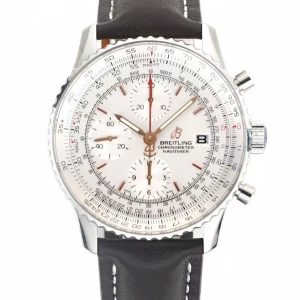
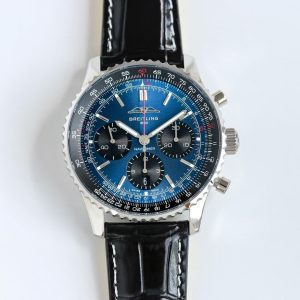
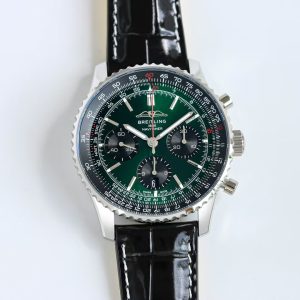
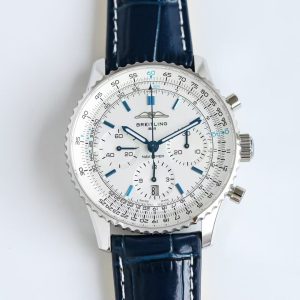
This BLS Factory version is positioned as a Breitling Navitimer Chronograph replica with a silver-toned case, black dial, and steel bracelet. The Navitimer-style layout matters here because the watch is not built around a quiet three-hand presentation; it is a busier pilot-chronograph format with sub-dials, bezel scale detail, and pushers that make interaction part of the wearing experience.
The black dial gives this version a more technical reading than lighter Navitimer colorways, with stronger contrast against the bright metal case and bracelet. Buyers comparing similar chronograph replicas should pay close attention to dial print clarity, sub-dial alignment, hand reset behavior, and how reflections move across the crystal in QC images, especially because the exact crystal specification is not provided.
The silver-toned case and steel bracelet create a more grounded profile than a slimmer or simpler Navitimer variant. The source copy supports a firmer chronograph pusher feel, rotating bezel feedback, audible rotor in quiet settings, and heavier steel-bracelet presence, so this version is better suited to buyers who want a tactile, instrument-like watch rather than a light or ultra-subtle dress-style piece.
Several technical values remain unspecified: movement caliber, case size, thickness, crystal type, bezel construction, bracelet clasp type, lume details, and the exact date display configuration. That makes this a version to evaluate by confirmed title facts, factory identification, dial and bracelet execution, and QC photos rather than by assumed specifications.
Watch Specifications
- Factory version
- BLS Factory
- Movement
- Modified automatic chronograph movement structure; exact caliber not specified on this product page
- Case size
- Not specified on this product page
- Thickness
- Not specified on this product page
- Bracelet / strap
- Steel bracelet
- Crystal
- Not specified on this product page
- Dial details
- Black chronograph dial with sub-dials; lume details and exact date configuration not specified on this product page
- Bezel
- Rotating bezel behavior described; material and construction not specified on this product page
- Caseback
- Not specified on this product page
- Model / reference family
- Breitling Navitimer Chronograph replica
- Colorway
- Silver-toned case, black dial, steel bracelet
- QC focus
- Check chronograph start, stop, and reset action, sub-dial alignment, bezel rotation feel, dial print clarity, hand alignment, bracelet finishing, clasp function, and date change behavior if shown
Known Flaws
- Inspect the chronograph start, stop, and reset behavior in QC video if available. This matters because the source copy frames this BLS Factory Navitimer around firm pusher action and active interaction; for most buyers, slightly firm feedback is acceptable, but hesitation, floating reset, or misaligned reset hands would be a more serious concern.
- Check sub-dial spacing, sub-dial hand alignment, and dial print clarity under direct and angled light. The black Navitimer-style dial is visually dense, so small printing errors or uneven register alignment can stand out more than on a simpler three-hand layout; seriousness is moderate for buyers who care about close-up accuracy.
- Review crystal reflections at oblique angles and make sure the sub-dials, minute track, and bezel scale remain readable. The page already notes narrow reflection bands across the crystal, so this is mainly an inspection point rather than a confirmed defect; it is usually minor unless glare hides key dial details in normal wrist angles.
- Confirm bezel rotation feel and bezel scale alignment in QC handling. A firm, slightly dry bezel feel is supported by the source copy and may be normal for this version, but uneven resistance, loose play, or visibly off-center scale alignment would matter for buyers expecting an instrument-like chronograph presentation.
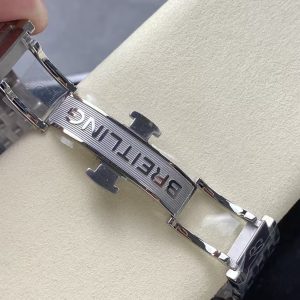
- Inspect bracelet fit, end-link seating, clasp function, and side finishing. The steel bracelet gives this watch its grounded wrist presence, but poor SEL fit, sharp edges, or a loose clasp can change the wearing experience; seriousness is moderate because bracelet issues are visible and felt during daily use.
- Ask for date-change behavior only if the date display is clearly shown in the product photos or QC media. The source mentions a change near midnight, but the exact date configuration is not fully verified, so buyers should treat slow or delayed changeover as a QC observation rather than a defect unless it sticks, skips, or fails to advance.
Best For / Not Ideal For
Best For
- Buyers who want a BLS Factory Navitimer Chronograph with a black dial, silver-toned case, and steel bracelet as the confirmed visual setup.
- Buyers who prefer a denser, more grounded chronograph presence over a lighter three-hand Navitimer-style layout.
- Buyers who value active interaction, including firm chronograph pusher feel, bezel handling, and clear start, stop, and reset checks during QC.
- Buyers comparing factory versions who are comfortable judging this watch through QC photos and videos because exact case size, thickness, movement caliber, crystal type, and clasp type are not specified.
- Buyers who want strong black-dial contrast against bright metal surfaces and are willing to inspect dial print, sub-dial alignment, hand reset, and reflection behavior before deciding.
Not Ideal For
- Buyers who want a lightweight, quiet, low-profile watch, since this steel-bracelet chronograph is framed around heavier wrist presence and audible mechanical behavior in quiet settings.
- Buyers who need fully verified technical specifications before purchase, including exact case size, thickness, movement caliber, crystal specification, lume details, and bracelet clasp type.
- Buyers who prefer a simple or dress-style Navitimer layout, as the chronograph dial, sub-dials, pushers, and bezel scale create a busier, more instrument-like profile.
- Buyers with low tolerance for QC-dependent details such as chronograph reset alignment, sub-dial symmetry, bezel resistance, bracelet finishing, clasp action, and possible date-change behavior if shown.
- Buyers who dislike firmer pusher action, reflective crystal behavior at angles, or the more physical feel of a steel bracelet chronograph.
Frequently Asked Questions
What does BLS Factory mean on this Navitimer Chronograph?
It identifies the factory version being used for this replica release. In this listing, the confirmed product facts are the Navitimer chronograph format, the BLS Factory version, the silver-toned case, the black dial, and the steel bracelet. The page should be judged on those confirmed details, not on assumed specifications that are not listed.
What movement details are confirmed?
The product is described as an automatic chronograph, but the exact movement caliber is not specified. The source copy emphasizes the way the chronograph behaves in use: firm pusher action, clean start and stop response, and a decisive reset. Buyers should confirm timing behavior and hand return in QC media rather than assuming a named caliber.
Are the case size and thickness specified?
No. Exact case size and thickness are not specified on this product page. What is confirmed is the silver-toned case and the denser chronograph presence on the wrist. Compared with a three-hand Navitimer, this version is presented as more grounded and more physically present.
What should buyers check in QC photos or video?
Confirm chronograph start, stop, and reset behavior; sub-dial alignment; dial print clarity; hand alignment at reset; bezel rotation feel; bracelet finishing; clasp function; and date change behavior if the date display is shown. Also check how reflections move across the crystal at angled light, since the dial is black and the source copy notes reflective behavior at oblique viewing angles.
How does this compare with a three-hand Navitimer?
This chronograph version is busier and more interaction-focused than a three-hand Navitimer. The black dial, sub-dials, and steel bracelet create stronger contrast and a heavier wrist profile. Buyers looking for a lighter, quieter, more subtle watch usually prefer the three-hand layout; buyers who want active chronograph use and a more instrument-like feel should look at this version.
What is known about the bracelet, crystal, and known flaws?
The bracelet is a steel bracelet. The crystal type is not specified. Buyer-visible points to watch are firmer pusher action, audible rotor noise in quiet settings, reflective crystal behavior at certain angles, and the heavier presence that comes with a steel chronograph. Those are inspection points, not defects by default, and they should be judged from QC images or video.
Navitimer models tend to attract collectors who enjoy a more information-rich dial rather than a minimalist layout. The appeal is not just visual complexity, but how the scale arrangement, sub-dials, and bezel markings work together once you spend time reading the watch in different situations.
Because small differences in dial printing, hand proportions, and bezel alignment can significantly affect how a Navitimer feels in daily use, it is often worth comparing versions beyond surface appearance. This Breitling super clone buying guide offers a broader look at factory variations and common Navitimer configurations, helping you understand which details tend to matter most over time.